
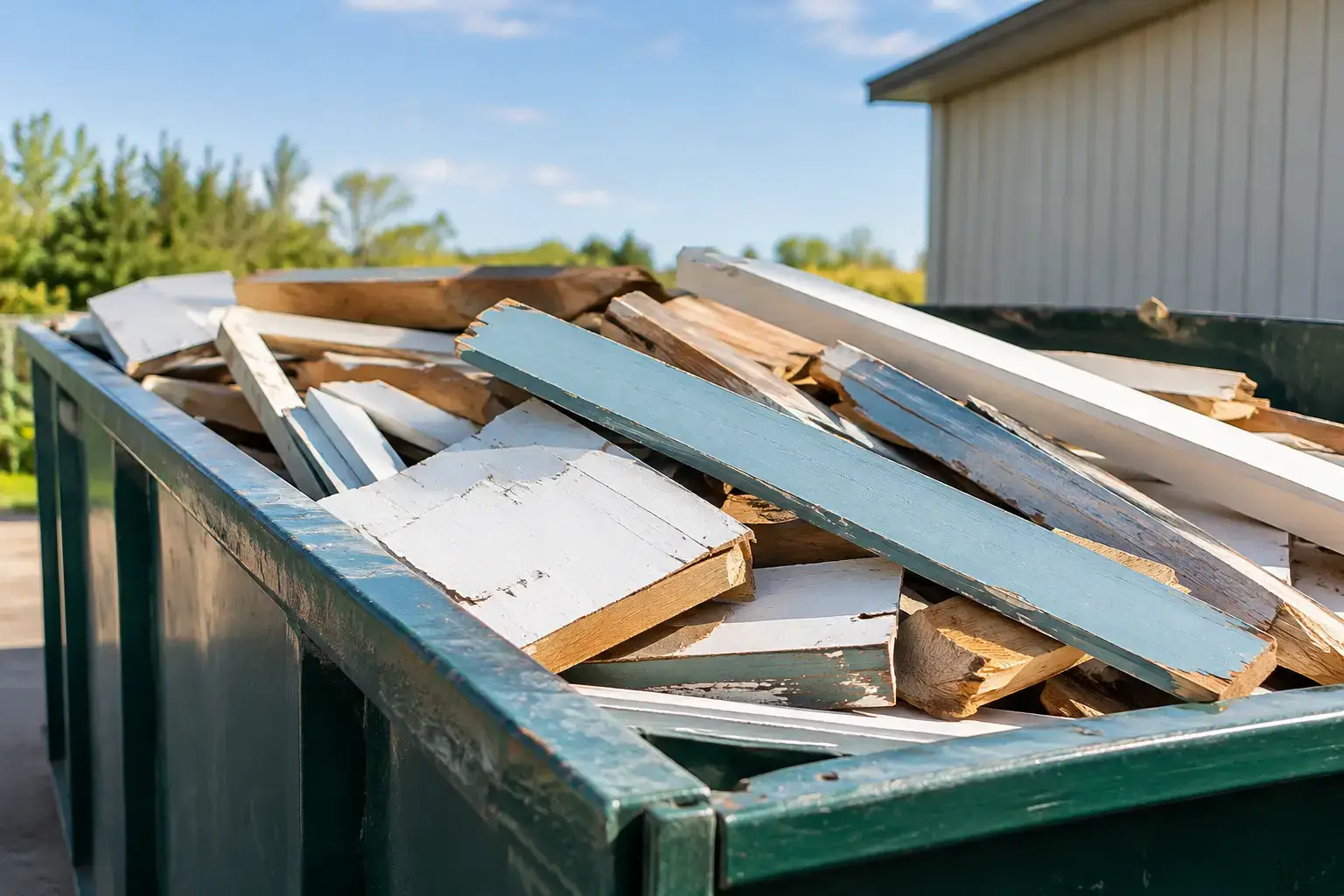
A renovation can leave you with a surprising amount of painted wood: old baseboards, cabinet frames, fence boards, trim, shelving, and demolition lumber. So, can dumpsters hold painted wood? In many cases, yes. Painted wood can often go into a general waste or mixed-material dumpster, provided it is ordinary construction debris and does not contain hazardous coatings or other restricted materials.
The key is knowing what kind of paint is on the wood, how old the material is, and what else is mixed into the load. A quick conversation before delivery can prevent a rejected load, extra sorting, or an avoidable disposal charge.
Can Dumpsters Hold Painted Wood From a Renovation?
For most current renovation projects, painted lumber is accepted as general construction and demolition waste. That includes painted studs, trim, doors without glass, wood paneling, cabinets, shelving, and non-treated fence boards. If you are pulling out an older kitchen, finishing a basement, or cleaning up after a DIY project, a general waste bin is usually the practical choice.
Painted wood becomes more complicated when the coating may be hazardous. Old paint can contain lead, and some specialty coatings may contain chemicals that need separate handling. The age of the property matters here. If you are demolishing painted wood from a much older home and do not know the paint history, do not assume it belongs in a regular bin.
Wood that is wet, moldy, or heavily nailed is not automatically a problem for a dumpster. It may affect how the material is handled at the receiving facility, but it is typically still construction debris. What matters most is whether the load contains prohibited hazardous waste, liquids, or materials that require a separate waste stream.
When Painted Wood Needs Special Handling
Painted wood should not go into a regular dumpster if it has been identified as hazardous or is contaminated with another restricted substance. Lead-painted wood is the most common concern in older demolition work. Sanding, scraping, or breaking up this material can create hazardous dust, so it should be handled carefully even before disposal.
Pressure-treated wood is another material worth flagging before booking. Treated lumber is common in decks, retaining walls, fences, and outdoor framing. It is not the same as painted wood, but the two often end up together during exterior demolition. Disposal rules for treated lumber vary by facility, so it is best to separate it when possible and confirm where it can go.
Wood coated with tar, creosote, heavy adhesives, unknown industrial finishes, or chemical residue may also require special disposal. The same applies to wood from fire damage if it contains ash, soot, insulation, melted plastics, or other mixed debris. A dumpster can still be part of the cleanup plan, but the material may need to be sorted first.
Do not place wet paint cans, paint thinner, solvents, stains, or other liquid products in the bin. Even if the wood itself is acceptable, leftover paint products are a separate disposal issue. Letting a small amount of paint fully dry on a piece of wood is very different from tossing in containers of liquid paint.
A simple rule for unknown paint
If the paint is old, peeling, or from a property with an unknown renovation history, treat it as a question mark. Do not sand or break it apart simply to make it fit in the bin. Take photos, describe the material when requesting a quote, and ask whether it should be tested or directed to a specialty disposal option.
That small step protects the people working on the project and helps keep the rest of your load moving without delays.
Choose the Right Bin for Painted Lumber
The right dumpster size depends less on the paint and more on the volume and shape of the wood. Trim and small boards can pack tightly, while long studs, cabinets, and demolition lumber fill space quickly. Wood is also lighter than concrete, brick, or soil, which often makes a general waste bin a good fit for wood-heavy renovation debris.
A small 5-yard bin may work well for a room cleanout, a bathroom remodel, or a short run of fencing. For a kitchen tear-out, basement renovation, or several rooms of flooring and trim, a mid-size bin gives you more room to work without overfilling. Large renovation and demolition projects often need a 20- or 25-yard bin, especially when painted lumber is mixed with drywall, insulation, carpet, and other general debris.
Avoid choosing a clean fill, concrete, or asphalt-only bin for painted wood. Those containers are intended for heavy, recyclable materials that need to stay free of general waste. Putting painted lumber into a clean fill load can contaminate the material and lead to additional sorting charges.
At Forever Green Bin Rental, the best approach is to explain the project rather than guessing at a bin type. Mention whether you are removing interior trim, old cabinets, a deck, fencing, or structural lumber. The more clearly the materials are described, the easier it is to arrange a container that fits the job.
How to Load Painted Wood Safely
Loading a bin well makes pickup safer and helps you get the most from the space. Start with the longest, flattest boards on the bottom. Lay them flat instead of leaning them upright, and place heavier pieces low in the container. This reduces gaps and keeps the load stable.
Remove or bend back protruding nails when practical. You do not need to make every board spotless, but exposed nails can catch clothing, damage bags, and create a hazard while loading. Break down cabinets and large wood pieces if they can be safely dismantled. Flat panels stack much more efficiently than bulky boxes or assembled furniture.
Keep painted wood separate from materials that need different disposal routes. Concrete, asphalt, soil, tires, appliances, hazardous products, and liquid waste should not disappear into a mixed pile of demolition lumber. Sorting as you work is faster than pulling a load apart after the bin arrives.
Do not load above the top edge of the dumpster. Boards sticking out can make transportation unsafe and may require the load to be leveled before pickup. If you expect long lumber, tell the rental company ahead of time so you can plan the bin placement and loading method.
Watch for mixed-material surprises
Old doors may have glass panes. Cabinets can contain countertops, sinks, hinges, and plumbing fixtures. Fence sections may include wire, metal posts, or concrete footings. These materials are not always prohibited, but they can change the best bin type and the disposal cost.
Take a few minutes to separate obvious metal, glass, and heavy masonry from the wood pile. For contractors, this keeps the site cleaner and makes it easier to account for waste streams. For homeowners, it prevents the common mistake of ordering a bin based on a pile that looks smaller and simpler than it really is.
What About Painted Furniture and Wood Scraps?
Painted furniture can often go into a general waste dumpster if it is not contaminated and does not include restricted items. Wood chairs, dressers, shelving, tables, and dismantled bed frames are usually handled much like other household or renovation debris. Large upholstered items, mattresses, electronics, and appliances may have different requirements, so they should be identified before loading.
Small painted wood scraps are generally fine in a mixed waste bin. Bagging loose splinters and sawdust can help keep the work area tidy, but do not bag dust created from suspected lead paint or other hazardous coatings. That material needs a more cautious disposal plan.
For exterior projects, remember that painted wood, treated wood, and painted metal may be mixed together in the same structure. A worn fence or deck can look like simple lumber until demolition starts. Planning for separation before you begin can save time on pickup day.
Book With the Disposal Rules in Mind
Painted wood is usually manageable, but it should never be treated as a one-size-fits-all waste category. Standard painted lumber from a recent renovation is often suitable for a general waste bin. Older paint, treated wood, chemical coatings, and contaminated debris deserve a closer look before they are loaded.
When you request a dumpster quote, describe the age of the material, the type of project, and any concerns about paint or treatment. A local bin provider can help you choose the right container, protect your driveway during delivery, and keep your cleanup moving without a last-minute disposal problem.