
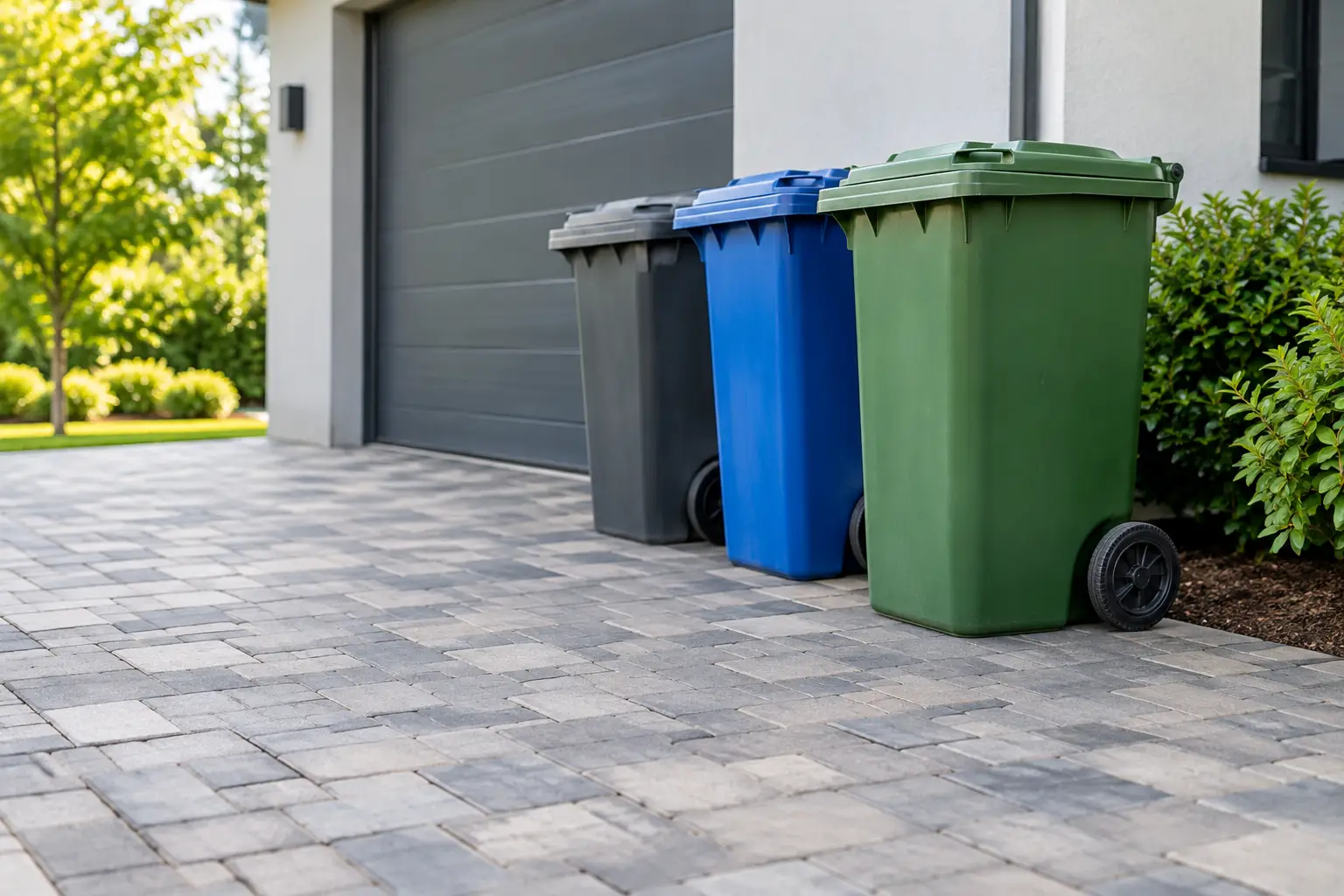
A driveway bin can make a renovation, cleanout, or landscaping project far easier. But if your driveway is finished with interlock pavers, it is reasonable to ask: are bins safe for interlock driveways? They can be, provided the bin is placed, loaded, and removed with the right protection and care.
Interlock is durable, but it is not a single solid slab of concrete. It is a system of individual pavers, bedding material, edge restraints, and a compacted base. A heavy roll-off bin concentrates a lot of weight in a small area, especially once it is filled with shingles, soil, concrete, drywall, or demolition debris. The goal is not simply to get a bin onto the driveway. It is to spread that weight and avoid movement that can disturb the pavers underneath.
Why Interlock Driveways Need Extra Care
A properly installed interlock driveway is designed to handle normal vehicle traffic. That does not automatically mean it is ready for a loaded waste bin sitting in one location for several days. The risk depends on the condition and construction of the driveway, the size of the container, the material going into it, and where the delivery truck needs to position the bin.
Interlock can shift, settle, crack, or develop low spots when excessive point pressure reaches the base below. This is more likely on older driveways, pavers with existing movement, driveways with poor drainage, or areas close to an edge where the base may not be as well supported. Freshly installed interlock also deserves caution because the joints, edges, and base may not have fully settled.
The bin itself is only part of the equation. A 5-yard bin filled with household clutter creates a very different load than a larger container full of concrete, wet soil, brick, or asphalt. Dense materials add weight quickly, which is why they often require a dedicated clean-fill or concrete bin rather than a general mixed-waste container.
Are Bins Safe for Interlock Driveways With Boards Underneath?
In most cases, protective boards are the right starting point. Strong wooden planks or boards placed beneath the bin's contact points help distribute the load over a wider section of the driveway. They also create a buffer between the steel container and the paver surface, reducing the chance of scratches, chips, or direct pressure marks.
Good driveway protection is not a thin piece of scrap wood placed wherever it happens to fit. The boards need to be substantial, positioned before the bin is set down, and long enough to support the container's rails or contact areas. The delivery operator should place the bin carefully rather than dragging it across the surface.
At Forever Green Bin Rental, driveway protection is included with every rental because it is a practical part of responsible service, not an optional afterthought. Still, boards reduce risk rather than eliminate it entirely. If a driveway has a weak base, loose pavers, visible settling, or prior damage, the safest choice may be to use another location.
Choose the Best Place for the Bin
The strongest area of an interlock driveway is usually away from unsupported edges, drains, decorative borders, and visibly uneven sections. A level, straight area gives the driver more control during placement and gives the bin a more stable footing while it is loaded.
Avoid placing a bin on a slope whenever possible. A sloped driveway can make loading awkward, increase the risk of debris shifting inside the container, and complicate pickup. It can also put extra stress on individual pavers if the bin settles or moves slightly under weight.
Do not overlook access. The delivery truck needs enough room to safely back in, set the container down, and retrieve it later. Low tree branches, overhead wires, parked cars, tight turns, and narrow driveways can affect placement options. Let the rental provider know about these conditions before delivery so the crew can plan accordingly.
If the driveway is not a good candidate, consider a permitted street placement, a compacted gravel area, or another firm surface on the property. Local rules can apply to roadside bins, so this option should be confirmed before the delivery date.
Match the Bin and Material to the Job
Right-sizing the bin protects more than your budget. It can also help protect the driveway. A container that is much larger than the project requires may take up unnecessary space and encourage overloading. On the other hand, a bin that is too small may lead to extra rentals or material piled above the rim.
For lighter projects such as a garage cleanout, furniture removal, or basement decluttering, a smaller bin is often the sensible choice. Renovation debris, lumber, cabinetry, and drywall may require more capacity, but the material is generally less dense than concrete or soil.
Heavy materials deserve a separate plan. Concrete, asphalt, dirt, stone, brick, and clean fill should be kept within the limits provided by the bin company. These materials are dense enough that even a partially filled container can become extremely heavy. Booking the correct bin type and following fill limits helps keep the load safe for transport and reduces unnecessary stress on your driveway.
Never try to make a heavy load fit by filling a bin above the top rail. Overfilled containers are difficult to tarp and transport safely, and debris can shift during pickup. Keep material level with the rim unless you have been given specific instructions otherwise.
Loading Habits That Help Protect Pavers
Once the bin is in place, how you use it matters. Load heavier items evenly across the bottom rather than dropping all the weight into one end. This keeps the container more balanced and reduces the chance of sudden movement or uneven pressure on the boards and pavers.
Take care with machinery as well. Driving a skid steer, mini excavator, or other heavy equipment over an interlock driveway can be harder on the surface than the bin itself. If equipment access is needed, discuss it with your contractor before work starts. Protective mats, alternate access routes, or a different staging area may be needed.
Keep the area around the bin clear. Loose debris, wet leaves, ice, and scattered pavers can create slip hazards for anyone carrying material. During wet weather, avoid allowing water to pool around the container. Standing water can soften the bedding sand or expose drainage problems that were not obvious before the rental.
What to Check Before Delivery and After Pickup
Before the bin arrives, walk the driveway and take a few clear photos. Look for cracked pavers, low areas, loose edges, stains, or existing tire marks. This is useful for your own records and helps you make an informed decision about whether the driveway can support the rental.
Tell the bin company if you have concerns about a particular section of the driveway. A local provider should be willing to discuss placement, bin size, material weight, and site access before sending a truck. A quick conversation can prevent a costly surprise later.
After pickup, inspect the area once the boards are removed. Sweep away debris and check that the pavers remain level. In many cases, minor surface marks can be cleaned, and a small amount of joint sand can be replaced if needed. If you notice significant settling or movement, address it promptly before water, traffic, or winter freeze-thaw cycles make the issue worse.
When a Driveway Bin May Not Be the Best Option
There are situations where the honest answer is to avoid placing a bin on interlock. A driveway with obvious sinking, broken edge restraints, loose pavers, poor drainage, or a thin base is already showing signs that it may not handle concentrated weight well. The same applies when the only available placement area is very close to a garage, retaining wall, or unsupported driveway edge.
It also may not be worth the risk for exceptionally heavy debris. If your project involves a large volume of concrete, soil, or stone, ask about smaller heavy-material bins, staged pickups, or a placement area with a stronger base. A little extra planning is usually less expensive than repairing an interlock driveway.
A bin rental should take the burden out of cleanup, not create another project after the debris is gone. With proper boards, thoughtful placement, the right container, and a realistic approach to weight, an interlock driveway can often be used safely. When the surface is questionable, choosing a different location is simply the smart call.