
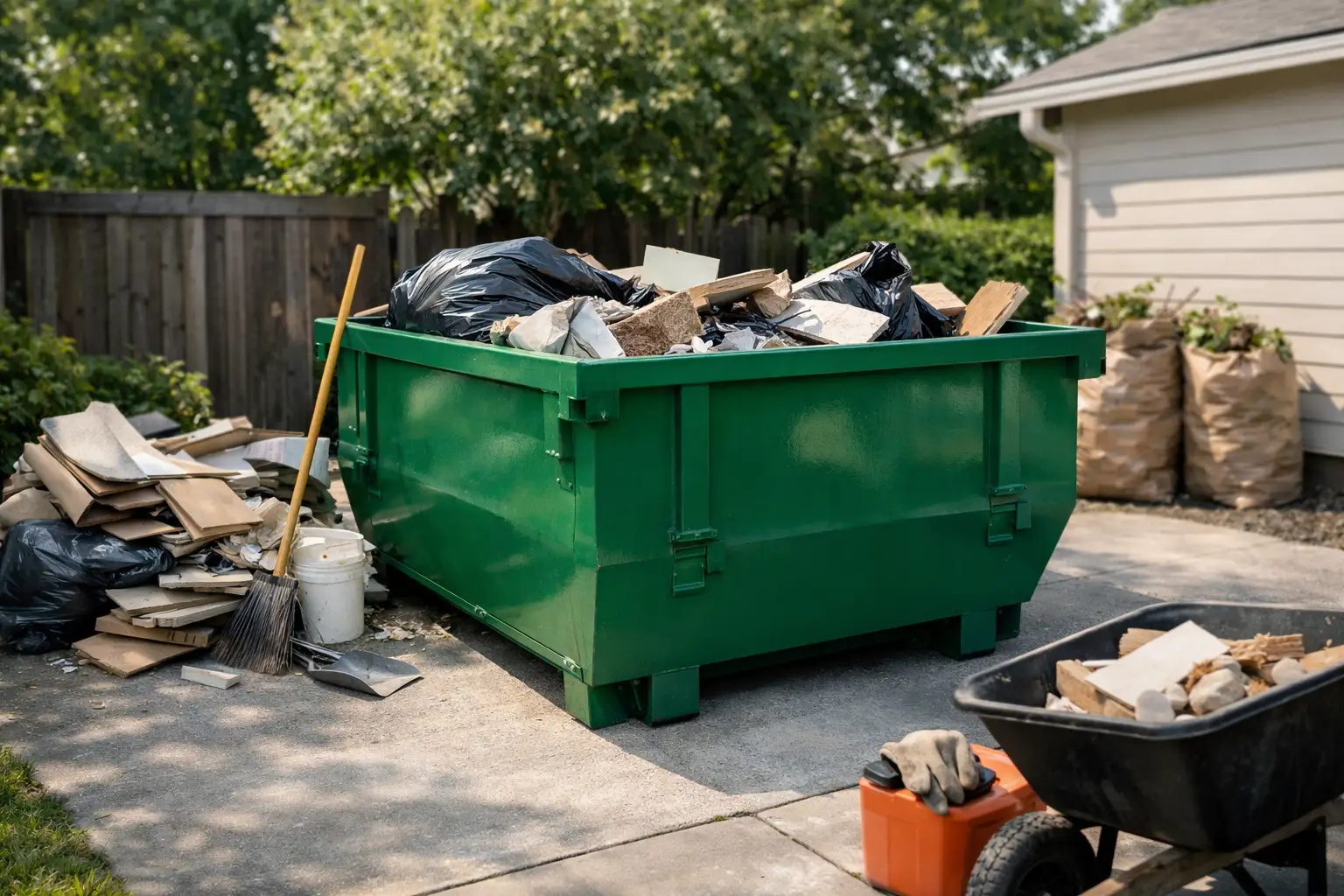
If you're clearing out a bathroom, tearing up a small patio, or finally dealing with the junk in the garage, a full-size roll-off can be more bin than you need. This 5 yard dumpster review is for the jobs that are too big for curbside pickup but too small to justify paying for extra space you will not use.
A 5 yard bin sits in a useful middle ground. It gives homeowners and contractors a simple way to handle debris without crowding the driveway or overspending on capacity. For the right project, it is one of the most efficient rental options available. For the wrong one, it fills faster than expected and creates delays. That is the part worth looking at closely.
5 yard dumpster review: what it is really good at
A 5 yard dumpster is built for compact, lower-volume cleanup work. Think single-room cleanouts, small renovation debris, yard waste from a modest landscaping job, or dense material like concrete where weight matters more than volume. It is not the bin for a whole-home purge or a major addition. It is the bin for focused work.
That difference matters because many people shop by price first and size second. In practice, the better approach is to match the container to the debris stream. A smaller bin can save money and take up less space, but only if the material and volume are realistic. If you are loading old drywall, trim, cabinets from a powder room, and a few bags of junk, a 5 yard bin often feels just right. If you are demoing an entire kitchen, the odds shift quickly.
One of the biggest advantages is control. Smaller bins are easier to place, easier to load without overthinking, and less likely to become a catch-all for every extra item around the property. That can sound minor, but on active projects it keeps disposal organized.
Size, space, and what actually fits
People often hear "5 yards" and have no clear picture of what that means on-site. The practical answer is this: it is a small roll-off designed for jobs that generate a manageable pile of debris, not a mountain.
In real-world terms, a 5 yard dumpster typically works well for a bathroom remodel, a small basement cleanout, a shed cleanout, limited roofing debris, dirt from a minor landscape job, or broken concrete from a short walkway. It also suits heavier materials because you do not need a huge container once weight limits come into play. That is why small bins are commonly used for clean fill, concrete, asphalt, and other dense loads.
For homeowners, the footprint is often the deciding factor. A smaller bin is easier to fit on a standard driveway and less disruptive during the rental period. That is a real benefit if you are working in a suburban neighborhood where parking, access, and property protection all matter.
Still, there is a trade-off. Small bins do not leave much room for estimating mistakes. If your project has any chance of expanding once demo starts, sizing up can be the safer call.
Where a 5 yard dumpster can disappoint
A fair 5 yard dumpster review should be clear about the limitations. The main issue is not that the bin is too small in general. It is that cleanup jobs have a way of growing.
A simple room cleanout can turn into a hallway, a closet, and half the basement. A bathroom demo can reveal damaged subfloor, extra tile, and old fixtures you had not planned to remove. Once the bin is nearly full, loading slows down because every item has to be placed carefully to stay within the rim.
Bulky waste is another problem. Light materials can still eat up space fast. Old furniture, cabinets, carpet rolls, and awkward framing offcuts do not always stack neatly. You may still be under the weight limit and out of usable room.
This is why small dumpsters work best when the job scope is tight and the material type is known. If there is uncertainty, a larger bin may actually be the more cost-effective choice because it reduces the chance of needing a second haul.
Best use cases for homeowners
For residential projects, the 5 yard size shines when the cleanup is specific and contained. Garage decluttering is a strong example, especially when the waste is mostly boxes, broken shelving, yard tools, and general junk rather than large furniture sets. It is also a smart fit for seasonal cleanups where you want everything gone in one pass without taking over the property.
Bathroom renovations are another good match. Tile, vanity pieces, drywall, and old fixtures add up quickly, but usually not enough to demand a large roll-off unless the work expands into nearby rooms. Small flooring jobs can also fit well, especially if you are replacing material in one area rather than an entire level of the home.
Landscaping jobs depend more on material type. A 5 yard bin can make sense for dirt, sod, bricks, or concrete from a small project because those materials get heavy fast. In that case, smaller is not a compromise. It is often the correct and safer choice.
Best use cases for contractors and renovators
Contractors tend to value speed and predictability more than raw bin size. On that front, a 5 yard container can be useful for punch-list debris, small demolition phases, masonry waste, or isolated work areas where a compact container keeps the site cleaner.
It is especially practical when material separation matters. If you are keeping concrete, asphalt, clean fill, or mixed debris separate, a smaller dedicated bin can help avoid contamination and simplify disposal. That matters on jobs where the wrong waste stream creates extra cost.
There is also a logistical advantage. Smaller bins are often easier to position close to the work zone, which cuts down on carrying time and keeps crews moving. For a contractor working in tight driveways or occupied residential spaces, that convenience can be more valuable than extra volume.
Cost value: cheaper does not always mean better
Most customers look at a 5 yard dumpster because they want a lower-cost option. That makes sense. If the project fits, paying for a larger container is unnecessary.
But value comes from matching size to job, not just booking the smallest bin available. If a 5 yard dumpster fills on day one and you need another pickup, the low starting price stops looking like a bargain. The best rental decision balances cost, debris type, loading speed, and the risk of underestimating volume.
That is where quote-based service matters. A good rental company should ask what material you are tossing, how much of it you expect, and where the bin needs to go. That kind of guidance prevents the common mistake of choosing a container based only on the number in the price sheet.
Property impact and placement
A smaller dumpster is easier on a property in simple, practical ways. It takes up less driveway space, leaves more room for vehicles, and generally feels less intrusive during a short rental. For homeowners, that can make the project less stressful.
Placement still matters. The drop area should be level, clear of vehicles, and accessible for delivery and pickup. Overhead wires, low branches, and narrow approaches can create problems even with a compact container. Built-in driveway protection is another detail worth paying attention to because it helps reduce scuffing and pressure marks where the bin sits.
For many local customers, this is one reason a responsive neighborhood operator beats a distant national call center. The details around access, timing, and placement are easier to sort out when the company understands the kinds of properties common to the area.
So, is a 5 yard dumpster worth it?
For the right project, yes. A 5 yard dumpster is worth it when the debris is limited, the material is heavy, or the work area does not justify a larger roll-off. It is efficient, easier to place, and often the smartest option for targeted cleanups.
It is less worth it when the job is loosely defined, bulky waste is involved, or you already suspect the cleanup will grow. In those cases, going one size up usually buys peace of mind and better workflow.
The best way to think about this bin is not as the cheapest rental. Think of it as the most precise rental for smaller jobs. When it matches the scope, it saves time, protects space, and keeps disposal simple. When it does not, the limits show up fast.
If you are on the fence, describe the job honestly before booking. A small bin works best when the project is truly small, not when you are hoping to make it fit.