
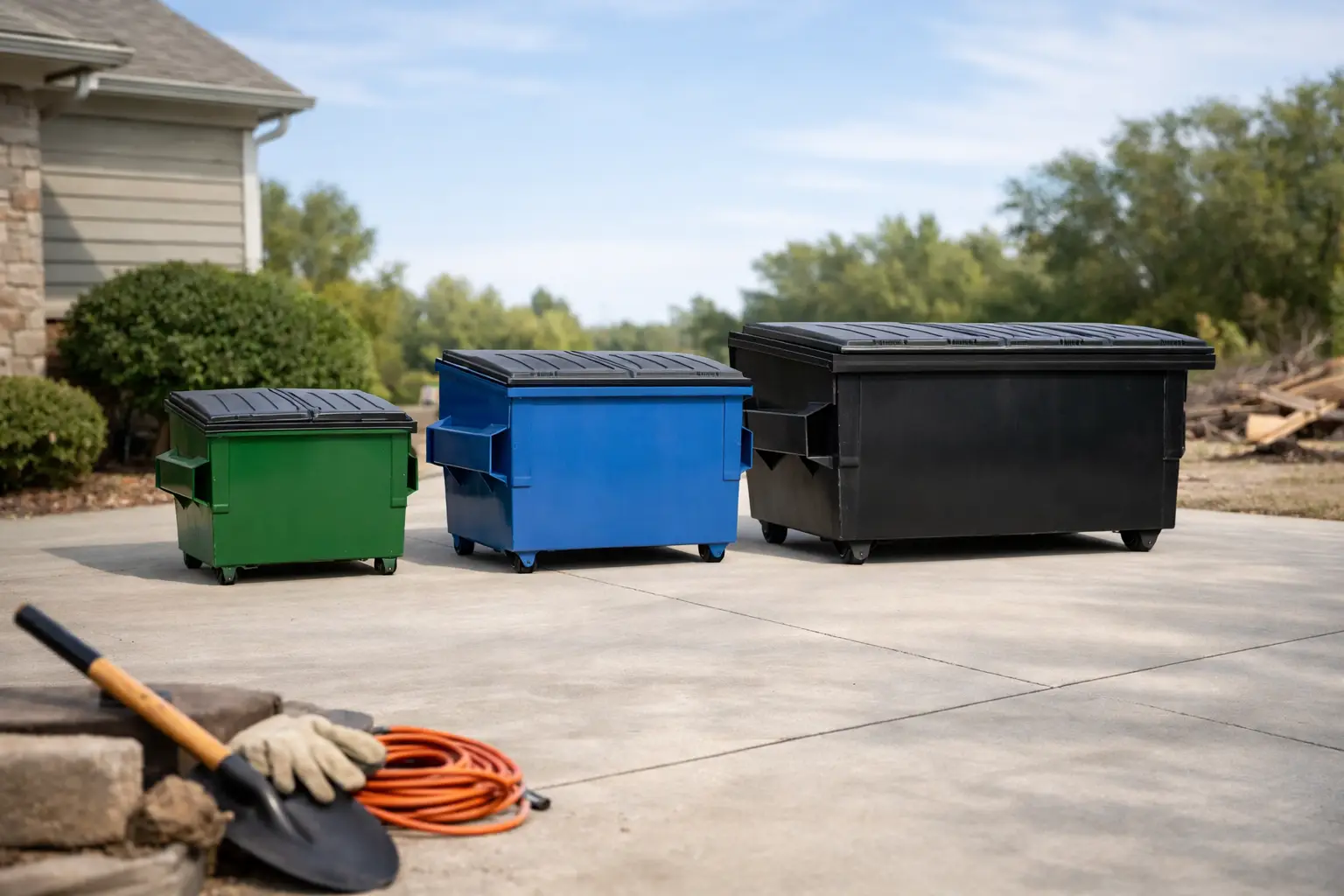
A bin that is too small slows the whole job down. A bin that is too large can mean paying for space you never use. If you are wondering how to choose bin size, the right answer usually comes down to three things: what you are throwing out, how much of it you have, and how much room you have on site.
For homeowners, that might mean the difference between a quick garage cleanout and a bin that overfills by noon. For contractors, it can affect labor flow, pickup timing, and whether materials stay separated the way they should. The good news is that choosing the right size is usually simpler than people expect once the project is looked at in practical terms.
How to choose bin size without guessing
The easiest mistake is estimating by eye. Debris almost always takes up more room once it is piled together, especially when you are dealing with bulky materials like cabinets, drywall, fencing, or old furniture. A room that does not look too full can fill a bin faster than expected.
Start with the scope of the job rather than the appearance of the waste. Ask yourself whether you are doing a small cleanout, a single-room renovation, a major remodel, or a construction project with steady debris over several days. That gives you a more reliable starting point than trying to picture everything in cubic yards right away.
It also helps to think about the material itself. Heavy debris and bulky debris behave differently. Concrete, asphalt, soil, and brick get heavy quickly, so even if they do not take up much volume, they often need a smaller bin. Light mixed waste from a basement cleanout may need more space even though it weighs less.
Match the bin to the type of project
A small bin is often the right call for focused jobs. If you are clearing out one room, removing a deck, cleaning a garage, or tackling a modest DIY project, a 5-yard bin is often enough. It keeps the footprint manageable and works well when driveway space is limited.
Mid-size bins usually make sense for renovations that create a mix of materials over several days. Think bathroom remodels, flooring removal across part of the house, roofing debris, or a larger household cleanout before a move. These jobs create more volume than most people expect, especially once old fixtures, underlayment, trim, and packaging are added.
Larger bins are better for full-home renovations, demolition work, estate cleanouts, major landscaping tear-outs, and construction sites where debris builds up quickly. A 25-yard bin is typically the better fit when the goal is to keep the site moving without arranging extra hauls mid-project.
The trade-off is simple. A bigger bin gives you breathing room, but it also takes more space and may not be necessary for smaller jobs. A smaller bin is efficient and cost-conscious, but only if the debris truly fits.
Think in debris categories, not just square footage
Square footage can help, but it does not tell the whole story. Two kitchens of the same size can produce very different amounts of waste depending on what is being removed. Cabinets, countertops, drywall, tile, and old appliances create a very different load than paint, trim, and light fixtures.
The same applies outdoors. A landscaping project might sound moderate until old patio stones, fence sections, shrubs, and soil are all added together. That is why debris type matters as much as project size.
If your load is mostly general household junk, furniture, cardboard, light renovation debris, or mixed material, volume is usually the main factor. If your load includes clean fill, concrete, asphalt, brick, or dirt, weight matters more. In those cases, a smaller dedicated bin is often the smarter choice because it keeps disposal safe, compliant, and cost-effective.
How to choose bin size for heavy materials
Heavy materials need special attention because the wrong choice is not just inefficient. It can create hauling and loading issues.
Concrete, asphalt, soil, and masonry should usually go into smaller bins even on larger jobs. That surprises a lot of people. They assume a big demolition project automatically needs the biggest container, but when the debris is dense, smaller bins are often the correct setup. The issue is not just how much fits. It is how much the container can safely carry.
This is also where separating materials can help. If you mix concrete with general waste, you may lose the advantage of using the right disposal stream for each material. For contractors and property managers, that can affect both cost and site efficiency. For homeowners, it usually means a more complicated pickup than necessary.
Site access matters more than most people think
Even the right bin size on paper has to work in the real world. Before booking, look at where the bin will go and how much space is available for delivery and pickup.
Driveways, narrow side access, low branches, parked vehicles, and tight cul-de-sacs can all affect what size bin makes the most sense. If a larger bin technically fits but leaves no room to work around it, that may not be the best choice. The same goes for projects where keeping part of the driveway open is important.
For residential jobs, many customers prefer the smallest size that comfortably handles the debris because it keeps the property more usable. For job sites, the priority is often reducing downtime, which can make a larger bin the better operational choice. There is no universal rule here. It depends on how the site functions day to day.
A good local bin rental company will also factor in property protection, especially for driveway placements. That matters when you are working on finished concrete, asphalt, or decorative surfaces and want the bin placed carefully from the start.
Be honest about timeline and loading pace
Some projects create all their debris at once. Others build gradually over a week or two. That changes what size bin makes sense.
If you are cleaning out an attic or basement over a weekend, you may be able to estimate the load fairly well and book accordingly. If you are remodeling in phases, the debris can stretch longer than expected. In that case, going slightly larger may save you from running out of space before the work is done.
Contractors often deal with this trade-off. A smaller bin may look efficient at the start, but if crews are losing time stacking debris neatly, waiting for swap-outs, or working around overflow, the savings disappear quickly. The right size is the one that supports the pace of the project, not just the initial estimate.
Common sizing mistakes
The most common mistake is underestimating bulky items. Furniture, vanities, cabinets, and demo debris rarely stack as neatly as people imagine. Air gaps eat up space fast.
Another mistake is choosing based only on price. A smaller bin may cost less upfront, but if it leads to extra hauls or delays, the total cost can end up higher. On the other hand, booking the largest option for a minor project is not automatically better either. That can mean paying for unused capacity and taking up more room than necessary.
A third mistake is mixing materials that should stay separate. If you have clean fill, concrete, or asphalt, mention that early. The right bin is not just about volume. It is about matching the container to the material.
When it makes sense to ask for help
If you are between two sizes, it is usually worth asking for a recommendation based on the exact job. A quick description of the project often gives enough detail to narrow it down. Mention the type of debris, the rough size of the space being cleaned out or demolished, and whether there are heavy materials involved.
That kind of conversation is especially useful for first-time renters. Most people do not rent bins often enough to estimate by memory, and they should not have to. A responsive local provider can usually tell the difference between a 5-yard cleanout job and a larger renovation load after a few practical questions.
At Forever Green Bin Rental, that is exactly how we help customers book with more confidence. The goal is not to push a bigger bin than you need. It is to match the job to the right size so the cleanup stays simple.
A practical way to make the final call
If the project is small and contained, start small. If it involves multiple rooms, bulky demolition debris, or a longer timeline, size up. If the material is heavy, ask about a dedicated smaller bin. And if site access is tight, make sure the bin works not just for disposal, but for the way the property needs to function while the job is underway.
The best bin size is not the one that sounds safest or cheapest at first glance. It is the one that fits the debris, the property, and the pace of the work without creating extra trips, delays, or mess. A few minutes of planning upfront usually saves a lot more than that once the cleanup starts.