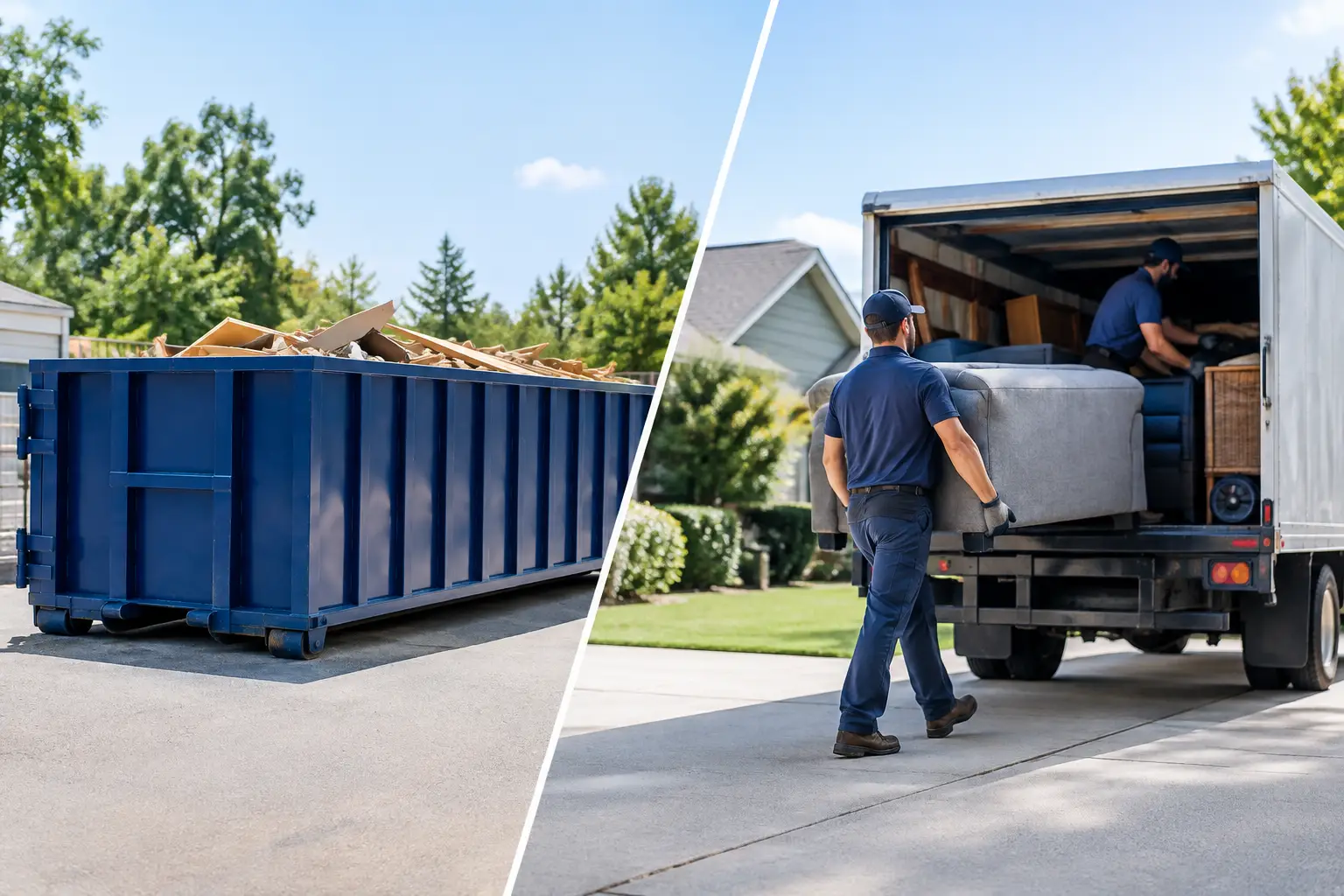
A basement full of old furniture, drywall from a kitchen remodel, or debris from a contractor job can all create the same question: how do you get it gone without losing a weekend to landfill runs? When weighing roll off versus junk removal, the right choice usually comes down to who will do the loading, how much material you have, and how long the project will take.
Both services solve a disposal problem, but they work very differently. A junk removal crew does the lifting and hauling for you. A roll-off bin gives you a container on-site so you can load debris as the work happens. Knowing the difference before you book helps prevent paying for more service than you need - or choosing an option that slows down your project.
Roll Off Versus Junk Removal: The Main Difference
Junk removal is a full-service pickup. You point out the items, a crew carries them out, loads their truck, and takes them away. It is built for speed and convenience when the material is already piled up and ready to go.
A roll-off bin rental is a self-load disposal option. A bin is delivered to your driveway, job site, or approved placement area, and you fill it on your own schedule. When the work is done, the bin is picked up and the material is taken for proper disposal.
Neither is automatically better. The better fit depends on the scope of the job. If you have a few bulky items and cannot move them safely, junk removal can be worth the higher labor cost. If debris will build up over several days or weeks, a bin is often the more practical and cost-conscious choice.
When Junk Removal Makes Sense
Junk removal works best for small, contained jobs where labor is the biggest obstacle. Think of a sofa that will not fit through a stairwell easily, a garage corner packed with old household items, or a move-out cleanup with a limited amount of material.
It is also useful when you need everything gone immediately. A crew can often clear a prepared pile in one visit, leaving no container on the property afterward. For homeowners who are unable to lift heavy items, do not have help, or simply need a hands-off solution, that convenience has real value.
The trade-off is cost and timing. You are paying for a crew, truck space, loading labor, and a scheduled pickup window. Pricing can rise quickly if the volume is larger than expected, access is difficult, or the crew has to sort through material throughout the property. Junk removal is usually less efficient for ongoing renovation debris because workers may arrive before the project is actually finished.
When a Roll-Off Bin Is the Better Choice
A roll-off bin is designed for projects that produce debris over time. Renovations, landscaping work, roofing tear-offs, demolition, estate cleanouts, and construction jobs rarely create one neat pile in a single afternoon. A bin gives you one place to put waste as you work.
For a homeowner finishing a basement, that might mean loading framing scraps, old flooring, packaging, and drywall over several days. For a contractor, it means crews can keep a job site cleaner without pausing work to arrange repeated pickups. Instead of making truckload after truckload to a disposal facility, the material stays contained until pickup.
Roll-off rental also gives you more control over labor. If you already have a crew, family help, or a renovation team on site, paying for separate junk-hauling labor may not make sense. You can load when it is convenient, keep walkways clear, and avoid letting debris take over the driveway or yard.
At Forever Green Bin Rental, driveway protection is included with every rental, which matters when a container is being placed at a home. It is a simple detail, but it helps customers focus on the cleanup rather than worrying about avoidable property damage.
Bin Size Matters More Than Many People Expect
The right bin should match both the amount and type of debris. A small 5-yard bin can be a smart choice for a room cleanout, bathroom renovation, or compact DIY project. Larger 14-, 20-, or 25-yard containers are better suited to major remodels, demolition debris, and active construction work.
Going too small may mean paying for an additional haul or trying to cram material into an overfilled bin. Going too large can mean paying for unused capacity. If you are unsure, describe the project, the materials, and the approximate size of the space being cleared when requesting a quote. A local bin provider can help you choose a practical size before delivery day.
Compare Cost by the Job, Not Just the Price Tag
It is tempting to compare one junk removal quote against one bin rental price and choose the lower number. That can be misleading because the services include different things.
Junk removal includes labor, which can make it appealing for a small pile of heavy items. But for a full kitchen renovation or a multi-room cleanout, labor charges can become substantial. A bin rental may offer better value because you are paying for container capacity and disposal rather than a crew's loading time.
On the other hand, a roll-off bin is not a good bargain if you only need to remove one mattress, a broken appliance, and a few bags of clutter. In that case, the convenience of a pickup may justify the cost.
Ask what is included before deciding. A clear quote should address the bin size, rental period, included weight, disposal fees, delivery, pickup, and any restrictions on materials. With junk removal, confirm whether the estimate can change based on actual volume, stairs, item weight, or difficult access.
Material Type Can Decide the Answer
Waste is not all handled the same way. General household debris, clean fill, concrete, asphalt, yard material, and mixed construction waste may need different disposal routes. That is why a bin that seems right by size can still be the wrong choice if it is loaded with restricted materials.
For example, concrete and asphalt are extremely heavy. They usually need a dedicated container or specific loading limits rather than a mixed-waste bin filled to the top. Clean fill should stay free of garbage and mixed debris so it can be processed correctly. Hazardous items, including certain chemicals, paints, fuels, batteries, and propane tanks, typically require separate handling.
Junk removal companies also have material limits, especially for hazardous waste and unusually heavy debris. Before booking either service, make a quick inventory of what you are disposing of. Separating materials early can reduce surprises, keep disposal compliant, and make cleanup faster.
Consider Access, Schedule, and Safety
A roll-off bin needs an appropriate placement area and enough access for the delivery truck. Driveways are common, though the exact space needed depends on the container size and site conditions. Do not plan to block a shared lane, a busy work area, or a location where vehicles need constant access.
Junk removal requires access too. Crews need a safe route from the items to their truck, which can be difficult with narrow stairs, finished interiors, or heavy materials in a backyard. If moving the debris to the curb or driveway first is easy, a pickup may work well. If it is being created outside as the job progresses, a bin usually keeps the site more organized.
Safety is another factor. Do not underestimate the risk of carrying old furniture, demolition materials, or construction debris. Sharp edges, nails, awkward loads, and wet materials can cause injuries. Choose junk removal when professional lifting is the safer option. Choose a bin when you have capable help and want a controlled place to load material over time.
A Simple Way to Choose
Choose junk removal when the load is small, ready now, and difficult for you to carry. Choose a roll-off bin when debris will accumulate over several days, you have people available to load it, or the project involves a significant amount of renovation or construction material.
For many cleanouts and renovation projects in Newmarket and surrounding communities, a bin rental is the option that keeps the work moving without repeated trips or rushed pickup timing. The best disposal plan is the one that fits the real job: the material you have, the space you have, and the time you need to finish it right.