
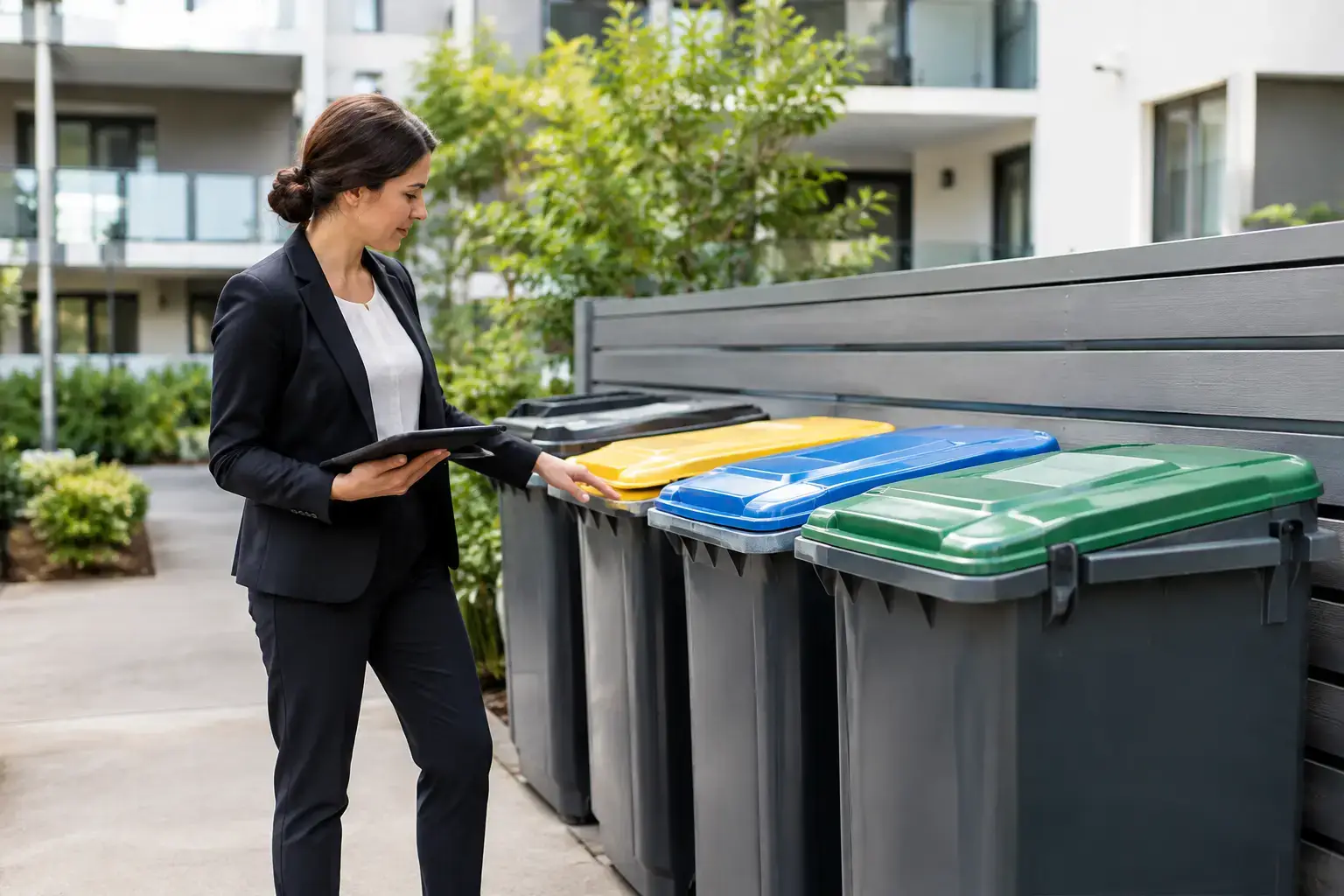
A tenant moves out on Friday. Painters arrive Monday, flooring is scheduled for Tuesday, and the old furniture, damaged drywall, carpet, and boxes are still sitting in the unit. Property manager waste bin solutions are not just about getting debris off-site. They are about keeping a turnover moving, protecting the property, and avoiding the last-minute scramble that delays the next tenant or contractor.
For single-family rentals, multi-unit buildings, condominium communities, and commercial properties, the right bin plan makes cleanup predictable. The wrong plan can leave a bin overflowing, block access, create avoidable disposal charges, or take up valuable parking space longer than necessary.
Why Property Waste Gets Complicated Fast
Property cleanup rarely comes in one neat waste stream. A unit turnover may include household junk, mattresses, shelving, old flooring, small appliances, and renovation debris. A landscaping project may generate brush, soil, and concrete edging. A repair after water damage can involve drywall, insulation, flooring, and demolition material.
Those materials do not always belong in the same container. Clean fill, concrete, asphalt, general waste, and mixed renovation debris can have different disposal requirements and pricing. Separating material at the start is usually easier than sorting it after a bin is loaded.
Timing adds another layer. A bin delivered too early can occupy a driveway or parking area while the project is still waiting to begin. A bin delivered too late can force crews to pile debris in a garage, hallway, or loading area. Property managers need a rental partner that can work around trades, tenant schedules, and access restrictions without turning waste removal into another project to manage.
Property Manager Waste Bin Solutions Start With the Job
The best bin is not always the biggest one. It is the one that fits the material, the available space, and the pace of the work.
For a small unit cleanout, a 5-yard bin may be enough for bagged trash, light household items, and minor repair debris. It is a practical choice when access is limited or when a larger container would take up too much room. For a full apartment turnover with flooring removal, cabinetry, fixtures, and bulky items, a mid-size bin often provides more breathing room.
Larger 20- or 25-yard bins are better suited to major renovations, demolition work, estate cleanouts, or multiple-unit projects. They can reduce the need for extra pickups, but they also require enough placement space and clear access for the delivery truck. If the work is spread over several weeks, a smaller bin with scheduled swaps may be more efficient than keeping one large container on-site for the entire project.
Think in Waste Streams, Not Just Volume
Before booking, make a quick list of what will be thrown out. General waste bins work well for mixed household and renovation debris, while clean fill bins are intended for uncontaminated soil, brick, stone, and similar material. Concrete and asphalt should be kept separate when possible because these heavy materials are handled differently from regular construction waste.
A mixed bin offers convenience, especially during turnovers where several materials are involved. The trade-off is that certain items may still be restricted, and heavy materials can affect how much the bin can safely carry. When in doubt, describe the project clearly before delivery. A straightforward quote based on the actual materials is better than guessing and dealing with a surprise later.
Plan Delivery Around Access and Occupancy
A bin only helps if it can be placed where crews can use it safely. For a detached rental home, the driveway is often the simplest option. At a townhouse complex, apartment building, or commercial site, placement may require more coordination with a condominium board, maintenance team, neighboring tenants, or parking management.
Confirm the delivery area before booking. Check for low branches, overhead wires, narrow driveways, parked vehicles, gates, and tight turning areas. If the bin needs to sit in a visitor space or loading zone, make sure the necessary approval is in place first. A few minutes of planning can prevent a failed delivery or a bin placed farther from the work area than anyone expected.
Driveway protection should also be part of the conversation. Roll-off bins are heavy, particularly once they are loaded with concrete, roofing, or wet construction debris. Protective boards or other precautions help reduce the risk of surface damage. Forever Green Bin Rental includes driveway protection with every rental, which gives property managers one less detail to arrange.
Keep Turnovers Moving Without Overbooking
For most property managers, the goal is not to have a bin on-site for as long as possible. The goal is to have it there exactly when it is needed.
A practical turnover schedule starts with the cleanout, then moves into demolition and repair work, followed by final pickup before cleaning and staging begin. If contractors are working in phases, ask whether a swap or pickup can be scheduled between stages. Removing the first load of debris before finishing crews arrive creates more room to work and helps keep common areas clear.
There are times when a longer rental makes sense. A multi-unit renovation, ongoing maintenance project, or vacant-property cleanup may produce debris over several days. In those cases, it helps to set clear expectations with trades about what belongs in the bin and what does not. Without that direction, a container can quickly fill with materials from unrelated work or unauthorized dumping.
Protect the Property and the People Around It
Waste management is part of site safety. Debris left beside a bin can block walkways, create trip hazards, and make a property look poorly managed. An overloaded container can be unsafe to transport and may require material to be removed before pickup.
Ask crews to load material evenly and keep debris below the top edge of the bin. Long items should be placed carefully so they do not stick out. Cardboard, light packaging, and loose insulation can blow around if they are not contained. For occupied buildings, let tenants know where the bin is located, how long it will be there, and whether parking or access will be affected.
It also pays to control what goes into the container. Paint, chemicals, propane tanks, tires, batteries, and other restricted materials may require separate disposal. Electronics, appliances, and recyclable materials may have better disposal options depending on the item and local facility rules. Clear instructions protect the property manager from delays and keep the pickup process simple.
Common Mistakes That Raise Cleanup Costs
The most common mistake is underestimating the amount of debris. A kitchen renovation can create far more waste than homeowners expect once cabinets, countertops, drywall, packaging, and old flooring are added together. Ordering too small a bin may lead to an extra haul or an overloaded container.
The opposite mistake is paying for more capacity than the job needs. A small repair project does not always need a large roll-off bin, especially when the site has limited space. Match the size to the scope, then leave a reasonable margin for unexpected debris.
Mixing heavy material into a general waste bin is another issue. A few pieces of concrete may be manageable, but a bin full of masonry, soil, or asphalt should be planned as a dedicated heavy-material load. Material separation can feel like an extra step, yet it often prevents disposal problems and keeps costs easier to predict.
Finally, do not wait until the last day to arrange pickup. If the next trade is scheduled to start, the bin should be removed before their materials and equipment arrive. Cleanup is most efficient when it is built into the project schedule, not treated as an afterthought.
Build a Repeatable Bin Plan for Every Property
Property managers who oversee recurring turnovers benefit from a simple repeatable process: estimate the waste, identify any heavy or restricted material, confirm placement, book delivery, and schedule pickup around the next phase of work. Keep notes on which bin sizes worked for similar units and which projects generated more debris than expected. Over time, those records make quoting and scheduling faster.
A local bin provider should be easy to reach when a move-out date changes or a contractor finds more demolition than planned. The right support is practical: clear answers, a suitable bin, protected placement, and dependable pickup. When waste removal is handled well, the property is ready for its next use sooner - and that is the result every manager is working toward.