
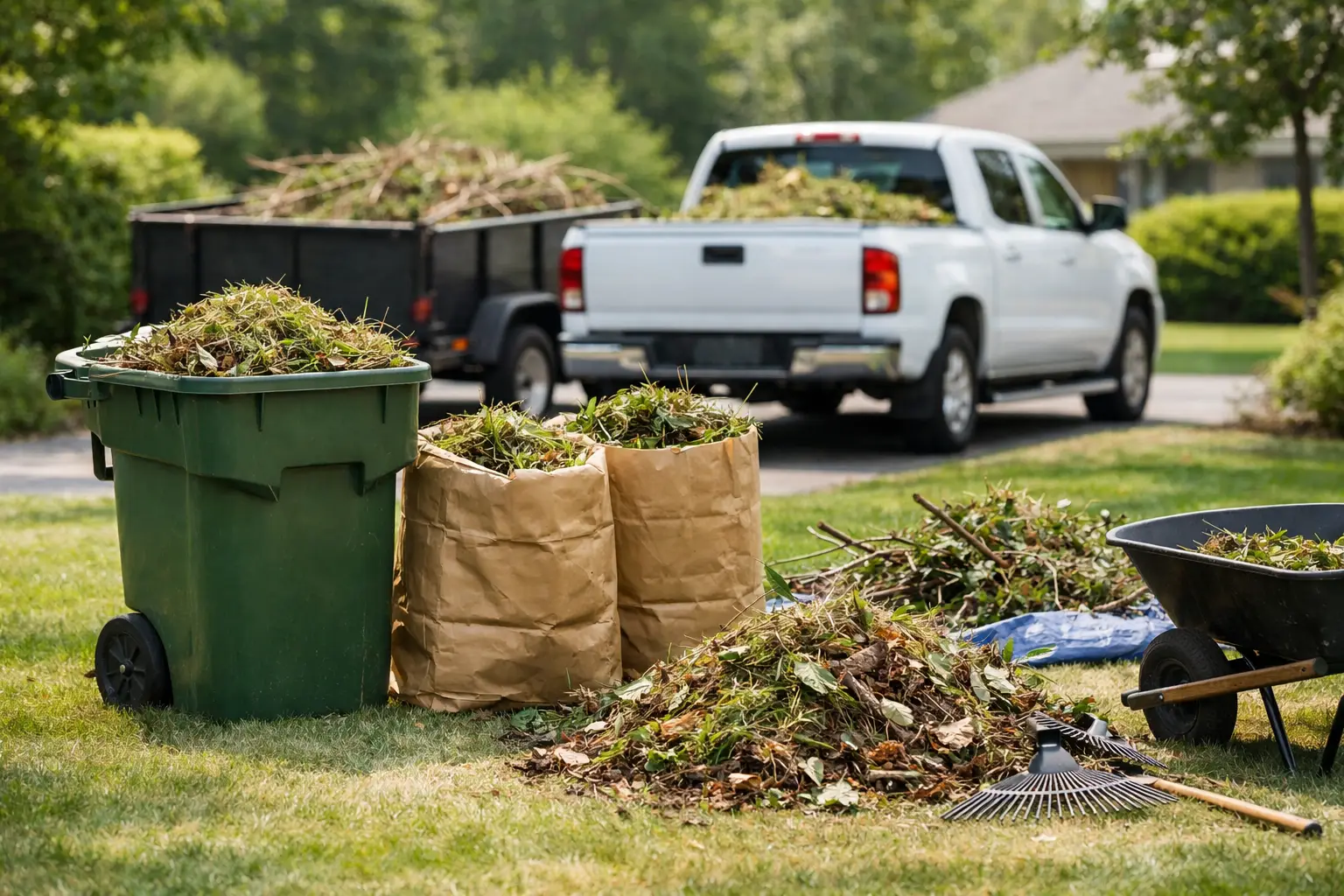
A weekend of pruning can leave a driveway packed with branches, bags of leaves, and more grass clippings than expected. Knowing how to dispose yard waste before you start makes the cleanup faster, keeps recyclable organics out of the trash, and prevents an avoidable problem at pickup time.
For a few bags of leaves, your local yard waste program may be all you need. For a storm cleanup, a full property refresh, or a landscaping project tied to renovation work, a larger disposal plan can save multiple trips and keep the site under control. The right option depends on what you have, how much there is, and whether the material is clean and separated.
Start by Sorting Your Yard Waste
“Yard waste” is a broad term, but disposal rules often treat materials differently. Separate organic material from construction debris, household garbage, soil, and bulky items before you load bags or schedule a bin.
Common organic yard waste includes leaves, grass clippings, weeds, small branches, brush, garden trimmings, pumpkins, and non-treated natural wood. These materials can often be composted, collected through a seasonal municipal program, or taken to an approved composting or transfer facility.
The material that causes the most confusion is wood. Clean branches and untreated brush may be accepted as yard waste, but pressure-treated lumber, painted wood, plywood, fencing, railroad ties, and manufactured wood products are not the same thing. They may need to go into a general waste stream instead. The same applies to tree stumps, which can be too large or heavy for curbside collection and may have different processing requirements.
Keep rocks, concrete, bricks, soil, sod, plastic planters, landscape fabric, hoses, metal edging, and pet waste out of organic yard waste unless your local facility specifically allows them. A bag of leaves mixed with a few pieces of plastic may be rejected, and a bin loaded with mixed materials can require different handling than a clean green-waste load.
Use the Best Disposal Method for the Job
There is no single best answer for every yard. A homeowner clearing flower beds has different needs than a contractor removing brush after a grading project. Start with the option that fits the volume and condition of the material.
Compost What You Can Use at Home
Composting is a practical choice for small, ongoing amounts of leaves, grass clippings, plant trimmings, and untreated garden waste. It reduces the number of bags at the curb and creates useful material for garden beds over time.
Balance green materials, such as fresh grass and vegetable scraps, with brown materials like dry leaves and small twigs. Avoid adding diseased plants, invasive weeds with mature seeds, meat, dairy, pet waste, or chemically treated wood. Those materials can create odors, attract pests, or spread problems back into your garden.
Composting works best when you have the space and plan to maintain the pile. It is not always the right answer after a major cleanup. A large amount of brush or several mature shrubs can overwhelm a backyard compost setup quickly.
Use Curbside Yard Waste Collection
Many communities offer seasonal curbside collection for leaves, brush, and garden debris. This is often the most convenient and cost-effective route for normal weekly or seasonal yard work.
Check your local collection calendar before putting anything out. Programs can set limits on bag counts, bundle size, branch diameter, container type, and pickup dates. Paper yard-waste bags are commonly required because they can be processed with the material, while plastic bags may not be accepted. Branches may need to be tied into manageable bundles rather than placed loose at the curb.
Do not assume grass clippings are always accepted. Some communities encourage residents to mulch clippings back into the lawn instead, while others allow them in yard-waste bags. A quick check of local rules is better than leaving bags out for a missed pickup.
Take Small Loads to a Drop-Off Facility
A local compost site, recycling depot, or transfer station can be useful when you have more material than curbside collection allows but not enough to justify a bin. This option gives you flexibility after storms or landscaping work, especially if you can transport brush safely in a truck or trailer.
Call ahead or review the facility’s accepted materials, fees, and load preparation rules. Some sites accept clean brush but not stumps. Others separate leaves, soil, sod, and wood waste. Arriving with a sorted load can make the visit quicker and may reduce disposal costs.
Secure every load before driving. Loose branches, bags, and tarps can become a road hazard, and unsecured debris may lead to a rejected load or a fine.
How to Dispose Yard Waste From Large Cleanups
A bin rental becomes the practical option when the waste is too much for your curbside limit, too bulky for your vehicle, or connected to a larger property project. Examples include removing overgrown hedges, clearing a backyard before a new patio, cleaning up after tree work, or handling debris from a renovation where yard waste and general junk are both present.
The key is to book the right type of bin and describe the material accurately. Clean brush, branches, and untreated wood may be handled differently from mixed household debris. Dirt, concrete, asphalt, and clean fill also require their own container in many cases because weight and processing rules are different.
A bin is not automatically a place for everything outside. Never load hazardous materials such as fuel, paint, pesticides, herbicides, propane tanks, batteries, chemicals, or asbestos-containing materials. These need designated disposal programs. Avoid tossing e-waste, tires, appliances, and mattresses into a bin unless you have confirmed that they are accepted and understand any additional fees.
If you are combining yard debris with renovation material, tell the rental provider before delivery. That conversation helps prevent a bin from being loaded with materials that cannot be processed together. It also helps you choose a size that fits the project without paying for more container space than you need.
For many residential cleanups, a smaller bin is enough for bagged debris, pruning waste, and unwanted outdoor items. A larger roll-off bin may make more sense for major brush removal, deck demolition, fencing replacement, or a renovation that produces both exterior and interior debris. Do not fill a bin above its rim. Overfilled containers may be unsafe to transport and can delay pickup.
Keep Yard Waste Clean and Easy to Handle
A little preparation makes every disposal option easier. Keep leaves and grass dry when possible, since wet bags become heavy and tear easily. Cut branches into lengths that meet local or bin-provider requirements. Remove wire, rope, plastic decorations, and soil from root balls where practical.
For tree debris, consider whether you want to keep some material on site. Wood chips can work as mulch around trees and pathways, while larger logs may be useful for firewood if the wood is suitable and properly seasoned. This only makes sense if you have room to store it and a real use for it. Keeping piles “just in case” can create an eyesore, shelter pests, and make the next cleanup harder.
Be careful with invasive plants and diseased vegetation. Composting or leaving them in open piles may not be appropriate. Local collection guidance can help determine whether those materials need to be bagged, taken to a specific facility, or disposed of as regular waste.
Plan Ahead for Seasonal and Storm Cleanup
Spring and fall create the biggest rush for yard waste disposal. If you wait until the last weekend of a cleanup window, collection limits and bin availability can become a problem. Schedule major pruning, landscaping, and cleanout work with disposal in mind, especially if you are coordinating contractors or preparing a property for sale.
After a storm, prioritize safety over speed. Do not cut or move branches near power lines. Keep broken limbs away from sidewalks and driveways where they could cause injuries, then arrange removal once the area is safe. Separate manageable brush from damaged fencing, roofing, or other construction debris so each material can go where it belongs.
For homeowners and contractors in Newmarket and nearby communities, Forever Green Bin Rental can help make larger cleanup projects more manageable with local delivery, straightforward guidance, and driveway protection included with every rental. The best time to decide on disposal is before the first branch hits the ground - then the work stays focused on improving the property, not figuring out what to do with the pile afterward.