
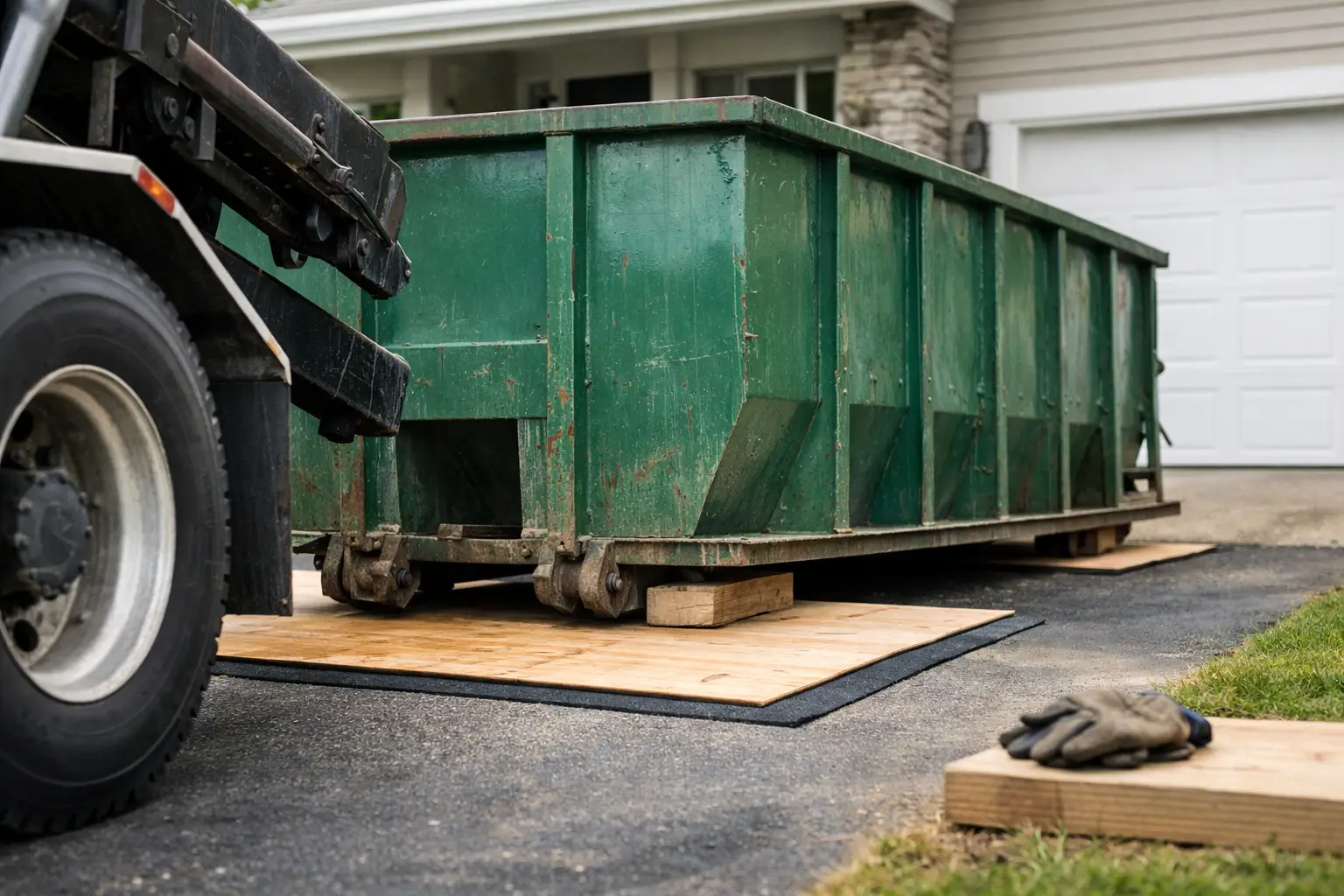
A dumpster makes cleanup easier right up until it leaves a scrape, crack, or oil mark across your driveway. If you're wondering how to protect driveway from dumpster placement during a renovation, cleanout, or roofing job, the good news is that most damage is preventable. It usually comes down to weight, surface condition, where the bin sits, and whether the rental company takes driveway protection seriously from the start.
For homeowners, that matters because a driveway is not just a place to park. It is one of the most visible and expensive hard surfaces on the property. For contractors and property managers, it matters for a different reason. A damaged driveway can slow down a job, create complaints, and add costs nobody planned for.
Why dumpsters damage driveways in the first place
A roll-off dumpster puts a lot of concentrated weight onto a relatively small contact area. Even an empty bin is heavy. Once you add shingles, drywall, concrete, soil, or demolition debris, the load increases fast. The pressure is even greater at the points where the steel rollers or rails rest on the driveway.
That does not automatically mean damage will happen. It depends on the driveway material, its age, the weather, and the type of debris going into the bin. A newer, thicker concrete driveway may handle a light household cleanout without an issue. An older asphalt driveway in hot weather is much more likely to mark, sink, or gouge under the same bin.
The biggest risks are surface scratching, cracking, chipping at edges, depressions in asphalt, and stains from rust or debris. Delivery and pickup can also cause damage if the truck has limited space to maneuver or if the bin shifts while being set down.
How to protect driveway from dumpster weight and contact points
The most effective way to protect a driveway is to create a buffer between the dumpster and the surface below it. In practice, that usually means placing wooden boards or similar protective material under the contact points where the bin will rest.
The boards spread the weight over a wider area and reduce direct metal-on-concrete or metal-on-asphalt contact. That helps prevent scrapes and lowers the chance of pressure damage. Thick plywood can help in some situations, but solid boards are generally better because they are less likely to flex or crush under load.
Placement matters just as much as the material. The protective boards need to sit exactly where the dumpster rails or rollers will land, not just somewhere nearby. If the boards shift during delivery, they do not do much good. That is why experienced drivers and local bin rental companies tend to get better results than a rushed drop-off with little site planning.
At Forever Green Bin Rental, driveway protection is included with every rental because it is one of those details that should not be treated like an extra.
Choose the right spot before the dumpster arrives
A bad placement choice creates problems even if you use boards. Before delivery day, look at the driveway with weight and access in mind.
Flat, level ground is best. A sloped driveway adds pressure in uneven ways and increases the chance of shifting during drop-off or pickup. If one section of the driveway already has cracks, soft spots, or crumbling edges, avoid it. The weakest area is usually the one that fails first.
You also want enough straight clearance for the truck to set the bin down smoothly. Tight turns, low branches, parked vehicles, basketball nets, and garage overhangs can force awkward placement. When the driver has room to work, the dumpster is more likely to be lowered carefully and evenly.
If the bin is going on asphalt, be extra cautious in summer. Heat softens asphalt, and heavy loads can leave impressions even with protection underneath. In those cases, a lighter fill level, shorter rental period, or different location may be the safer choice.
Concrete vs. asphalt driveways
Concrete is usually more resistant to surface deformation, but it can still chip, crack, or stain. Older concrete with hairline cracking is more vulnerable than it looks.
Asphalt is more flexible, which can help in some cases, but it is also more likely to dent or rut under a heavy roll-off container. If you are loading dense debris like brick, soil, concrete, or roofing material, asphalt requires more caution.
Match the bin size to the job
One common mistake is renting a larger bin than the driveway and debris really call for. Bigger bins are useful, but they also bring more empty weight and make it easier to overload the container.
For a garage cleanout or small remodeling job, a compact bin is often easier on the driveway and easier to place. Large bins make more sense for full-home cleanouts, demolition, or major renovation work, but only if the surface can handle the load and the material belongs in that size container.
This is where guidance from the rental company matters. The right recommendation is not only about volume. It is about material type, total weight, and where the bin is going. A driveway-safe choice is sometimes a smaller bin emptied more strategically rather than one oversized container packed to the limit.
Load the dumpster in a way that protects the driveway
Even with protection underneath, poor loading practices can turn a manageable setup into a driveway problem.
Heavy material should be loaded evenly. If all the weight ends up on one side or one end of the dumpster, the pressure on the driveway becomes uneven too. That can increase the chance of cracking or indentation, especially during pickup when the truck lifts and angles the bin.
You also need to know which materials get heavy fast. Shingles, dirt, concrete, brick, and wet wood add up quickly. A bin that looks only half full may already be carrying enough weight to stress the surface below. For dense debris, it is often smarter to use a smaller specialty bin rather than a large mixed-waste container filled past a safe weight.
Try to keep debris inside the bin and avoid dropping heavy chunks from a height. That protects the container, reduces shifting, and helps prevent debris from bouncing out and damaging the driveway surface around it.
Timing and weather make a difference
People do not always think about timing, but the season can affect driveway protection as much as the bin itself.
In hot weather, asphalt is softer and more prone to impressions. In freeze-thaw conditions, existing cracks in concrete can widen under load. After heavy rain, the ground beside the driveway may be soft, which matters if the truck needs to angle near the edge during delivery.
If your driveway already has visible wear, schedule the dumpster for the shortest practical window and have the debris ready to go. The less time a heavy container sits in one place, the lower the chance of pressure marks or staining.
When a permit or street placement may be better
Sometimes the safest answer is not the driveway at all. If the driveway is narrow, steep, newly paved, or already damaged, street placement may be worth considering where local rules allow it. That depends on municipal requirements, traffic conditions, and permit needs, so it is not always the easiest option. But for some properties, it is the better trade-off.
Ask the rental company the right questions
If you want to know how to protect driveway from dumpster damage, part of the answer is choosing a company that already has a process for it.
Ask whether driveway protection is included, what materials they use under the bin, and whether the driver will assess placement on arrival. Ask how they handle asphalt driveways, older concrete, or heavy materials like clean fill and roofing debris. If the answers are vague, that tells you something.
A good local company should be able to explain what type of bin fits the job, where it should go, and what limitations to watch for. That kind of practical guidance matters more than a low headline price if it helps you avoid a repair afterward.
A few warning signs to watch before delivery
Take a quick walk around the driveway before the bin arrives. Look for spider cracks, loose edges, sinking areas, fresh sealcoating, or surface patches that may not hold up under concentrated weight. If you see them, mention them before delivery, not after.
It also helps to move vehicles, trailers, and other obstacles early so the driver can place the dumpster in the safest position without rushing. Good access lowers the risk of both property damage and frustrating delays.
Protecting a driveway is usually not about one magic trick. It is about a few smart decisions made before the bin hits the ground: proper placement, proper protection, the right container, and realistic loading. When those pieces are handled well, the cleanup stays focused on your project instead of the surface underneath it.