A dumpster can make a basement cleanout, renovation, or demolition job move much faster - until an item in the bin cannot be accepted. The easiest way to avoid prohibited dumpster items is to think about disposal before loading starts, not when the bin is full and pickup is scheduled.
For homeowners and contractors, this is less about memorizing a long list of rules and more about separating materials that require a different disposal route. A few minutes of planning can prevent extra fees, delayed removal, and the hassle of unloading a bin after the fact.
Why prohibited items create problems
Roll-off bins are designed for specific waste streams. General waste, clean fill, concrete, asphalt, and mixed construction debris may all be handled differently once they leave your driveway or job site. Disposal facilities inspect incoming loads, and they may reject material that creates a safety risk, contaminates recyclable material, or requires special processing.
That means a prohibited item is not just an inconvenience for the disposal company. It can hold up the truck, affect where the entire load can be taken, and add handling costs. When you book the right bin and load it properly, your pickup stays simple and your project stays on schedule.
Rules can vary by disposal facility and local regulations. If you are unsure about an item, ask before placing it in the bin. A quick question is much easier than sorting through debris on pickup day.
How to avoid prohibited dumpster items before delivery
Start by looking at your project rather than the pile. A kitchen renovation may produce drywall, lumber, cabinets, flooring, and fixtures. A landscaping project may produce soil, sod, brush, concrete, and old patio stones. These materials do not always belong in the same container.
Make three basic groups before your bin arrives: accepted project debris, recyclable or reusable items, and materials that need special disposal. Keep the last group off to the side in a clearly marked area. This approach is especially useful when several people are working on a cleanup, since the wrong item often gets tossed in simply because it was nearby.
For larger jobs, tell your crew or family exactly what the bin is for. A sign on the garage wall or near the loading area can help. If the container is intended for concrete only, for example, it should not become a convenient place for lumber, garbage bags, or old paint cans.
Match the bin to the material
The right bin type matters as much as the right bin size. A clean fill bin is intended for clean material such as soil, while concrete and asphalt bins are for heavy, dense debris. A mixed-material bin may work well for many renovation cleanups, but it still has restrictions.
Mixing heavy materials with general waste can create problems even when each material seems acceptable on its own. Concrete, brick, soil, and asphalt add weight quickly. They may require a dedicated container so the load can be transported and processed safely.
When requesting a quote, describe the project honestly. Mention demolition debris, roofing material, soil, concrete, appliances, or anything else that could affect the recommended bin. A local provider can help you choose a practical option before delivery, rather than trying to solve a disposal issue later.
Common items that should stay out of a dumpster
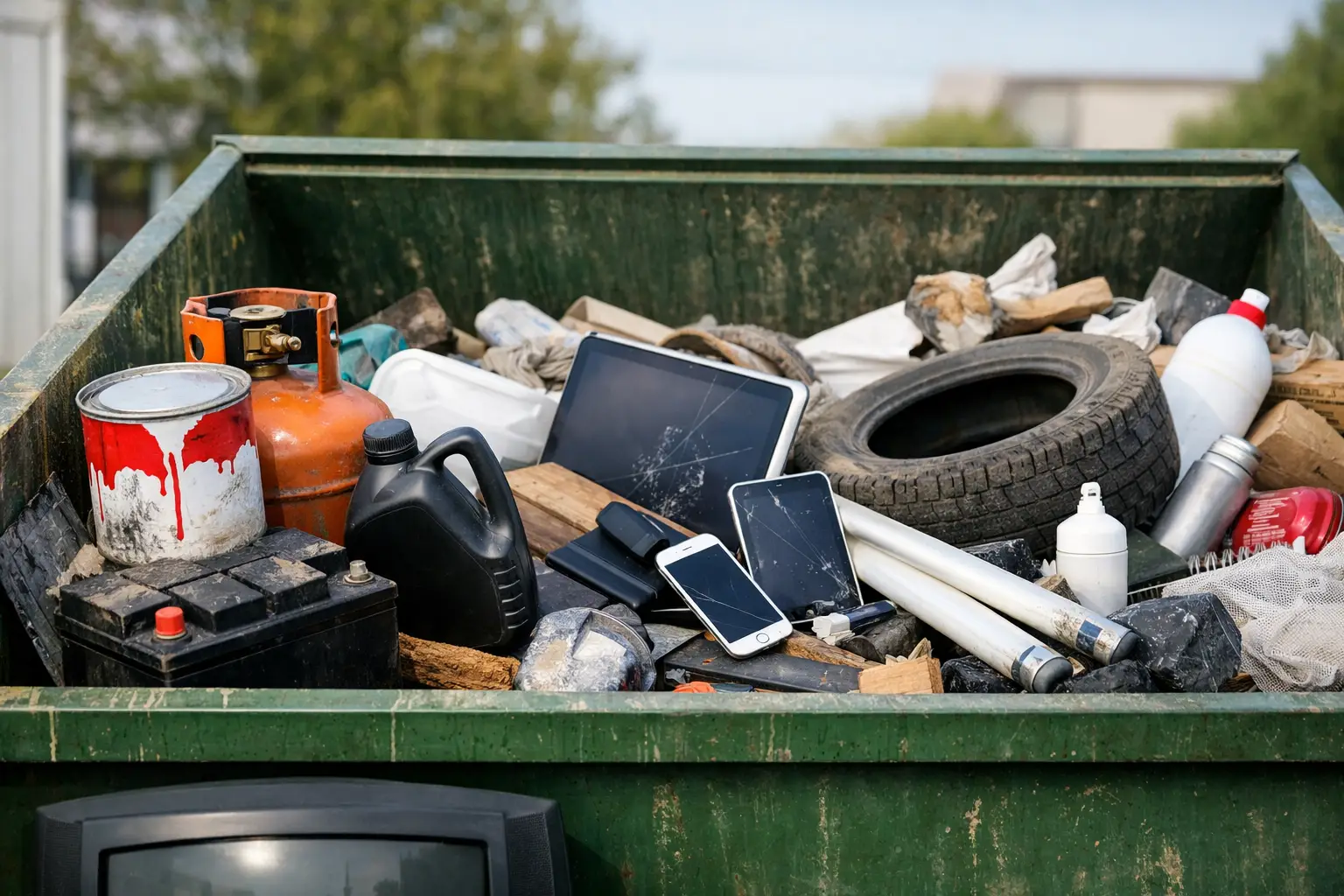
The exact prohibited list depends on the bin type and disposal facility, but certain items commonly require separate handling. These materials may be hazardous, pressurized, liquid, regulated, or difficult to process with ordinary construction and household waste.
- Paint, stains, solvents, fuel, motor oil, antifreeze, and other liquid chemicals
- Propane tanks, gas cylinders, fire extinguishers, ammunition, and fireworks
- Car batteries, household batteries, electronics, fluorescent bulbs, and some appliances
- Tires, medical waste, asbestos-containing materials, and hazardous chemicals
- Refrigerators, freezers, air conditioners, and other equipment that may contain refrigerants
Do not assume an item is acceptable because it fits in the bin. A small container of paint or a single propane tank can create a bigger problem than a large pile of drywall. If it leaks, explodes, contains a regulated chemical, or has a battery or refrigerant system, keep it out until you confirm the proper disposal method.
Paint, chemicals, and liquids
Liquids are a frequent issue because they can spill during loading, transport, or unloading. Partially full paint cans, lawn chemicals, cleaners, pesticides, and automotive fluids should never be hidden inside bags or placed beneath other debris.
Some dried paint may be handled differently than liquid paint, but that depends on the facility and the product. Check first. For liquid materials and household hazardous waste, use the appropriate local collection program or designated facility.
Electronics, appliances, and batteries
Electronics and batteries contain components that often need recycling or controlled processing. Televisions, computers, monitors, printers, and similar items should be separated from renovation debris. The same goes for lithium-ion batteries, which can create a fire risk when damaged or compacted.
Appliances require a closer look. A basic metal item may be accepted in some circumstances, while refrigerators, freezers, air conditioners, and dehumidifiers can require refrigerant removal before disposal. Ask about the specific appliance instead of treating all metal items the same.
Tires, propane tanks, and pressurized items
Tires are commonly handled through dedicated recycling programs, not general waste bins. Propane tanks, aerosol cans, fire extinguishers, and other pressurized containers should also be kept out unless your disposal provider has confirmed a safe, approved option.
These items are not minor exceptions. Compaction equipment and transfer operations can turn them into a safety concern. Set them aside from the beginning so they do not get buried under the rest of the cleanup.
Keep recyclable and reusable materials separate when possible
Avoiding prohibited items is only part of a cleaner load. Separating reusable and recyclable material can reduce waste and make your project easier to manage. Cabinets in good condition, working fixtures, usable doors, and surplus building supplies may have another home instead of going into a dumpster.
Scrap metal, cardboard, clean wood, and clean concrete may also have different disposal or recycling options. Whether separation is worthwhile depends on the size of the project, available space, and the time you have. For a small weekend cleanout, a mixed bin may be the most practical choice. For a major renovation or demolition project, separating materials early can make more sense.
The key is not to overcomplicate a simple job. Focus first on keeping hazardous or restricted items out of the bin. Then consider which materials are easy to reuse, donate, recycle, or place in a dedicated container.
Load the bin safely and leave room for pickup
Proper loading helps prevent problems even with accepted material. Place heavier debris on the bottom and distribute weight across the container. Break down bulky items when practical, and keep all materials below the top rail. Overfilled bins may not be safe to tarp or transport.
Avoid piling debris against the doors if your bin has them. Load through the doors when possible, then fill toward the front. Do not place materials outside the bin and expect the driver to collect them unless that has been arranged in advance.
If you find a questionable item after loading has started, remove it right away. Waiting until the container is full can turn a simple correction into a time-consuming sorting job.
Ask before you load when the item is unclear
Some items fall into a gray area. Mattresses, carpeting, roofing shingles, insulation, treated wood, large appliances, and bulky furniture may be accepted under certain conditions but may also affect disposal requirements or pricing. The answer depends on the material, bin type, and local facility rules.
Forever Green Bin Rental helps homeowners and contractors in York Region and South Simcoe match their debris to the right bin before the job begins. Giving a clear description of what you plan to dispose of helps avoid surprises and keeps delivery and pickup moving as planned.
A dumpster should take work off your plate, not create a last-minute disposal problem. Set aside anything hazardous, pressurized, electronic, liquid, or uncertain, then confirm it before loading. That small step protects your property, your timeline, and everyone handling the load.