
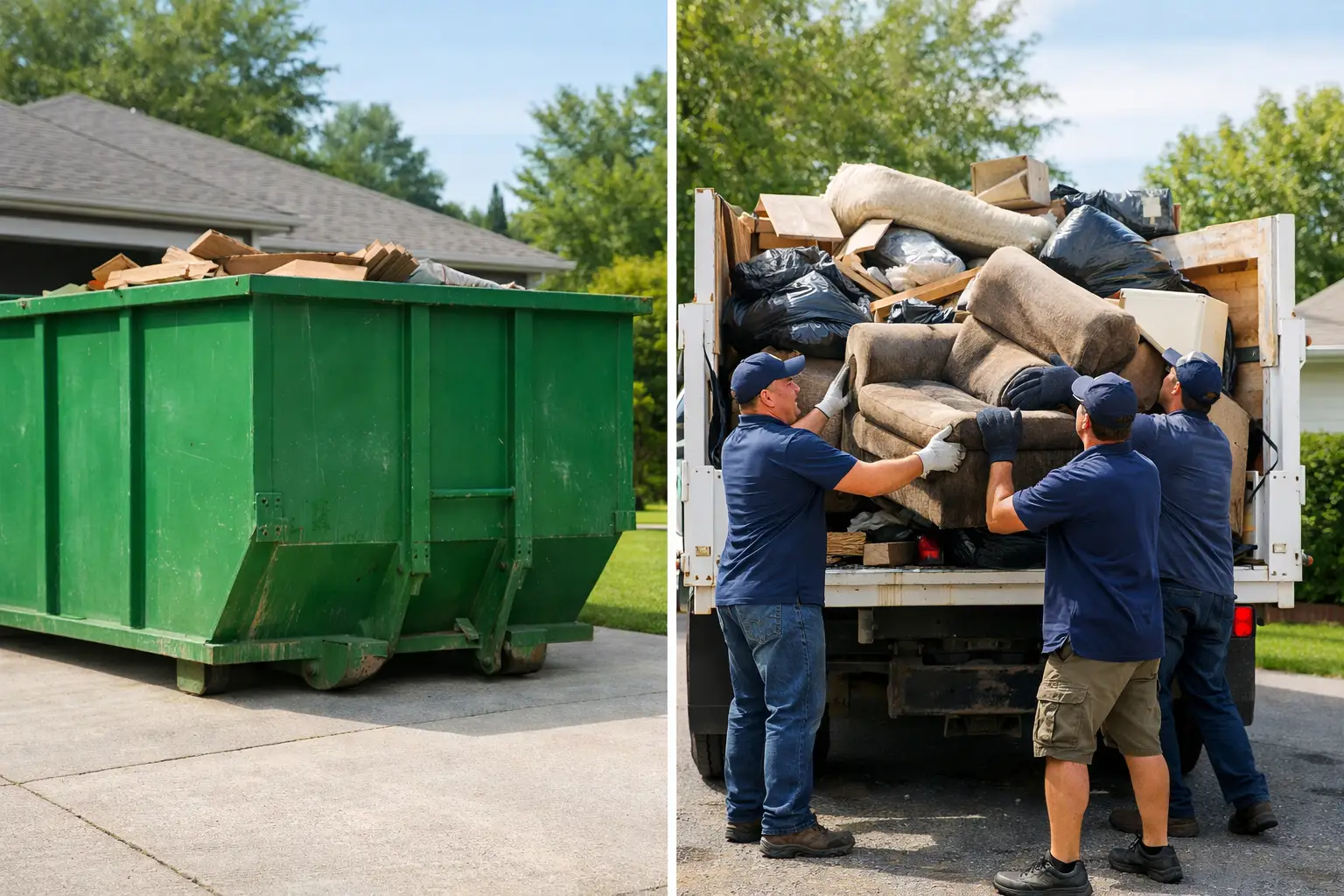
If you are staring at a garage full of junk, a torn-out bathroom, or a pile of demo debris, the choice between dumpster rental versus junk removal changes how the whole job goes. One option gives you time and control. The other gives you labor and speed. The best fit depends on what you are throwing out, how fast the work is moving, and whether you want to do the loading yourself.
For many homeowners and contractors, this decision gets framed as price alone. That is usually where people get tripped up. The cheaper option on paper can become the more expensive one once you factor in labor, scheduling, repeat pickups, or the need to keep a project moving over several days.
Dumpster rental versus junk removal: the real difference
A dumpster rental gives you a bin delivered to your property for a set period. You load it on your own schedule, and it gets picked up when you are done. This works well when cleanup happens over time, like a basement cleanout, roofing project, kitchen remodel, yard overhaul, or ongoing renovation.
Junk removal is a crew-based service. A team arrives, carries the material out, loads it into a truck, and leaves with it the same day. This is usually a better fit when you want everything gone at once and do not want to handle the lifting.
That difference sounds simple, but it affects almost everything else. With a bin, you are paying for container space and flexibility. With junk removal, you are paying for labor, truck space, and a shorter service window.
When a dumpster rental makes more sense
If the cleanup is tied to a project rather than a single pile of junk, a dumpster usually gives you more value. Renovations are the clearest example. Drywall, flooring, trim, cabinetry, shingles, wood, packaging, and general debris tend to build up in stages. You do not want to stop work every time a stack gets too big.
A bin on site lets you keep the area cleaner and safer as the job moves forward. That matters for homeowners doing DIY work on weekends and for contractors trying to avoid cluttered work zones. Instead of stacking waste in the driveway or garage, you toss it as you go.
Dumpster rental also makes sense when the volume is hard to estimate on day one. Maybe you are cleaning out an estate and do not know what is buried in the basement. Maybe a deck removal turns into extra fence debris and old patio material. A container gives you room to work through the mess without calling for another pickup every few hours.
There is also a practical advantage when you need material-specific disposal. Some projects involve concrete, asphalt, clean fill, or mixed debris. Matching the right bin to the right material can help keep disposal efficient and avoid issues that come from mixing waste streams the wrong way.
When junk removal is the better choice
Junk removal is often the better option when labor is the real problem. If you have a couch in the basement, old appliances in the garage, and a few bulky items that need to disappear today, a crew can handle the heavy lifting and save you the effort.
It is also useful when space is tight or the amount of junk is relatively small. If you only have a truckload or two and want it gone in one visit, renting a full bin may be more than you need. The same goes for situations where the material is already gathered and accessible, such as curbside furniture, office cleanouts, or a few leftover items after a move.
For some people, convenience is the deciding factor. If you are managing a property from a distance, helping an elderly relative, or simply do not have the time or physical ability to load a bin, junk removal can be worth the higher labor cost.
Cost depends on more than the quote
This is where dumpster rental versus junk removal gets more nuanced. Junk removal can look cheaper for a very small load, especially if it is a quick in-and-out job. But once volume increases, pricing tends to climb fast because you are paying for truck capacity and labor.
Dumpster rental is often more cost-effective for medium to large cleanups, especially if debris is generated over several days. You are not paying a crew to stand there while the project unfolds. You are paying for a container, delivery, pickup, and the disposal structure tied to that bin.
The mistake is comparing the two without thinking about the job itself. A single-day furniture pickup is not the same as a week-long bathroom demolition. If you choose junk removal for an active remodel, you may end up scheduling multiple visits. If you choose a bin for one recliner and a broken treadmill, you may be paying for more capacity than you need.
Timing matters more than people expect
Many cleanup decisions come down to schedule. If you need debris gone now and it is already piled up, junk removal has an obvious advantage. It is designed for immediate clearing.
But if your project stretches across a few days or a couple of weekends, a dumpster is usually easier to live with. You can load in phases, keep the site organized, and avoid waiting until the end when waste has already taken over the space.
This is especially true for remodeling work. Demo starts fast, but debris keeps coming. Old fixtures come out first, then drywall scraps, then flooring, then packaging from new materials. A container on site keeps that flow under control.
Property protection and access are part of the decision
Not every property handles waste removal the same way. A junk removal truck needs access for a crew to carry items out and load quickly. A dumpster rental needs enough room for safe placement and pickup. The right provider should help you think through driveway space, surface protection, and the best location for the bin.
This is where a local company often has an advantage. They know the neighborhood layouts, tighter suburban driveways, and the everyday concerns that matter to homeowners. Driveway protection should not be an afterthought. It should be built into the service.
For contractors and property managers, access planning matters even more. You need the bin where the crew can use it without blocking the site or slowing down deliveries. A well-placed container saves steps all day long.
How to choose between dumpster rental versus junk removal
Start with the type of material. If you are dealing with construction debris, roofing waste, yard material, or a full cleanout, a dumpster is often the stronger fit. If you have a few bulky household items and want hands-off service, junk removal is usually easier.
Then look at volume. Small and contained jobs often favor junk removal. Larger or expanding jobs usually favor a bin.
Next, be honest about labor. If you have the help, time, and ability to load waste yourself, renting a dumpster gives you more flexibility. If you want someone else to carry everything out, junk removal earns its keep.
Finally, consider pace. One-time purge or ongoing project? That question alone will point most people in the right direction.
Common scenarios and the smarter fit
For a garage cleanout with old shelving, boxes, broken tools, and general clutter, either option can work. If you want it gone in one day and do not want to lift, junk removal is fine. If you are sorting over a weekend and know more stuff will be added as you go, a small bin is usually better.
For a kitchen renovation, dumpster rental is usually the clear choice. Cabinets, drywall, flooring, counters, and packaging build up too quickly for one pickup to stay practical.
For an estate cleanout, it depends on the pace and the people involved. Families sorting sentimental items often benefit from a bin because the process takes time. If the property has already been sorted and only disposal remains, junk removal may be enough.
For concrete, asphalt, soil, or heavy material, a dedicated bin is often the safer and more efficient route. Those jobs require the right container, not just open truck space.
At Forever Green Bin Rental, this is the kind of decision we help people make every day - not by pushing the biggest bin, but by matching the service to the actual cleanup.
The right choice should make your project easier, not just remove waste. If you are still deciding, think less about which service sounds better and more about how the cleanup will actually happen once the work starts.