
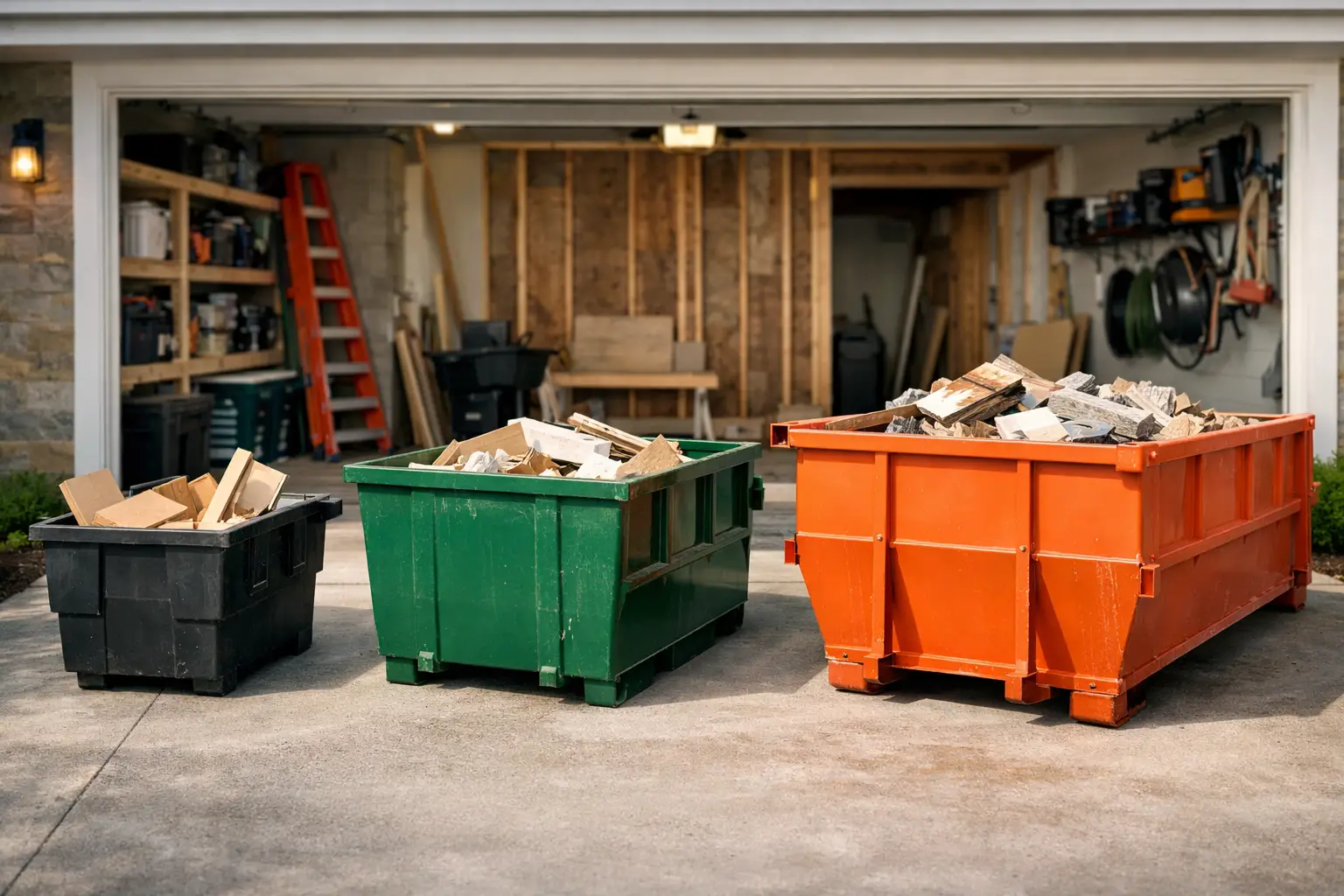
A garage renovation creates waste in layers. First come the old shelves, broken storage cabinets, and boxes that have not been opened in years. Then there are drywall scraps, lumber offcuts, flooring, insulation, and old fixtures. Choosing the best bins for garage renovations means planning for the full project, not just the pile you can see on day one.
A bin that is too small can slow the job down and leave debris stacked in the driveway. A bin that is too large can be more capacity than a simple refresh requires. The right choice comes down to the size of the garage, the scope of the renovation, the materials being removed, and where the container will be placed.
Start With the Type of Garage Project
Before choosing a bin size, look at what the renovation actually involves. A one-car garage organization project has very different disposal needs than a full garage conversion, workshop buildout, or teardown of a damaged interior.
For a basic cleanout, the waste is usually light but bulky. Cardboard, old plastic storage totes, shelving, lawn equipment, household items, and worn-out furniture can take up a surprising amount of room. In this situation, a smaller bin is often a practical fit because the materials are not especially heavy.
A renovation that includes new walls, insulation, drywall, flooring, or cabinetry creates a mixed load. This is where homeowners and contractors need enough room for bulky construction debris while keeping weight in mind. If the project includes demolition, the debris volume can rise quickly once wall coverings, framing, and old work benches start coming out.
Concrete floors, asphalt, brick, and clean soil are a separate decision. These materials are extremely heavy, even when the pile looks manageable. They generally belong in a dedicated clean fill, concrete, or asphalt bin rather than a mixed waste container. Separating heavy material helps ensure the load can be hauled safely and handled properly.
Best Bins for Garage Renovations, by Scope
Bin sizes are measured in cubic yards, which refers to volume rather than weight. A quick visual estimate helps, but it is better to leave some room than to assume debris will pack down perfectly.
Small cleanouts and garage organization
A 5-yard bin is often the right starting point for a one-car garage cleanout, a storage purge, or the removal of a few large items. It works well for old shelving, boxes, small cabinets, carpet, household clutter, and light renovation debris.
This size is a good choice when you are clearing space before installing wall storage, painting, adding epoxy flooring, or setting up a hobby area. It is also easier to fill gradually over a short DIY project. The trade-off is simple: if the garage is packed from wall to wall or includes large furniture and building materials, a 5-yard bin can fill sooner than expected.
Standard garage remodels
For many two-car garage updates, a mid-size bin is the most practical option. This includes projects with drywall removal, old cabinets, damaged insulation, wood framing, flooring, doors, work benches, and general household waste.
A mid-size container gives a renovation crew room to keep the work area clear without committing to the largest available bin. It is often the sensible middle ground for homeowners replacing garage finishes and contractors completing a standard interior renovation. If you are removing an entire ceiling or several interior walls, it is worth sizing up rather than planning on debris compression to solve the problem.
Full conversions, major demolition, and rebuilds
A large 20- or 25-yard bin is better suited to a major garage renovation. Think garage-to-living-space conversions, extensive demolition, detached garage rebuilds, large workshop renovations, or projects that involve removing substantial amounts of framing, drywall, roofing materials, and bulky fixtures.
Large bins help keep a busy site moving. Contractors do not have to stop work to create another debris pile, and homeowners do not have to make repeated landfill trips with a pickup truck. However, bigger is not automatically better. A large bin should be matched to the available driveway or job-site space, the expected material weight, and the amount of debris the project will actually produce.
Match the Bin to the Material, Not Just the Volume
The biggest mistake in garage cleanup is treating every type of debris the same. A mixed waste bin is designed for many common renovation materials, but certain loads need their own container or require special handling.
General mixed debris may include wood, drywall, carpet, cabinets, plastics, household junk, light metal, and packaging. This is common for garage renovations because most projects produce a combination of old storage items and construction waste.
Clean fill bins are for uncontaminated material such as soil, gravel, brick, or concrete, depending on the accepted load. Concrete and asphalt bins are intended for dense paving and masonry material. Keeping these materials separate is not just about disposal rules. It prevents an overloaded bin, avoids unnecessary sorting, and helps keep the job on schedule.
Paint, chemicals, propane tanks, gasoline, batteries, tires, electronics, and other hazardous materials should not be tossed into a regular renovation bin. Set these items aside early so they do not get buried under debris. If you are unsure about a particular item, ask before loading it. That quick question can prevent a delay at pickup.
Plan for Weight Before the Bin Arrives
Garage debris can be deceptive. A bin full of cardboard and old plastic organizers is mostly a volume issue. A bin filled with wet drywall, old tile, concrete chunks, or lumber is a weight issue as well.
If your project includes heavy materials, keep those materials in a dedicated container when possible. Do not load all the heavy debris on one side of a mixed bin. Spread material evenly and keep the load below the top edge. A bin that is overfilled cannot always be hauled safely, which can turn a straightforward cleanup into an extra step.
Wet weather also changes the math. Drywall, carpet, insulation, and cardboard can absorb water and become heavier. When rain is expected, try to load moisture-sensitive materials promptly and avoid leaving the bin open with lightweight debris that can blow around.
Choose a Placement That Keeps the Renovation Moving
The best bin is only useful if it is placed where your crew can reach it easily. For most residential garage projects, the driveway is the most convenient location. It keeps debris close to the work area and preserves access to the street for delivery and pickup.
Before booking, measure the available space and consider parked vehicles, gates, low-hanging branches, overhead wires, and delivery access. If the garage door will stay open during the project, place the bin where debris can move out efficiently without blocking every path in and out of the home.
Driveway protection matters here. A loaded roll-off bin carries real weight, particularly when it contains renovation materials. Protective boards or other proper measures help reduce direct contact and protect the surface beneath the container. Forever Green Bin Rental includes driveway protection with every rental because cleanup should not create a new repair project.
Avoid the Two Most Common Sizing Errors
The first error is ordering for the visible junk only. Most garages look full because of stored belongings, but renovation work adds new debris after demolition begins. Account for the shelves, wall finishes, flooring, and packaging that will come out later.
The second error is ordering a large mixed bin for heavy materials. A large container may have plenty of space, but concrete, soil, asphalt, and masonry can reach weight limits long before the bin looks full. For those materials, a smaller dedicated heavy-material bin is usually the better choice.
If you are between sizes, consider the project timeline. A weekend cleanout with a defined pile may fit a smaller bin. A renovation that will evolve over several days, especially one involving demolition, often benefits from extra capacity. The goal is not to fill every inch of the bin. The goal is to keep debris out of the garage and the project moving without interruption.
A garage renovation feels more manageable once the waste plan is settled. Set aside heavy or restricted items, estimate debris from every stage of the work, and choose a bin that gives you room to work safely. With the right container waiting in the driveway, the old garage can come out quickly and the new one can start taking shape.