
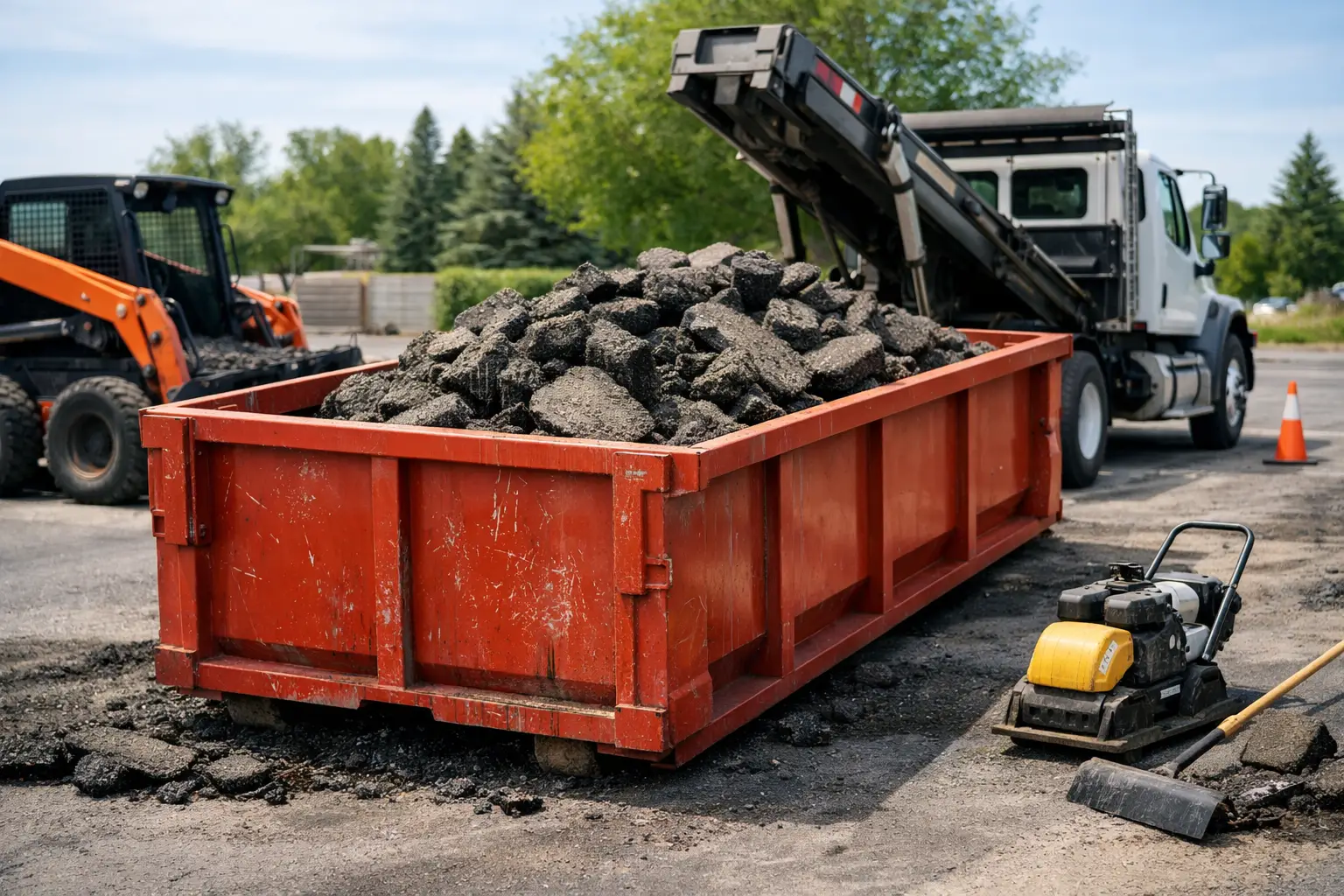
A torn-up driveway can get messy fast. One day the old asphalt is in place, and the next you have broken chunks piled at the curb, taking up space, creating a hazard, and slowing the rest of the job down. That is where asphalt disposal bin rental makes the difference. When you have the right bin on site from the start, cleanup stays controlled, pickup is simpler, and the project keeps moving.
Asphalt is heavy, dense, and not something you want to treat like ordinary renovation debris. Whether you are replacing a residential driveway, removing a parking area, or handling paving work as a contractor, the disposal plan matters just as much as the demolition. A general waste bin is not always the right fit, and mixing asphalt with other materials can create avoidable costs.
Why asphalt disposal needs its own bin
Old asphalt may look straightforward to remove, but disposal is a different story. Weight is the biggest factor. Even a modest amount of broken asphalt can add up quickly, which is why dedicated concrete and asphalt bins are often the best option for this type of debris.
Using a separate bin helps keep the material stream clean. That matters for disposal pricing, but it also matters for logistics. If asphalt is mixed with wood, household junk, soil, or general demolition waste, the load may need extra sorting or a different disposal method. That can lead to delays and added charges that could have been avoided with better planning.
There is also a practical job-site benefit. A bin designated for asphalt keeps the work area more organized. Crews know exactly where the material goes, and homeowners avoid having piles of heavy debris sitting on the driveway or lawn while they figure out the next step.
When to book an asphalt disposal bin rental
The best time to arrange an asphalt disposal bin rental is before demolition starts, not after the debris is already stacked on site. Once removal begins, the material comes up fast. If there is nowhere to put it, your driveway project can turn into a cleanup problem in a matter of hours.
For homeowners, this often comes up during driveway replacement, garage pad removal, or landscaping work that includes tearing out old paved surfaces. For contractors, it is even more time-sensitive. Tight schedules depend on having the right container delivered when the crew is ready to work, not a day later.
If the project includes more than one waste type, it is worth thinking through separation in advance. Asphalt should usually go in its own bin, while other debris such as lumber, drywall, or mixed renovation material may require a different container. It depends on the scope of the job, but sorting material at the beginning is almost always easier than fixing a mixed load at the end.
Choosing the right bin size for asphalt
Bin size is not just about volume. With asphalt, weight usually matters more than how full the container looks.
A smaller bin is often the safer choice for dense material. That may seem counterintuitive if you are trying to clear a large area, but overloading a large bin with asphalt is a common mistake. Heavy debris reaches weight limits long before it reaches the top edge of the container.
For a small residential driveway patch or limited asphalt removal, a compact bin may be enough. For a full driveway tear-out or a larger paved area, you may need multiple hauls or a carefully planned container size based on the square footage and thickness of the asphalt being removed. That is why quote-based booking is useful. It lets the rental company match the container to the job instead of guessing based on size alone.
If you are not sure, describe the project in plain terms. A good local bin provider can help estimate what makes sense based on the material, access to the site, and how quickly the debris will be loaded.
What can go in an asphalt bin and what should stay out
A dedicated asphalt bin should generally contain asphalt only, or asphalt with closely related clean heavy material if the provider allows it. This is one area where assumptions can create problems.
If the bin is meant for concrete and asphalt, that does not automatically mean every hard material is acceptable. Soil, sod, garbage, wood, metal, shingles, insulation, and household waste usually belong elsewhere. Even if a small amount seems harmless, contamination can affect how the load is processed and priced.
This is especially important on mixed residential projects. A homeowner replacing a driveway may also be cleaning out the garage or reworking front landscaping at the same time. It is tempting to toss a few extra items into the same bin, but that convenience can backfire. Keeping the asphalt load clean is usually the lower-cost move.
Job-site access matters more than people expect
One of the most overlooked parts of asphalt disposal bin rental is placement. Asphalt removal happens in driveways, parking areas, and tight residential spaces where access is not always simple. Before delivery, think about where the bin can sit safely and where the removal crew will actually be working.
The goal is to reduce handling. The farther the debris needs to be carried or wheelbarrowed, the slower the job becomes. At the same time, the placement has to respect property conditions, vehicle clearance, and pickup access.
That is also why driveway protection matters. Heavy bins and heavy material can put stress on paved surfaces, especially during active loading. A company that includes driveway protection helps reduce the risk of damage while keeping the process more convenient for the customer. It is a practical detail, but one that makes a real difference on residential properties.
Common mistakes that lead to extra costs
Most disposal issues are avoidable. They usually come from booking the wrong type of bin, underestimating material weight, or mixing debris that should have been separated.
One common mistake is assuming all construction debris can go together. Asphalt is not just another cleanup material. It is heavy and often handled differently from general waste. Another issue is overfilling. Even if the material fits physically, a bin still has to be hauled safely. Heavy chunks stacked too high can create pickup problems and delays.
Timing can also create unnecessary cost. If the bin arrives too late, crews may spend time staging debris elsewhere. If pickup is delayed after the bin is full, the job site can become harder to manage. For contractors, that affects labor and schedule. For homeowners, it turns a short-term project into a lingering mess.
Asphalt disposal bin rental for homeowners vs. contractors
The needs are similar, but the priorities are often different.
Homeowners usually want simplicity. They need to know what size to order, where the bin will go, how long they can keep it, and whether the driveway will be protected. Clear answers matter because most are not dealing with asphalt disposal on a regular basis. They just want the old material gone without making multiple dump runs or worrying about whether they booked the wrong service.
Contractors tend to focus on turnaround, load compliance, and repeat reliability. They need a bin company that responds quickly, understands material separation, and can coordinate delivery and pickup around the job schedule. For paving crews and renovators, dependable service is not a bonus. It is part of keeping the project profitable.
That is where working with a responsive local provider can help. Companies like Forever Green Bin Rental understand the practical side of these jobs because they serve the same neighborhoods, contractors, and property types every day.
How to make the rental process easier
The smoothest asphalt disposal jobs usually start with a few basic details: what material is being removed, how much of it there is, where the bin can be placed, and when the project starts. That is enough to get a useful quote and avoid most of the common back-and-forth.
It also helps to be realistic about the scope. If the project might expand once demolition starts, mention that upfront. Sometimes a simple driveway replacement turns into added removal around the garage apron, walkway, or curb edge. A little planning room goes a long way.
If weather is a factor, especially during seasonal paving work, build in some flexibility. Rain and scheduling shifts happen. The best rental experience is not just about dropping off a bin. It is about having a provider that communicates clearly and adjusts when the job does.
Old asphalt does not need to sit in a pile while the rest of the project waits. With the right bin, the right material separation, and a delivery schedule that matches the work, disposal becomes one less thing to worry about.