
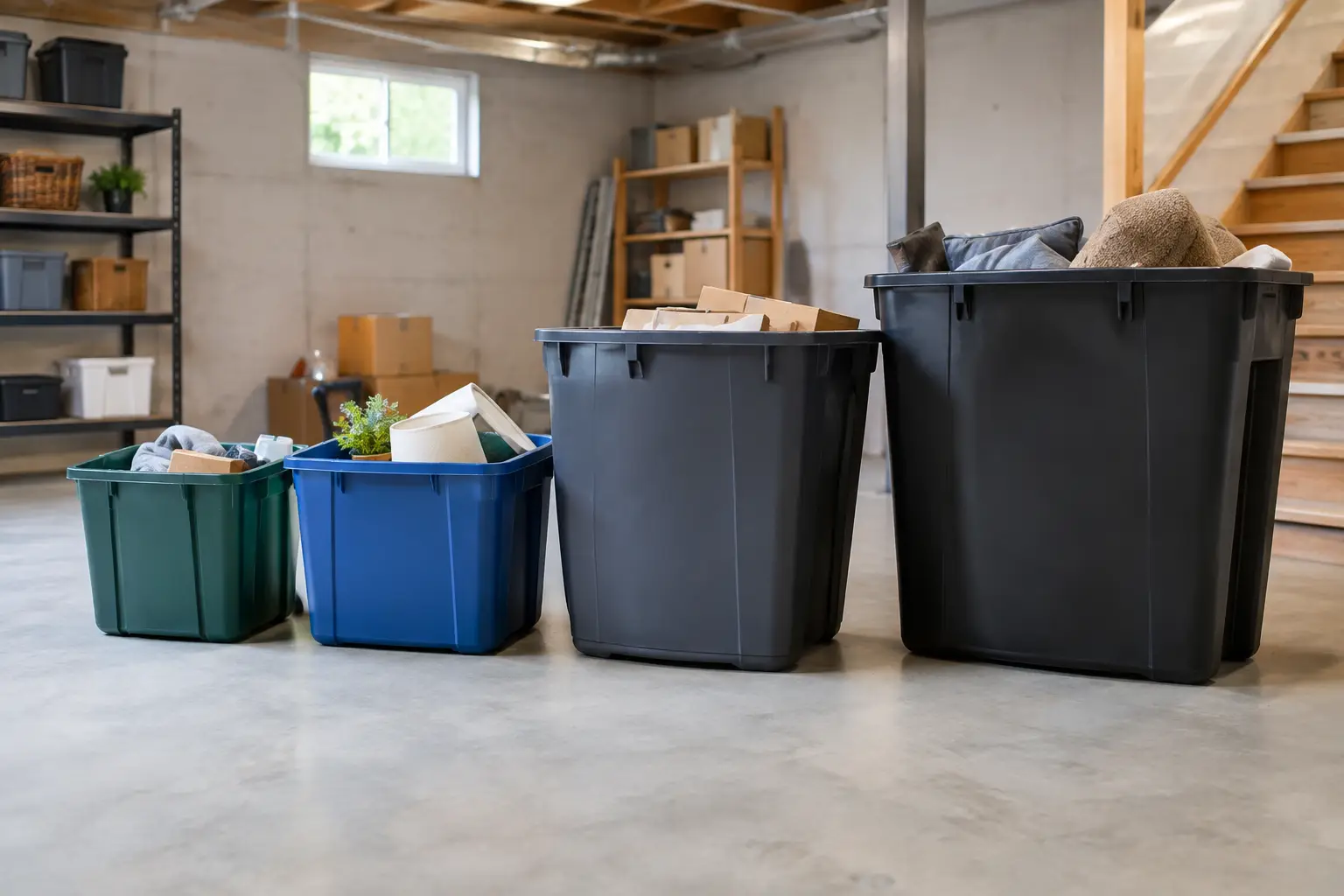
A basement cleanout usually starts with a few boxes and ends with old furniture, broken shelving, renovation scraps, and items that have not been touched in years. Choosing the best bins for basement cleanouts keeps that momentum going. The right bin gives you one place for the debris, avoids repeated landfill runs, and helps you clear the space without turning your driveway into a staging area.
The best choice is not always the largest container available. Basement projects are often limited by stair access, the type of material coming out, and how much room you have for a bin on the property. Start with the job itself, then match the bin size and waste type to what you are actually removing.
How to Choose the Best Bins for Basement Cleanouts
Before booking a bin, take a quick walk through the basement and separate what is staying, what can be donated, and what is headed for disposal. This gives you a much more realistic picture than estimating from one corner of the room.
Pay attention to bulky items. A small pile of loose cardboard or bags of clothing takes up far less room than a worn sofa, a broken entertainment unit, or several mattresses. Finished basements also tend to produce mixed debris during a cleanout, especially when old flooring, trim, drywall, and cabinets are part of the plan.
Your driveway and access point matter as well. A roll-off bin needs a clear, reasonably level placement area. Move vehicles, basketball nets, trailers, or other obstacles before delivery. A local bin provider should also take steps to protect the driveway during placement. Forever Green Bin Rental includes driveway protection with every rental, so homeowners can focus on the cleanup rather than worrying about scuffs or contact points.
A 5-yard bin for small, focused cleanouts
A 5-yard bin is often the right fit for a single storage room, a small unfinished basement, or a cleanup where most of the material is bagged household clutter. It works well for boxes, old toys, clothing, small furniture, shelving, and light renovation debris.
This is a practical option when the goal is to reclaim a section of the basement rather than empty the entire floor. It is also useful for homeowners clearing room before a contractor begins work. The trade-off is simple: large, bulky furniture can fill a 5-yard bin quickly, even if the overall pile does not look especially large in the basement.
A 10-yard bin for a typical basement purge
For many full-basement cleanouts, a 10-yard bin is the most balanced choice. It gives you room for household junk, furniture, old carpet, cardboard, wood, and general renovation waste without taking up more driveway space than necessary.
Choose this size if you are clearing multiple areas at once, such as a utility room, storage space, and a finished recreation room. It is also a sensible fit for a basement refresh that includes removing laminate flooring, damaged drywall, old baseboards, or a small amount of cabinetry.
A 10-yard bin can be more cost-effective than booking too small and needing a second pickup. Still, do not size up automatically if your material is heavy. Weight matters just as much as volume when concrete, soil, tile, or other dense materials are involved.
A 15-yard bin for larger cleanouts and basement renovations
A 15-yard bin gives you more breathing room when the basement has accumulated years of belongings or when demolition is part of the work. It is commonly suited to larger furniture, substantial amounts of carpet and underlay, wall removal debris, framing lumber, and old cabinets.
This size is often a good match for homeowners preparing a basement for finishing or rebuilding an older space. It allows you to keep working without packing every item like a puzzle. For contractors, it can also keep a moderate renovation moving through demolition and rough cleanup.
The main consideration is driveway space. Confirm that there is enough room for delivery, loading, and pickup, especially if you share a driveway or have limited maneuvering space near the home.
A 20- or 25-yard bin for major basement work
Large bins are best for extensive basement demolition, whole-home cleanouts that include the basement, or projects involving several rooms of material. A 20- or 25-yard bin may be appropriate when removing walls, ceilings, flooring, cabinets, insulation, and multiple bulky furnishings.
These bins help prevent downtime on projects with a steady flow of debris. However, they are not automatically the best option for every large-looking job. If the load is mostly concrete, brick, soil, or other heavy material, a large mixed-waste bin can become too heavy long before it looks full. In that case, use a dedicated heavy-material bin and keep it separate from general waste.
Match the Bin to What You Are Throwing Away
Basement waste is rarely all the same. Sorting materials before loading can protect you from delays, extra handling, and disposal issues. The best bins for basement cleanouts are the ones that match the waste stream, not just the amount of waste.
General waste bins are designed for common cleanout material such as household junk, furniture, wood, carpet, drywall, packaging, and mixed renovation debris. They are usually the right choice for a standard basement purge.
For projects that involve heavier or more specific material, use the appropriate bin type:
- Clean fill bins are for uncontaminated soil, gravel, and similar clean earth materials.
- Concrete bins are intended for concrete-only loads or loads that follow the provider's material rules.
- Asphalt bins are for asphalt material from paving or surface removal work.
- Mixed material bins handle common renovation and household debris, but they should not be treated as a catch-all for restricted waste.
Do not mix heavy material into a general household bin just because there is room left at the top. A few wheelbarrows of concrete chunks or wet soil can add significant weight. If you are unsure whether a material belongs in the bin, ask before it is loaded. It is much easier to choose the right container upfront than to stop a pickup because the load contains restricted or overweight material.
Plan the Basement-to-Bin Route Before Delivery
The bin is only part of the cleanup. The harder part can be getting material from the basement to the driveway safely and efficiently. Clear a path through the home, protect finished flooring if needed, and keep stairs free of loose debris.
Load in stages rather than carrying every item outside at once. Start with large, awkward pieces such as furniture, shelving, and carpet rolls. Break down items that can be safely dismantled, including cardboard boxes and lightweight shelving. Then fill the open spaces with smaller bags and loose material.
Keep the bin load level. Do not pile debris above the top rail, even if there appears to be room. Overfilled bins can create safety issues during transport and may need to be adjusted before pickup. A level load also helps you use the available space more effectively.
If your basement cleanout includes reusable items, move those aside before the rental arrives. Donations, resale items, and family keepsakes should never be sorted beside an active disposal pile. Once the cleanup gets moving, it is easy for a useful item to end up in the wrong stack.
Avoid the Most Common Basement Cleanout Mistakes
The first mistake is underestimating volume. Basements hide clutter well because items are spread across shelves, closets, and corners. A quick inventory of bulky pieces usually gives a better size estimate than counting bags alone.
The second is waiting until the bin arrives to decide what to keep. Set decisions early, especially for furniture, old electronics, exercise equipment, and boxes with unknown contents. A clear plan makes the rental period more productive.
The third is forgetting about restricted items. Paint, chemicals, propane cylinders, batteries, certain electronics, and other hazardous materials may require separate disposal methods. Keep these items out of the bin unless you have confirmed they are accepted.
Finally, do not let weather slow the job down. If rain or snow is expected, keep bags tied, protect materials that cannot get wet, and avoid creating slippery paths from the basement to the driveway. A cleanout moves faster when the route stays safe.
A basement can become useful space again sooner than most homeowners expect. Choose a bin that fits the amount and type of debris, prepare the loading route, and keep the project moving one section at a time. The goal is not just to empty the room - it is to make the next use of that space possible.