A cleanup project usually feels manageable right up until the debris starts piling up. One old bathroom turns into broken tile, drywall, vanity pieces, and packaging. A yard project becomes soil, sod, fence panels, and concrete chunks. This York Region dumpster rental guide is built for that moment - when you need a clear plan, not guesswork.
If you are renting a bin for the first time, the biggest mistake is thinking all dumpsters work the same way. They do not. The right rental depends on what you are throwing out, how much space you have, how fast the job is moving, and whether the material needs to be separated. A little planning upfront saves time, protects your driveway, and helps you avoid paying for the wrong container.
How to use this York Region dumpster rental guide
Start with the project, not the bin. People often ask for a specific size before they have thought through the material. That can lead to problems, especially on renovation and landscaping jobs where debris gets heavy fast.
A better approach is to answer three questions first. What are you loading? How much of it do you expect? Where will the bin sit? Once those answers are clear, choosing the right rental gets much easier.
For homeowners, that might mean separating a basement cleanout from a small demolition job. For contractors, it often means matching one container to mixed construction debris and another to heavy material like concrete or clean fill. The more accurately the waste stream matches the bin, the smoother pickup and disposal will be.
Bin size matters, but material matters more
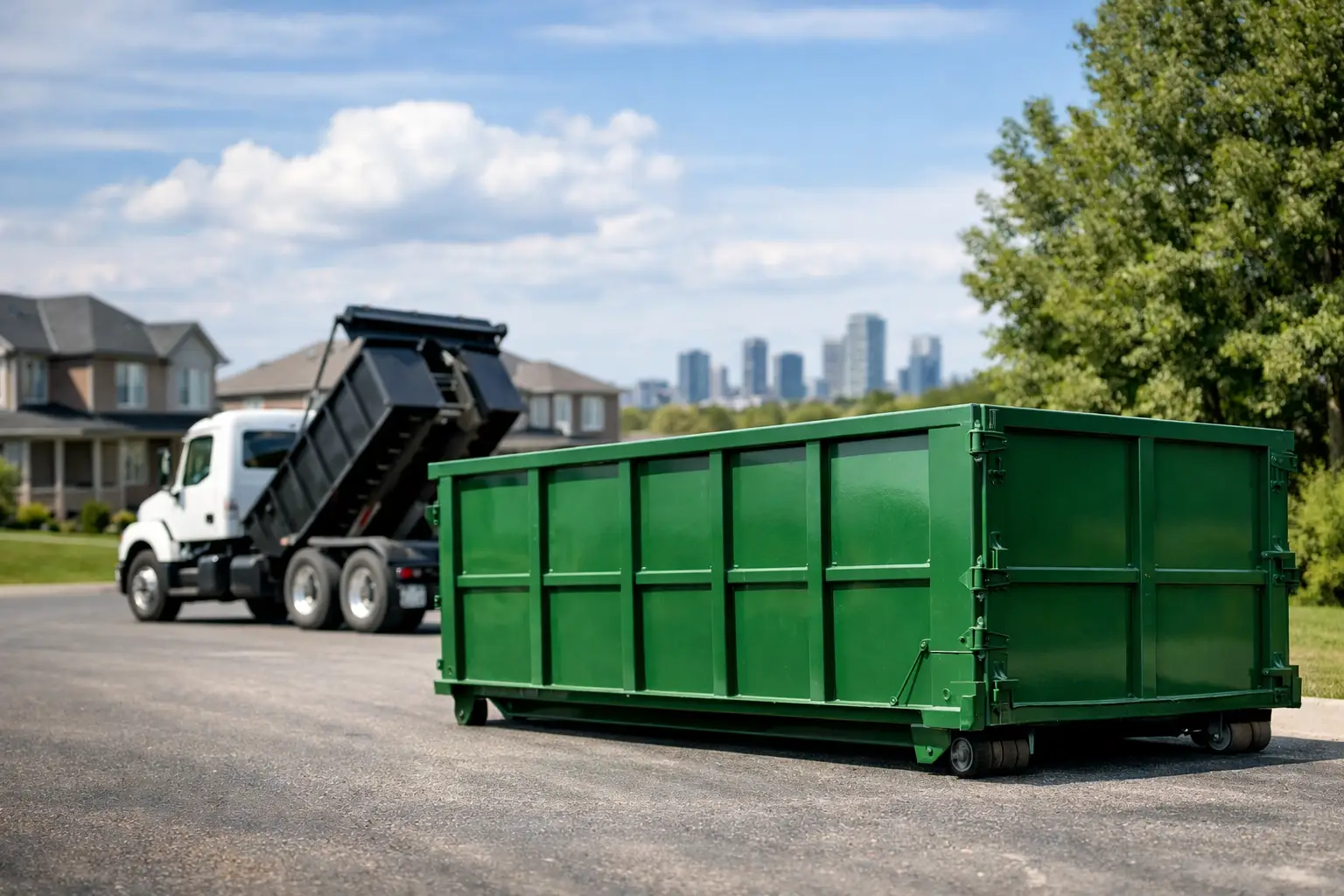
Size is usually the first thing people look at, and it does matter. A smaller 5-yard bin can make sense for a room cleanout, small DIY project, or modest landscaping job. Mid-size bins are often the practical choice for deck removal, roofing waste, kitchen updates, and larger junk removal jobs. Large 20-yard or 25-yard bins are better suited to major renovations, demolition debris, and active construction sites.
But volume is only half the equation. Weight can change everything.
A bin that looks half full can still be very heavy if it contains concrete, asphalt, brick, soil, or tile. That is why heavy materials often need their own bin category rather than a general waste container. The issue is not just disposal rules. It is also safe hauling. Overloading a bin with dense material can create delays, extra charges, or the need to reload the container properly before pickup.
For lighter mixed debris, you usually have more flexibility. Old furniture, wood scraps, drywall, cardboard, and household junk tend to fill space faster than they create weight. In those cases, bin size becomes the main concern. If you are tearing out masonry, digging up a yard, or removing a concrete pad, material type should lead the decision.
Know the difference between bin types
This is where many rentals go off track. Not every job belongs in a general waste bin.
General waste bins are usually the right fit for mixed household junk, renovation debris, wood, drywall, and non-hazardous cleanup material. They work well when the load is varied and reasonably light for its volume.
Clean fill bins are meant for material like soil, clay, sand, and similar uncontaminated fill. Concrete and asphalt bins are for hardscape and demolition materials that are too dense for standard mixed loads. Mixed material bins can be useful when the debris is not all one thing, but it still has to fit the accepted disposal stream.
If your project includes more than one type of debris, it is worth asking whether separation will help. Sometimes one mixed bin is fine. Other times, keeping heavy material separate from general waste is the more cost-effective option. It depends on the quantity, the disposal requirements, and the size of the job.
Placement affects the whole rental experience
Where the bin goes matters more than many people expect. A driveway is often the simplest placement because it is accessible, stable, and easy to load from the house or garage. On active job sites, placement should support the flow of work without blocking vehicles, garage access, or material deliveries.
This is also where property protection comes into play. A loaded roll-off bin puts real pressure on pavement. If the company includes driveway protection as part of the rental, that is more than a nice extra. It helps reduce wear and surface damage, especially during longer rentals or heavier loads.
Before delivery, clear the area and think about overhead space too. Low branches, wires, and tight turns can slow down drop-off or limit where the container can safely sit. If the best location is on the street rather than the property, check local rules first. In many cases, driveway placement is the cleaner and easier option.
Timing is not just about delivery day
A lot of customers focus on getting the bin there quickly, and that matters. Fast local delivery can keep a project on track. But timing also includes how long you need the bin, when the debris will actually be ready, and whether pickup needs to happen on a tight schedule.
For a weekend cleanout, a short rental may be enough. For a remodel, it is smarter to think in phases. Early demolition creates one kind of waste. Finishing work creates another. If the project is moving room by room, the best rental window may not be the longest one. It may be the one that lines up with the messiest part of the job.
Contractors know this already, but homeowners sometimes underestimate how much cleaner and faster a project feels when disposal is handled in real time. Debris that sits in piles becomes a hazard and a delay. A bin on site keeps the work area organized and makes final cleanup much easier.
What affects the quote
Straightforward pricing starts with good information. The quote usually depends on the bin size, the material type, the rental period, and the drop-off location. Weight and disposal category also matter, especially for heavy debris.
This is why quote-based booking is often the better system. It gives you pricing tied to the actual job instead of a vague flat rate that may not fit what you are doing. A small household junk load and a small concrete load might use similarly sized bins, but they are not handled the same way. The disposal cost is different, and the hauling demands are different too.
If you want the most accurate quote, be specific. Say whether you are doing a cleanout, renovation, roofing job, yard project, or demolition. Mention if the material includes soil, concrete, asphalt, or mixed debris. It is also helpful to say whether the bin will go on a driveway and how quickly you need delivery.
Common mistakes that cost people time or money
The most common issue is choosing too small a bin because the job does not look big at first. Debris expands once it is torn out and piled up. Cabinets, drywall, flooring, and trim take up more room than most people expect.
The second mistake is mixing materials that should be separated. If you throw concrete, soil, or asphalt into a general waste load, the pickup may need to be adjusted. That can mean delays or additional cost.
The third is poor loading. Material should be distributed evenly and kept below the top edge of the bin. Overfilled containers are not just inconvenient. They can create safety issues during hauling.
Another avoidable problem is waiting too long to book. In busy seasons, especially spring and summer, cleanup and renovation demand rises across York Region. If your project has a firm start date, it makes sense to arrange the rental early rather than hoping the right bin size will be available at the last minute.
Who benefits most from a local rental company
Local service tends to matter more on bin rentals than people expect. When the company knows the area, response times are often faster and scheduling is easier to coordinate. That matters when you need a container delivered quickly, swapped out, or picked up without slowing down the rest of the job.
For homeowners, local support usually means clearer communication and less friction. For contractors and property managers, it often means a more dependable working relationship. A company like Forever Green Bin Rental is built around practical job-site needs, not a one-size-fits-all national process.
The real advantage is simple. When the rental is matched to the actual project, waste stops being the problem that clutters the driveway, delays the crew, or turns a weekend job into two extra trips to the dump.
If you are planning a cleanup, remodel, or construction job, the best first step is not guessing the biggest bin you can find. It is choosing the right one for the material, the timeline, and the space you have - because the easiest cleanup is the one that runs smoothly from day one.