
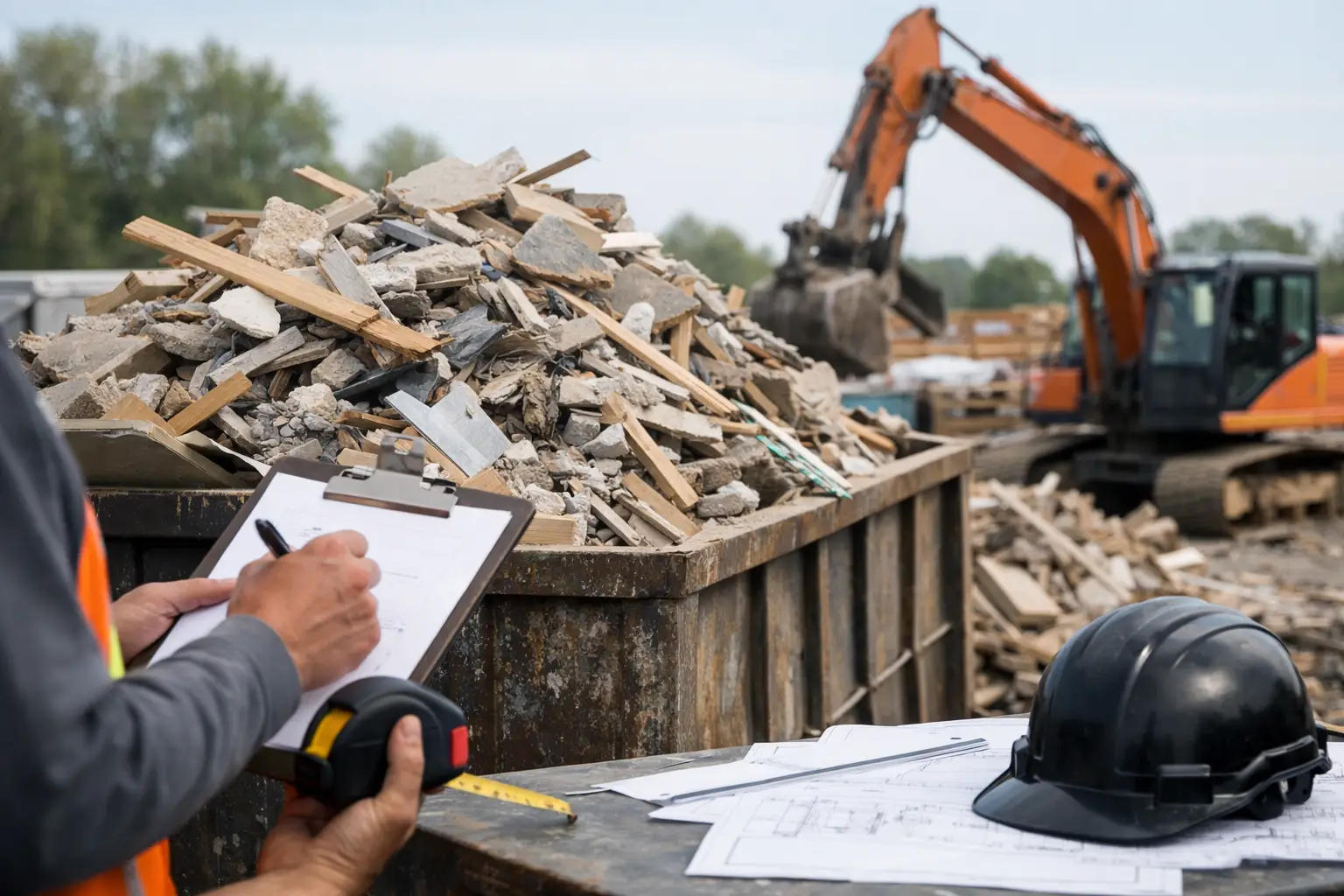
A renovation can look manageable until the old cabinets, drywall, flooring, and packaging start piling up. Knowing how to estimate construction debris volume before delivery helps you book a bin that fits the work, keeps the site clear, and avoids a last-minute scramble for more disposal space.
For most home and job-site projects, a practical estimate is better than a complicated calculation. You do not need to measure every broken stud or drywall offcut. You need to understand what materials are coming out, how much space they take up once loose, and whether they belong in a mixed waste, clean fill, or concrete and asphalt bin.
Start With the Scope of the Work
The best debris estimate begins before demolition. Walk through the project and identify every material that will be removed, not just the obvious items. A kitchen renovation may include cabinets and countertops, but it can also create drywall, old flooring, backsplash tile, insulation, plumbing fixtures, cardboard, and protective packaging from new materials.
For a cleanout, consider the contents of closets, storage rooms, garages, and sheds. Furniture often takes up far more bin space than homeowners expect because it does not stack neatly. A few large sofas, mattresses, or bulky shelving units can fill a substantial portion of a small bin before smaller items are loaded.
Contractors can get a more reliable number by reviewing the demolition plan room by room. Note the square footage of flooring, drywall, roofing, or decking being removed. Then account for framing, trim, underlayment, fasteners, and other materials that may not appear in the original scope but still need to leave the site.
Think in Cubic Yards, Not Just Pickup Loads
Roll-off bin sizes are measured in cubic yards. One cubic yard is a space measuring three feet long by three feet wide by three feet high. That is 27 cubic feet, roughly the volume of a large household appliance or a standard washing machine.
The challenge is that construction debris rarely packs into a perfect cube. Loose drywall, warped lumber, cabinets, and broken furniture leave air pockets. When you estimate volume, allow room for inefficient stacking rather than calculating only the solid material volume.
A useful working rule is to add 20 to 30 percent to your first estimate for loose loading. Add more if the debris includes awkward, bulky items. A bin that looks oversized on paper often becomes the right choice once the demolition starts.
A quick way to calculate volume
If you know the rough dimensions of a debris pile, multiply its length by width by average height in feet. Divide that number by 27 to convert cubic feet into cubic yards.
For example, a pile that is 12 feet long, 6 feet wide, and 3 feet high equals 216 cubic feet. Dividing 216 by 27 gives you 8 cubic yards. Because piles settle unevenly and loading creates gaps, planning for a 10-yard bin would usually be the safer call.
This method works well for neatly staged debris. For material still installed in the home, use square footage and the type of material to create a rough allowance instead.
Use Project Type as a Starting Point
Every project is different, but common jobs offer a helpful baseline. A 5-yard bin is often a practical fit for a small room cleanout, a bathroom refresh, or a compact landscaping project with light debris. It is also easier to place where driveway space is limited.
A 10-yard bin is a common choice for flooring removal, a medium garage cleanout, a small kitchen tear-out, or a basement decluttering project. It gives you more room without committing to a large container for a modest amount of waste.
For major renovations, larger cleanouts, deck removal, or multi-room demolition, a 14- to 20-yard bin may make more sense. A 25-yard bin is generally better suited to substantial renovation debris, large demolition work, and projects producing a high volume of light-to-medium mixed materials.
These are planning ranges, not guarantees. A 25-yard bin filled with old carpet and drywall is very different from a 25-yard bin filled with concrete. Volume matters, but weight matters too.
Separate Heavy Materials Before You Choose a Bin
Concrete, asphalt, brick, soil, and clean fill can become extremely heavy long before they fill a container. A small pile of broken concrete may only take up a few cubic yards, yet it can weigh more than a much larger pile of lumber and drywall.
That is why heavy materials should be estimated separately from general construction debris. If you are removing a patio, driveway section, retaining wall, or old concrete slab, measure the material by length, width, and thickness. Even a six-inch-thick concrete area adds up quickly.
Mixed loads can be convenient, but they are not always the most efficient or appropriate option. Keeping clean concrete, asphalt, or fill separate can make disposal easier and help ensure the bin is loaded within safe hauling limits. The right approach depends on the material, the amount, and local disposal requirements.
Do Not Forget What Comes With the New Work
Many estimates only cover what is being removed. New materials create waste too. Kitchen cabinets arrive in large boxes. Flooring and fixtures come wrapped in cardboard, foam, plastic, pallets, and protective corner pieces. Roofing, siding, and insulation projects can generate a surprising amount of packaging.
For a homeowner managing a renovation in stages, it may be worth scheduling the bin to cover both demolition and installation cleanup. That avoids storing packaging in the garage or making repeated trips to a disposal site. For contractors, factoring packaging into the estimate keeps walkways and work areas safer as the job progresses.
Load the Bin for the Space You Paid For
Even the right bin can seem too small if it is loaded poorly. Place flat, heavy materials on the bottom. Break down cabinets, boxes, and shelving where practical. Stack lumber in one direction instead of tossing it in from different angles. Fill gaps with smaller debris after the larger pieces are in place.
Do not pile waste above the top edge of the bin. Overfilled bins can be unsafe to transport, especially when materials can shift or fall during hauling. If you are close to the fill line, it is usually better to arrange pickup and book another container than force more debris into an already full load.
Before loading, set aside materials that may require separate handling, such as paint, chemicals, propane tanks, batteries, tires, electronics, or hazardous waste. Keeping restricted materials out of the bin prevents avoidable delays and protects the people handling the load.
When to Size Up Your Debris Estimate
Choose the next bin size up when the project has unknown conditions. Older homes often hide extra layers of flooring, damaged subfloor, outdated insulation, or wall repairs behind finished surfaces. Water damage and remodeling changes can turn a simple tear-out into a larger cleanup quickly.
Sizing up is also smart when you have limited time. If a contractor has a tight schedule, or a homeowner wants the driveway cleared before a new delivery arrives, spare capacity is valuable. The trade-off is paying for more container space than you may use. But the cost and disruption of an additional delivery can be higher than choosing a slightly larger bin from the start.
If driveway space is the concern, talk through the project rather than automatically choosing the smallest container. A local bin provider can help match the container to the debris type, access point, and schedule. Driveway protection should also be part of the plan, particularly for heavy loads and paved surfaces.
Get a Better Estimate Before Delivery
Take photos of the work area, make a simple material list, and write down the rooms or exterior sections being removed. Include approximate square footage where possible. This gives the rental provider enough information to recommend a realistic size instead of guessing from a project name alone.
For York Region and South Simcoe homeowners and contractors, Forever Green Bin Rental can help sort out the practical questions before a bin arrives: how much debris is expected, whether materials should be separated, and what size container fits the site. A clear quote and the right bin plan keep cleanup from becoming the part of the project that holds everything up.
A little extra planning at the beginning gives you a cleaner work area, safer loading, and fewer surprises when demolition is underway. Measure the obvious debris, allow room for the hidden and bulky stuff, and choose the bin based on both volume and weight.