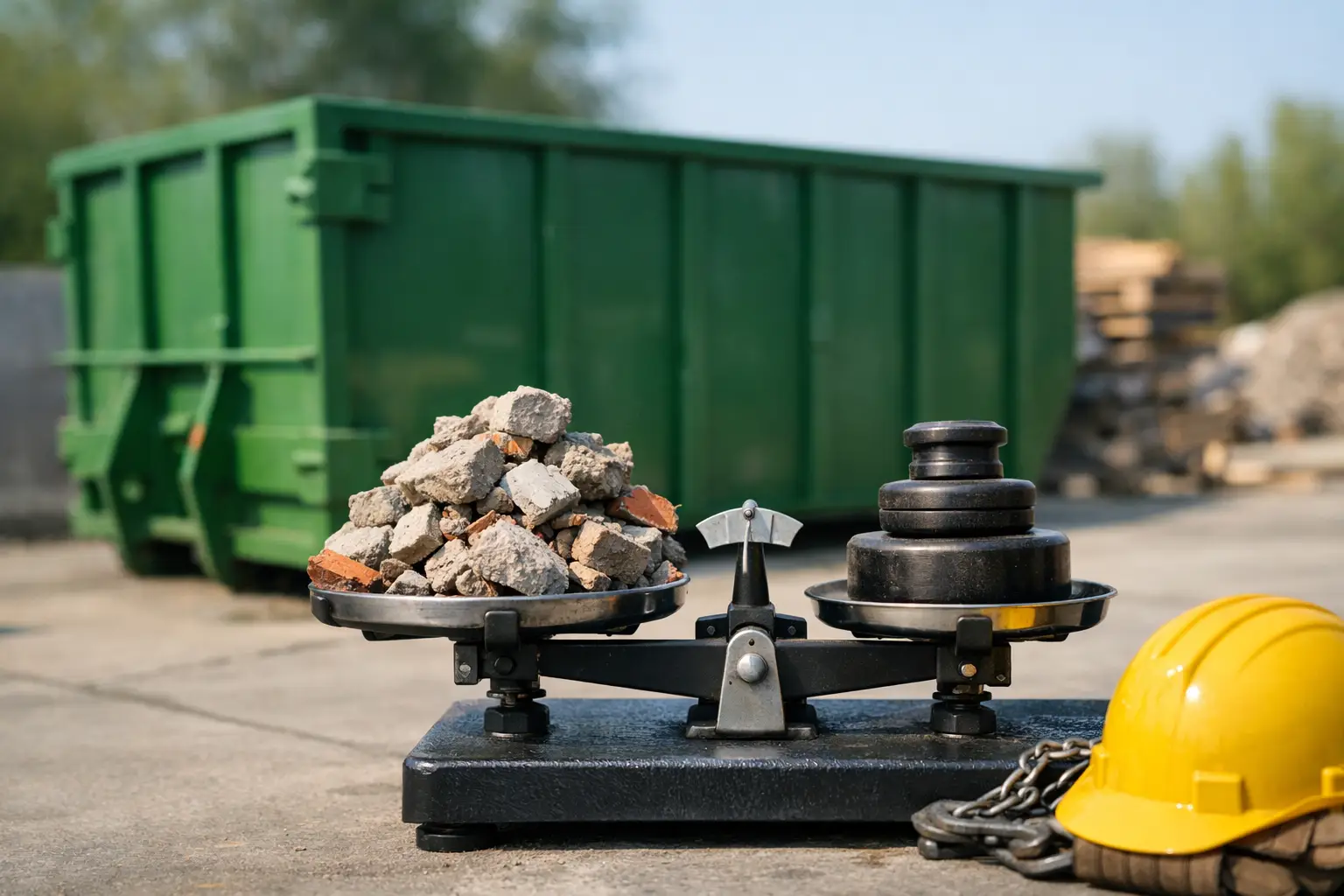
A bin can look half full and still be overweight. That is where a lot of dumpster rental confusion starts.
Dumpster weight limits explained in simple terms means this: every rental bin has both a size and a maximum weight allowance. The size tells you how much space the debris takes up. The weight limit tells you how heavy that debris can be before overage charges apply or the load becomes unsafe to haul. If you are cleaning out a garage, tearing out a kitchen, or managing a roofing or concrete job, both matter.
Why weight limits matter more than most people expect
Most people picture a dumpster in terms of volume. They think about how many bags, boards, or broken cabinets can fit inside. That is only half the equation. Hauling companies also have to account for truck capacity, road safety, landfill rules, and disposal costs, all of which are tied to weight.
This is why light, bulky debris and dense, compact debris behave very differently in the same bin. Old insulation, cardboard, and furniture can fill space quickly without adding much tonnage. Concrete, dirt, brick, shingles, and wet drywall can do the opposite. A smaller pile of those materials can hit the weight limit fast.
For homeowners, that affects cost. For contractors, it also affects scheduling. If a bin is overloaded by weight, pickup can be delayed until material is removed or reloaded properly. That can slow down a project and create avoidable site issues.
Dumpster weight limits explained by material type
The easiest way to understand weight limits is to think about what you are throwing out, not just how much of it there is.
General household junk is usually manageable. A room cleanout with clothing, toys, small furniture, boxes, and mixed trash often stays within standard allowances unless the bin is packed with unusually heavy items. Renovation debris is more variable. Cabinets, wood, drywall, flooring, and tile can add up quickly, especially if the material is damp or mixed together.
Then there are heavy materials that need extra attention. Concrete, asphalt, brick, soil, and clean fill are much denser than general waste. They are often placed in smaller bins on purpose, even for larger jobs, because a big container full of heavy debris can exceed what the truck can safely carry.
Roofing jobs are another common example. Shingles may not seem extreme when spread across a roof, but once torn off and packed into a bin, they become very heavy. A roofing load often needs a more careful estimate than a basic household cleanup.
That is why companies usually separate service options into general waste bins, clean fill bins, and bins for materials like concrete or asphalt. It is not just a pricing choice. It helps match the container to what the truck and disposal site can handle.
Bin size does not always mean higher weight capacity
This is one of the most common misconceptions in dumpster rentals. A larger bin holds more volume, but that does not mean you should automatically load it with heavier debris from front to back.
A 20-yard or 25-yard bin is great for bulky renovation material, construction debris, or large cleanouts. But if you fill that same bin with dense materials like dirt or concrete, you can run into weight problems long before the container is full. In those cases, a smaller bin is usually the better fit because it helps control tonnage and keeps hauling safe.
In practical terms, the right bin is a combination of size and waste type. A homeowner doing a basement cleanup might need more volume but not much weight allowance. A contractor removing patio slabs may need less volume but more attention to tonnage.
What happens if you go over the weight limit
Usually, going over the included weight allowance means extra charges based on additional tonnage. Those overage fees are tied to disposal costs and hauling realities, not arbitrary penalties.
Sometimes the issue is more serious than cost. If a bin is loaded too heavily or unevenly, it may not be safe to transport. In that situation, the customer may need to remove some material before pickup. That is a frustrating problem when you are trying to wrap up a job, especially if labor is already scheduled.
Weight can also affect the condition of the property. A properly placed bin with driveway protection helps reduce surface wear, but extremely heavy loads still create more pressure than ordinary household debris. That is another reason why honest planning at the start matters.
How to estimate weight before you book
You do not need perfect math, but you do need a realistic idea of the material.
Start with the type of project. A simple decluttering job is usually lighter than a bathroom demo. A bathroom demo is usually lighter than a roofing tear-off. A roofing tear-off is usually lighter than a concrete removal project. The material tells the story.
Next, think about density. Ask yourself whether the debris is mostly bulky and light, mixed and moderate, or compact and heavy. Wood framing, drywall, old shelving, and household junk fall into different ranges than pavers, mud, shingles, or broken masonry.
It also helps to estimate how much of the debris is actually heavy. A mixed renovation bin with a few tiles is different from a tile removal project. A yard cleanup with some branches is different from a landscape tear-out with soil and stone.
If you are unsure, this is where a local rental company adds value. Instead of guessing from a generic chart, you can explain the job and get a recommendation based on real loads they see every week.
When separate bins make more sense
Some jobs create mixed debris, but that does not always mean one mixed bin is the cheapest option.
If part of the material is very heavy, separating it can make your rental more efficient. For example, during a home renovation, it may make sense to place general demolition debris in one bin and dense material like concrete or brick in another. That can help avoid overage charges, keep pickup simple, and make disposal more straightforward.
Contractors already think this way on many job sites because sorting material keeps the workflow cleaner. Homeowners can benefit from the same approach, especially on landscaping, demolition, or full-room remodels where heavy debris tends to collect fast.
Questions to ask before renting
A good quote should make the weight allowance clear. If it does not, ask. You want to know how much weight is included, what kind of debris the bin is intended for, and how overage is billed if your load goes beyond the allowance.
You should also ask whether your material needs a specific bin type. That matters for concrete, asphalt, soil, brick, and other dense waste streams. Asking early is much easier than finding out at pickup.
For larger renovation or construction jobs, it is smart to describe the full scope. Mention roofing layers, tile removal, masonry, wet materials, or anything else that may add hidden weight. The more accurate the description, the better the recommendation.
Dumpster weight limits explained for real-world projects
For a garage or basement cleanout, weight is usually not the main issue unless you are tossing old gym equipment, shelving, or boxes of books. Volume matters more.
For kitchen, bathroom, and flooring renovations, weight starts to matter more because you often have a mix of cabinets, drywall, tile, countertops, and wood. These projects can go either way depending on the material.
For roofing, masonry, landscape tear-outs, and concrete removal, weight is the first thing to think about. Those jobs should never be planned by volume alone.
That is also why local operators are often more useful than national call centers. A company like Forever Green Bin Rental can help match the bin to the actual debris, not just the square footage of the project.
The simplest way to avoid problems is to be upfront about what is going in the bin. If the material is heavy, say so. If the project may change as demolition starts, mention that too. A good rental plan is not about squeezing the most into one container. It is about getting the right bin for the job so pickup stays easy, pricing stays predictable, and your cleanup keeps moving.