
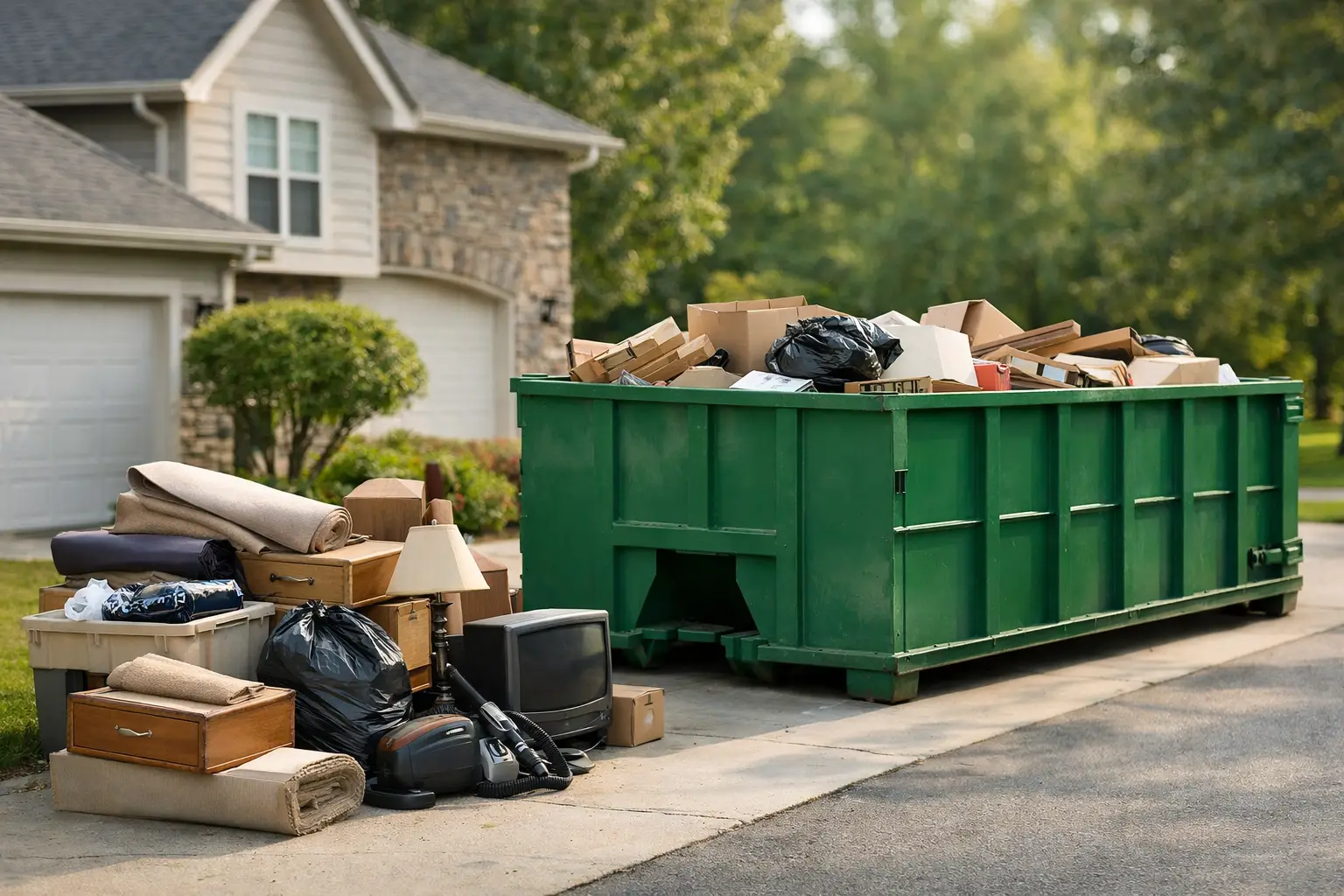
You usually realize you picked the wrong bin size halfway through the job - when the garage is still half full, the basement piles keep growing, and pickup day is already booked. If you are asking what size bin for home cleanout projects, the right answer depends less on square footage and more on what is actually coming out of the house.
A full-home cleanout can mean very different things. For one homeowner, it is old furniture, boxes, toys, and general junk after years of buildup. For another, it is a move-out, estate cleanout, or prep for renovations with bulky items, broken shelving, carpet, and mixed debris. That is why bin size should be matched to volume, material type, and how aggressively you plan to clear things out.
What size bin for home cleanout jobs usually makes sense?
For most residential cleanouts, the sweet spot is often a mid-size bin. Small bins work well when you are clearing one room or a light load of household junk. Larger bins make more sense when the cleanout includes furniture, mattresses, old cabinets, or debris from several rooms at once.
In practical terms, a 5-yard bin is often enough for a single-room cleanout, a small basement purge, or a garage that mostly contains bagged waste and loose clutter. A 10-yard bin is a common fit for a modest whole-floor cleanout or a home with a steady amount of junk but not a lot of heavy furniture. A 14-yard or 20-yard bin is usually the safer choice for larger home cleanouts, especially if you are dealing with bulky items, years of accumulation, or multiple spaces like the basement, garage, bedrooms, and shed. If the property is being emptied almost completely, or if cleanup overlaps with renovation debris, a 25-yard bin may be the better call.
The mistake people make is choosing only by price. A smaller bin may look cheaper at first, but if you need a second haul, the total cost and disruption can be higher than booking the right size from the start.
Start with volume, not just room count
Room count helps, but it is not enough on its own. A spare bedroom with a few boxes is very different from a basement packed wall to wall with old furniture, gym equipment, and shelving.
A better question is how much space the junk would take up if it were all piled together. Loose household clutter compresses differently than couches, dressers, or broken cabinets. Soft goods and bags can settle down inside a bin. Rigid bulky items do not. That is why two cleanouts with the same number of rooms can need completely different container sizes.
If your cleanout includes mostly boxes, clothing, toys, and small household items, you may be able to fit more than you expect into a smaller bin. If it includes sectionals, bed frames, dining sets, vanities, and shelving, size up. Bulky items waste air space, and bins fill faster than people think.
Common cleanout scenarios and the bin sizes they fit
A light decluttering project usually fits in a 5-yard bin. Think attic boxes, old seasonal decorations, a few broken chairs, small shelving, and general household junk. This size works well when the goal is to clear space, not empty the house.
A moderate cleanout often points to a 10-yard bin. This is a good range when you are cleaning out a basement, garage, or a couple of bedrooms and expect some furniture along with bagged waste. It gives you more flexibility without taking up too much driveway space.
A larger home cleanout usually lands in the 14-yard to 20-yard range. This is where many move-outs, estate cleanouts, and major downsizing projects fall. If several rooms are involved and you know there are bulky pieces coming out, this range helps avoid overfilling.
A near-complete home empty-out or a cleanout tied to demolition work often needs a 25-yard bin. This size is useful when you are clearing the contents of an entire property, removing old built-ins, or combining junk removal with renovation debris. It is efficient, but only if you truly have the volume to justify it.
Debris type changes the answer
When people ask what size bin for home cleanout, they often focus on how much junk they have and forget to think about what kind of junk it is. Material matters.
General household waste is usually straightforward. Furniture, boxes, toys, clothing, and non-hazardous junk can often go into a mixed waste bin. But if your cleanout includes concrete, brick, soil, asphalt, or other heavy materials, capacity and weight become a bigger factor. Heavy debris can reach weight limits long before the bin looks full.
That means a smaller bin can actually be the correct choice for dense material. If part of your cleanout involves tearing out a small patio, removing concrete steps, or clearing clean fill from the yard, it is smart to separate that material instead of mixing it with household junk. The right waste stream keeps disposal simpler and helps avoid extra charges.
Don’t ignore bulky items and loading style
A cleanout with ten garbage bags is easy to picture. A cleanout with three couches, two mattresses, a treadmill, and old kitchen cabinets is where estimates go sideways.
Bulky items create awkward gaps inside the bin. Even when the total weight is reasonable, the shape of the load can eat up space fast. If you know you are tossing oversized furniture, exercise equipment, long shelving, or large wood pieces, give yourself more room than your first estimate suggests.
Loading style also matters. If you are stacking carefully over a few days, you can usually use the space more efficiently. If several people are clearing rooms quickly and tossing items in as they go, the bin fills less neatly. For family cleanouts, move-outs, and estate situations, it is often worth sizing up just to keep the job moving.
A smaller bin is not always the safer choice
Some homeowners assume it is better to rent the smallest bin possible and see how it goes. Sometimes that works, especially for a focused cleanout. Often, it just creates pressure.
Once a bin is full, your pace changes. You start second-guessing what stays and what goes. Items pile up beside the garage. Pickup timing becomes more important than the actual cleanup. If your goal is to clear the property efficiently, enough capacity matters.
That said, bigger is not always better either. If you only have one room to empty or a basic decluttering project, a very large bin can be unnecessary. It takes up more space and may cost more than you need. The best choice is the one that matches the real job, not the most optimistic or most cautious guess.
When to size up for peace of mind
There are a few situations where going one size larger usually makes sense. One is when you have not started sorting yet. People almost always uncover more waste once closets, crawl spaces, and storage corners get opened up. Another is when more than one person is involved in the cleanup. Different people have different ideas about what should be kept, and once momentum starts, volume rises quickly.
It also makes sense to size up when the cleanout is tied to a deadline. If the house is being listed, sold, renovated, or turned over to a new tenant, there is value in having enough space the first time. In busy areas like York Region and South Simcoe, where homeowners often balance family schedules, contractors, and closing dates, avoiding a second bin can keep the whole project on track.
How to choose the right bin without overthinking it
If you are unsure, start by identifying three things: how many spaces are being cleared, whether bulky furniture is included, and whether any heavy material needs to be separated. That gives you a far better estimate than square footage alone.
If the job is one room or a light declutter, look at a 5-yard bin. If it is a basement, garage, or a couple of rooms with mixed junk, a 10-yard bin is often the practical choice. If you are clearing multiple rooms, handling furniture, or doing a full move-out style cleanout, move into the 14-yard to 20-yard range. If the house is being emptied at scale or mixed with renovation debris, a 25-yard bin is worth considering.
A local company like Forever Green Bin Rental can usually help narrow it down quickly because bin sizing is easier when someone understands the material, the property layout, and how these jobs actually unfold in real neighborhoods. The goal is not to sell the biggest container. It is to get you enough room to finish the job without wasting time, money, or driveway space.
The best bin size is the one that lets you keep going once the cleanup gets real. When in doubt, think about volume honestly, account for bulky items, and give yourself a little room for the stuff you forgot was there.