
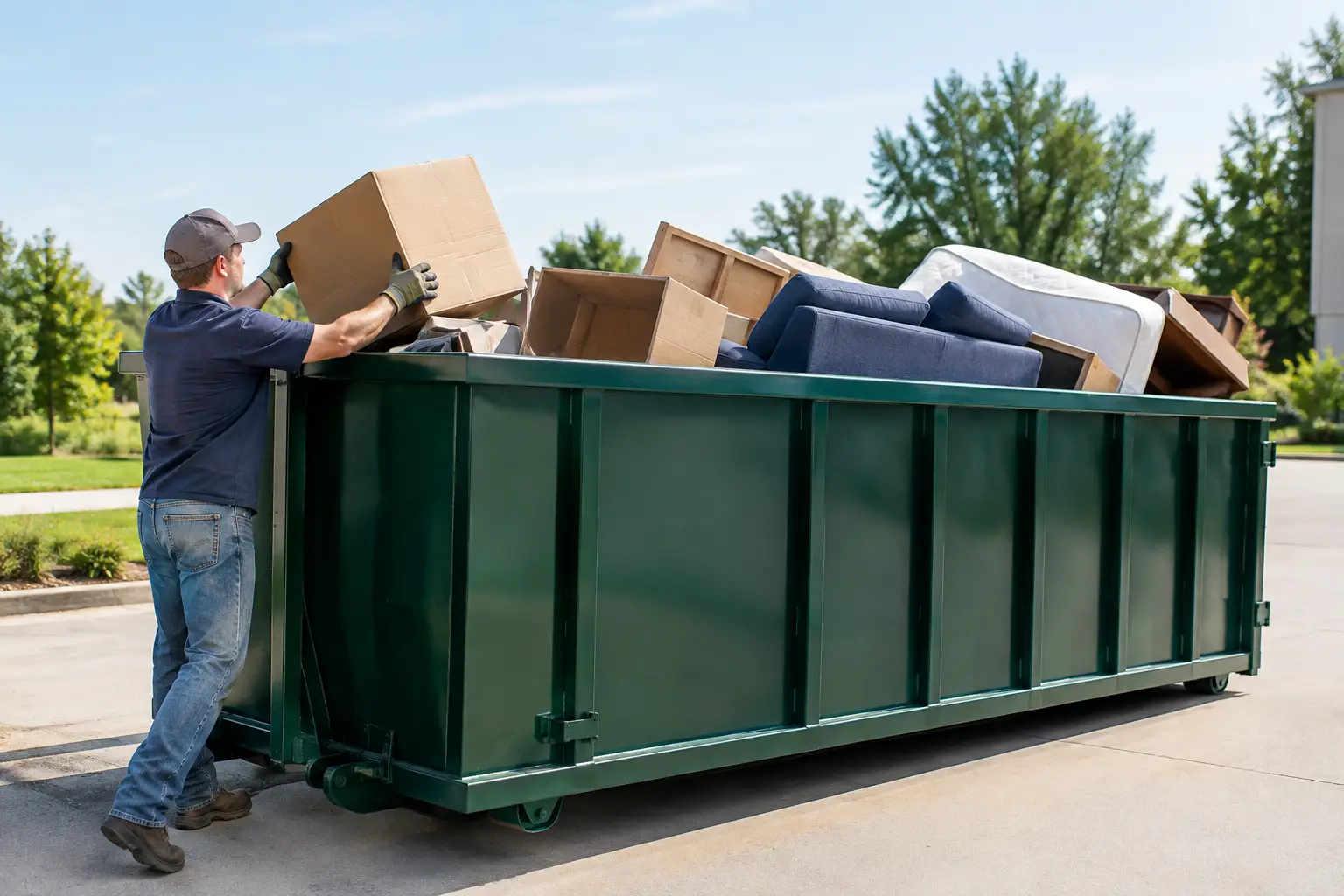
A dumpster can look roomy when it first arrives, then fill up far faster than expected once old drywall, cabinets, lumber, and bulky furniture start coming out of the house. Good dumpster loading is not about cramming in as much as possible. It is about placing material in the right order so you use the space safely, stay within the container's fill line, and keep pickup simple.
Whether you are clearing a basement, remodeling a kitchen, replacing a deck, or managing a busy job site, a little planning before the first item goes in can prevent wasted space, overloaded bins, and an extra trip to the dump.
Dumpster Loading Starts Before Delivery
The easiest bin to load is the one that matches the project. A container that is too small creates pressure to overfill it, while one that is much larger than needed can be an unnecessary expense. Think about both the volume of debris and the material's weight before booking.
Light, bulky material such as cardboard, old furniture, carpet, insulation, and packaging can consume a surprising amount of room. A larger bin may make sense even when the debris does not weigh much. Dense material is different. Concrete, soil, asphalt, brick, and stone add weight quickly, which is why they generally require a dedicated clean-fill or heavy-material bin rather than a general mixed-waste container.
Mixed loads also deserve a closer look. A renovation bin may hold wood, drywall, household debris, flooring, and fixtures, but loading restricted materials into the same container can create disposal problems. Paint, solvents, fuel, propane tanks, tires, batteries, and certain electronics usually need separate handling. If you are unsure about a material, ask before it goes into the bin. It is much easier to sort it out beforehand than after the container is loaded.
Placement matters too. Choose a firm, level location with clear access for delivery and pickup. Keep the area free of vehicles, low branches, overhead wires, and materials that could block the truck. A driveway is often the most convenient spot for residential cleanup, and protective boards or driveway protection help reduce the risk of surface damage. Still, it is smart to move vehicles and give the bin a clear path before delivery day.
A Safer Dumpster Loading Plan
Start with the heaviest, flattest items. Lay broken-up cabinets, sheet material, wood, doors, and other flat debris across the bottom whenever possible. This creates a stable base and prevents awkward pockets of empty space under lighter material.
Next, place long pieces along the sides of the bin. Lumber, trim, pipes, fence panels, and branches can often run lengthwise instead of diagonally. Diagonal loading wastes valuable room and makes it harder to distribute weight evenly. Break down what you can before loading. A disassembled shelving unit takes far less room than a fully assembled one, and flattened cardboard should never be tossed in as intact boxes.
As you build upward, fill gaps deliberately. Smaller items can go inside open furniture, between larger pieces, or in the spaces left around bulky debris. This does not mean forcing materials into unsafe positions. It means treating the bin like a simple packing job: large, stable pieces first, then smaller debris that fits around them.
Avoid making one tall pile in the middle. A bin loaded high in one area and low in another is harder to transport, can shift during pickup, and may leave usable space around the edges. Spread material across the container as you go. Every so often, step back and check whether the load is level from front to back and side to side.
Keep the top of the load at or below the container's rim. Material sticking above the sidewalls can blow out, shift onto the road, or prevent safe tarping for transport. A pickup driver may not be able to remove an overfilled bin until the excess is taken out. That can delay your schedule and add labor you did not plan for.
If your roll-off container has a walk-in loading door, use it carefully for heavy items instead of lifting them over the side. Keep the path clear and do not stack material where it could block the door from opening or closing. Never climb on debris to rearrange a load. Uneven waste, loose boards, nails, and shifting items can turn a quick cleanup task into an injury.
Keep Weight Where It Belongs
Weight distribution is just as important as how full the bin looks. Put dense items low and spread them across the floor of the container. Do not load all your concrete, wet drywall, soil, or shingles in one corner. Concentrated weight can make the bin difficult to handle and may exceed the limits of the container or truck.
For projects involving concrete, asphalt, dirt, brick, or stone, do not assume a general-purpose dumpster is the right answer. These materials can be recyclable when kept clean, but they can become much harder to process when mixed with wood, garbage, plastic, or other debris. A dedicated bin helps keep disposal costs predictable and avoids having a heavy mixed load rejected or reclassified.
Rain can change the equation. Wood, carpet, drywall, soil, and yard waste all gain weight when wet. If a storm is expected and your bin contains materials that absorb water, load with that added weight in mind. Covering materials before they go in or scheduling pickup promptly can help, depending on the job.
Common Loading Mistakes That Cost Space
The most common mistake is tossing debris in without a sequence. It feels faster in the moment, but it often leaves large voids at the bottom that cannot be reached later. Another is loading bulky items whole when they could be dismantled in minutes. Bed frames, desks, cabinets, boxes, and shelving are frequent space-wasters.
Do not use a dumpster as a catch-all for materials from every part of the project. Keep hazardous items, liquids, pressurized containers, and prohibited waste out of the bin. Also keep separate piles for recyclable clean fill or metal when your project has enough of it to make sorting worthwhile. Better separation can reduce disposal complications and make cleanup more efficient.
Be realistic about what remains. If you are near the rim and still have a garage full of debris, stop loading before overfill becomes the only option. A second bin, a scheduled swap, or a larger container may be the better choice. For contractors, that decision can protect the work schedule. For homeowners, it can prevent a stressful last-day scramble before pickup.
Make Pickup Easy From the Start
When the cleanup is done, take a few minutes to inspect the bin. Make sure nothing is extending above the top edge, no loose items are likely to blow out, and access to the container is clear. Move vehicles, equipment, and material piles out of the truck's path. If conditions changed after delivery, such as a blocked driveway or a newly installed gate, notify the rental company before pickup.
A well-loaded dumpster is safer for everyone involved: the people doing the cleanup, the driver handling the container, and the neighbors sharing the street. It also gives you the most value from the bin you rented.
Before the first load goes in, take a quick look at your debris pile and plan the order. That small step keeps a cleanup moving, protects your property, and makes the final pickup the easy part.