A bin rental should make a cleanup easier, not leave you wondering whether your driveway will need repairs afterward. For homeowners planning a renovation, cleanout, landscaping project, or demolition job, driveway protection is not a small detail. It is part of choosing the right waste removal service.
This driveway protection review looks at what meaningful protection should include, where it helps most, and what no provider can fully control. The short version: protective boards and careful delivery can greatly reduce risk, but driveway condition, weather, bin size, and loading habits still matter.
What Driveway Protection Means During a Bin Rental
A roll-off bin is built to carry serious weight. Even a smaller container can become heavy once it is filled with drywall, lumber, old flooring, furniture, or household debris. Concrete, asphalt, soil, and other dense materials add weight quickly. When that weight rests in one place for several days, the surface beneath it needs consideration.
Good driveway protection starts before the truck arrives. The rental company should ask where the bin will be placed, what material is being disposed of, and how long the container will be needed. Those details help determine the appropriate bin size, placement area, and whether the load needs special handling.
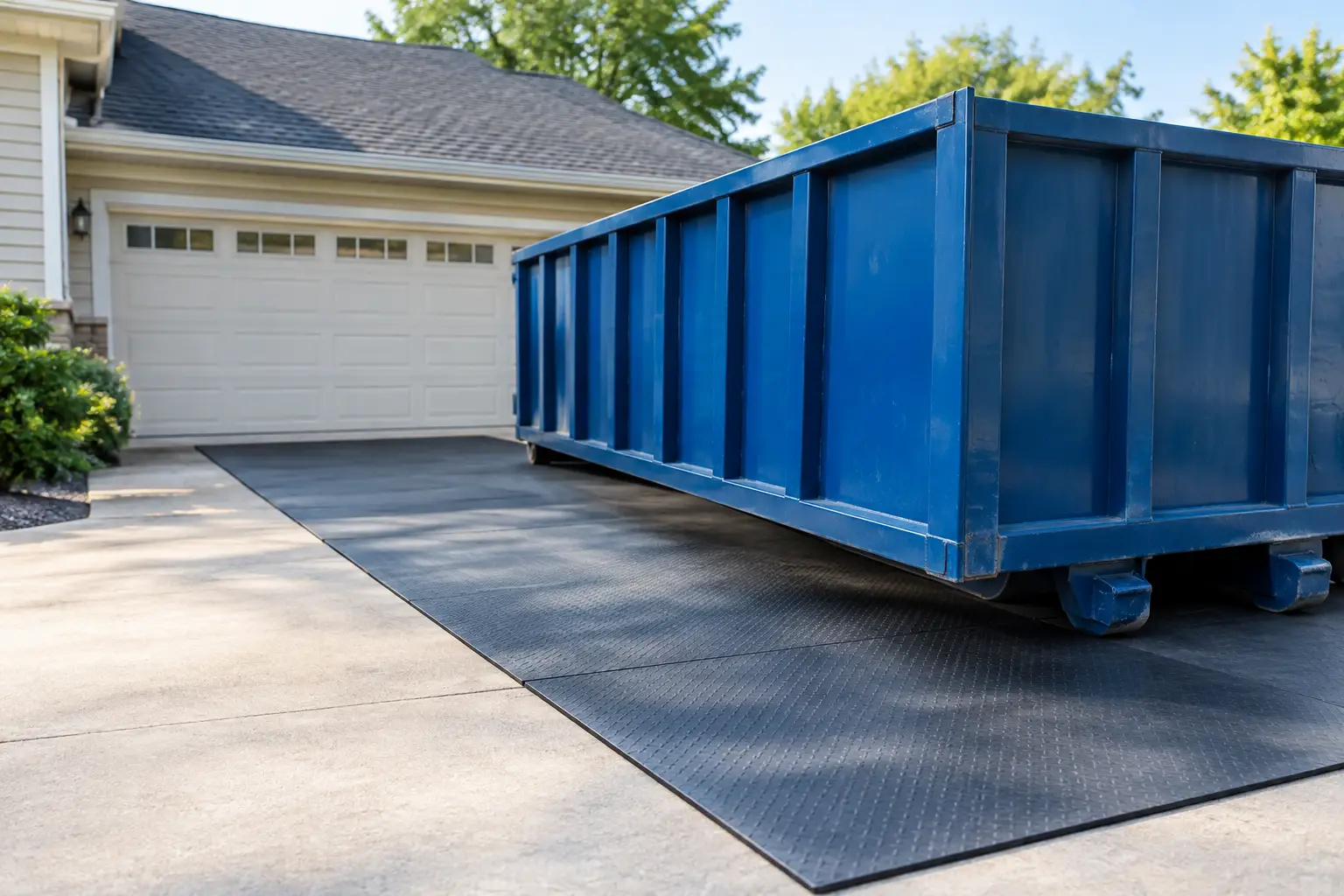
The most common protection method is placing sturdy wood boards between the bin and the driveway. The boards spread some of the load across a wider area and create a barrier between the container’s rails and the pavement. They are especially useful on asphalt driveways, interlock, decorative concrete, and newer surfaces that may be more vulnerable to marks or pressure points.
At Forever Green Bin Rental, driveway protection is included with every rental. That matters because customers should not have to choose between getting a bin delivered safely and paying an unexpected add-on fee.
Driveway Protection Review: What Works Best
Protective boards are a practical, proven step, but their value depends on how they are used. Boards need to be substantial enough for the bin size and positioned correctly beneath the rails. Tossing down thin scrap wood or placing boards after the container is already set down does not offer the same protection.
Careful truck operation matters just as much. A trained local driver will approach the placement area slowly, identify obstructions, and set the bin where the customer can access it without creating unnecessary stress on the property. This is particularly important on narrow suburban driveways, sloped lots, and homes with curbs, landscaping borders, or garage overhangs nearby.
The best results come from three things working together: a sound placement surface, proper boards, and an appropriately sized bin. If a homeowner orders a container that is too small, they may overfill it or need a second bin placed elsewhere. If they order one that is too large for the driveway and project, it may take up more space than necessary. Matching the bin to the job is part of protecting the property.
Asphalt Driveways Need Extra Care
Asphalt is flexible compared with concrete, and that flexibility can become a problem in hot weather. On a warm summer day, asphalt may soften enough that a heavily loaded bin leaves impressions even when boards are used. A driveway that is newly paved, thin, cracked, or already sinking is more susceptible.
Boards still help on asphalt, but expectations should be realistic. They reduce direct contact and distribute pressure, not eliminate every possibility of surface marking. If the driveway is very new or visibly soft, ask whether there is a firmer alternative placement area. In some cases, a level section of compacted gravel may be a better choice.
Concrete Is Strong, Not Indestructible
Concrete driveways generally handle weight well, but they can crack if they are already compromised or if the load is concentrated near an edge, control joint, or damaged section. Decorative concrete and stamped finishes also deserve added caution because repairs can be difficult to match.
The goal is to place the bin on a flat, stable portion of the driveway rather than over weak spots. Avoid setting it across a visible crack whenever possible. Let the provider know about any existing damage before delivery, especially if the bin will hold dense materials.
Interlock and Pavers Require a Careful Plan
Paver driveways can look strong but may shift under concentrated weight if the base below them is uneven or poorly compacted. Boards can help spread the load, yet they cannot correct a weak base or loose pavers.
For paver surfaces, placement should be discussed before the delivery truck arrives. A shorter rental period, a smaller bin, or an alternate location may be the smarter choice depending on the project. This is one situation where a quick conversation can prevent a frustrating repair later.
The Bin Contents Make a Difference
Not all loads put the same pressure on a driveway. A bin full of light household items, cardboard, insulation, or wood trim has a very different weight profile than one filled with broken concrete or wet soil.
For heavy materials, separate disposal options are often the right answer. Clean fill, concrete, and asphalt bins are designed for dense debris and can help keep loads manageable. Loading these materials into a mixed waste bin without a plan can create an overweight container, higher disposal costs, and added strain on the driveway.
Keep heavy material evenly distributed across the bottom of the bin. Do not pile concrete, dirt, or shingles in one corner. Even loading improves safety during pickup and prevents the container from sitting unevenly. It also makes it easier for the driver to remove the bin without sudden shifts in weight.
What Driveway Protection Cannot Guarantee
A trustworthy driveway protection review should be clear about the limits. Protective boards are a preventive measure, not an insurance policy against every type of damage. Existing cracks, poor drainage, frost movement, underground voids, and soft pavement can affect how a driveway responds under a loaded container.
Weather is another factor. Freeze-thaw conditions can weaken pavement and make existing cracks more noticeable. Heavy rain can soften the ground around a driveway or expose drainage problems. Extreme heat can affect asphalt. These are site conditions no rental company can fully see from the road.
Customers can help by pointing out concerns before drop-off. Mention a recently paved driveway, a known soft spot, a steep slope, low-hanging branches, utility covers, or an area that regularly pools water. Clear access is also essential. Move vehicles, basketball nets, trailers, and other obstacles before delivery so the driver can place the bin carefully on the first attempt.
Questions to Ask Before Booking
The right provider should answer practical questions directly. Ask whether driveway protection is included, what material is used beneath the bin, and whether the company has experience placing containers on your driveway type. If you are disposing of concrete, soil, brick, or asphalt, ask which bin is appropriate and whether there are fill limits.
It is also worth asking about delivery timing and pickup procedures. A bin that arrives when the driveway is clear and leaves as soon as the project is complete creates less disruption for your household or crew. For contractors, this helps keep trades moving without blocking access longer than necessary.
Photos can be useful when booking, especially for tight driveways or unusual access. A quick photo of the proposed placement area gives the rental provider a better sense of the site and opens the door to a more accurate recommendation.
A Better Standard for Property-Safe Cleanup
Driveway protection should be built into the service, not treated as an afterthought. Boards, proper placement, honest guidance about material weight, and responsive communication all reduce the risk of a cleanup project creating a new problem.
Before your bin arrives, take a minute to assess the surface, clear the access route, and choose the right container for the debris. That simple preparation gives your driveway the best chance of coming through the project in the same condition it started.