
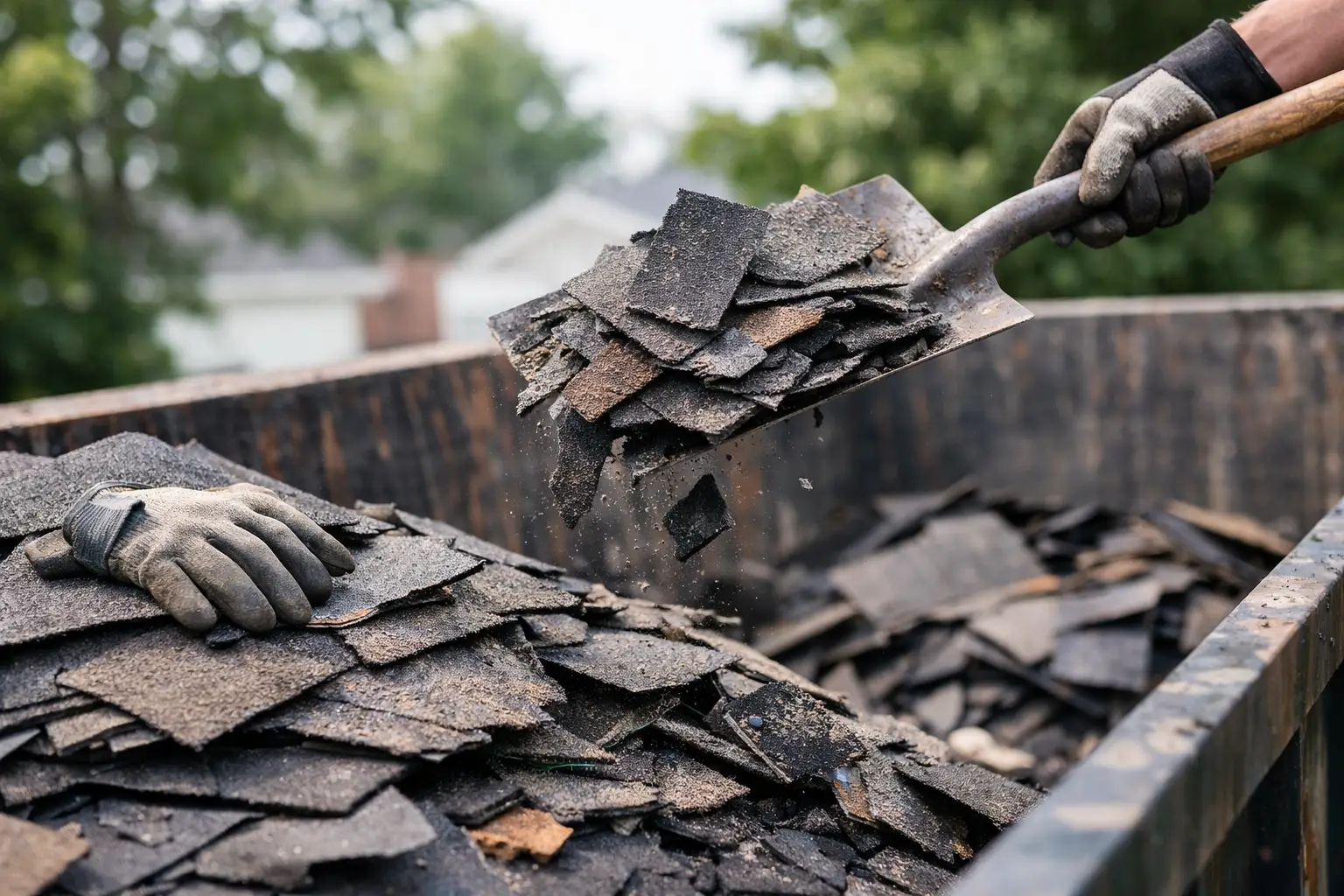
A roof tear-off creates debris faster than most homeowners expect. Once crews start pulling shingles, underlayment, flashing, and nails, a pickup truck quickly becomes an inefficient plan. Knowing how to dispose of old roofing shingles before work begins helps keep the driveway clear, protects the work area, and prevents costly last-minute trips to a disposal site.
For most reroofing projects, a roll-off bin is the simplest option. The right bin size and material plan depend on the roof’s square footage, the number of shingle layers, and what else is coming off the roof. Shingles are dense, so disposal is usually more about weight than volume.
Why roofing shingles need their own disposal plan
Asphalt shingles are heavy. A bundle may not seem like much when it is carried up a ladder, but a full roof can produce several tons of material. Add felt paper, wood sheathing, nails, vents, flashing, and damaged gutters, and the pile can outgrow a trailer or pickup bed in a hurry.
Loose shingles also create real safety issues. Wind can scatter torn material across the yard, exposed nails can puncture tires, and a growing pile makes it harder for roofers to work efficiently. Having a bin delivered before the first shingle comes down gives the crew one place to load debris as the job moves forward.
A bin also saves homeowners from making repeated disposal runs. That matters on a project with a tight weather window. Rather than stopping work to load, tarp, transport, unload, and return, the debris stays contained until scheduled pickup.
Check disposal rules before the tear-off begins
Not every landfill, transfer station, or recycling facility accepts roofing debris under the same rules. Requirements can vary by municipality and facility, especially when loads include mixed construction debris. Before you begin, confirm whether asphalt shingles are accepted and whether there are separate rules for recyclable shingle material, clean wood, metal, or mixed waste.
The age and condition of the roof matter, too. Older buildings can contain materials that need special handling. If there is any concern about asbestos-containing materials or another hazardous product, do not place it in a standard waste bin. Have the material assessed and follow the required handling and disposal process.
It also helps to ask your bin provider what can go into the container. A roofing load may be accepted as mixed construction debris, but adding prohibited items can create delays, extra charges, or a rejected load. Keep paints, solvents, fuel containers, batteries, propane cylinders, tires, and electronics out of the bin unless the provider has specifically approved them.
Choose a bin based on roof size and shingle layers
There is no single bin size that fits every roof. A small detached garage or shed may only produce a modest amount of material. A large home with two layers of shingles can create a much heavier load than its roofline suggests.
For a smaller repair or partial tear-off, a 5-yard bin may be enough when the debris is limited to a contained section of the roof. For a typical home reroof, many homeowners and contractors need a mid-size or larger roll-off bin. Major tear-offs, multi-layer roofs, or projects that also include decking and renovation debris may require a larger container or more than one pickup.
Weight limits are just as important as bin dimensions. Shingles pack tightly and become very heavy, especially after rain. A larger bin is not always the best answer if the weight allowance does not match the project. Give the rental company an honest description of the roof size, number of layers, and other materials being removed. A local provider can help you choose a bin that fits both the debris volume and expected weight.
Keep shingles separate from materials that can be recycled
Roof tear-offs often include materials with different disposal paths. Asphalt shingles may go into a designated roofing or mixed construction waste stream, while metal flashing, aluminum gutters, copper, and steel vents may be recyclable. Clean wood from decking or framing may also be handled differently from heavily treated, painted, or contaminated wood.
Separating materials at the start can make cleanup easier and may reduce unnecessary disposal costs. Set aside metal in a clearly marked pile or container rather than burying it under shingles. If decking is being replaced, keep clean lumber separate when practical. The key is not to overcomplicate the job site. Separate materials only when there is a clear disposal or recycling benefit and enough room to do it safely.
Avoid using the roofing bin as a catch-all for household junk. A few stray items can turn a straightforward shingle load into a mixed waste issue. If a renovation, garage cleanout, or demolition project is happening at the same time, discuss the materials in advance so the right bin plan is in place.
Load the bin safely and efficiently
Where the bin sits can make or break the cleanup process. The best placement is close enough for crews to reach it without carrying shingles across the property, but far enough from the house to leave working room. A level driveway is usually ideal. Ask for driveway protection beneath the bin to help reduce the risk of scrapes and pressure marks.
Load shingles evenly across the bottom of the container. Do not create one tall, dense pile at the front or back. Spreading the material helps keep the bin stable and makes it easier to stay within fill limits. Heavy bundles and torn shingle sections should go in first, with lighter roofing paper and packaging placed around them as needed.
Never load debris above the top rail. Overfilled bins can be unsafe to transport, and material may need to be removed before pickup. Keep a rake and magnet roller nearby to collect loose nails from the driveway, sidewalk, and lawn throughout the job instead of waiting until the end.
If roofers are tossing material from above, establish a clear drop zone and keep children, pets, vehicles, and anyone not involved in the work away from it. Ground crews should wear gloves, sturdy boots, and eye protection while handling torn shingles and sharp metal.
Consider whether shingle recycling is available
In some areas, asphalt shingles can be processed for use in paving materials. Recycling can be a worthwhile option when a nearby facility accepts the type and condition of shingles from your project. Clean asphalt shingles are more likely to qualify than loads mixed with insulation, plastic, wood, household garbage, or suspected hazardous materials.
That said, recycling availability is not guaranteed. Transportation distance, local facility rules, and the amount of contamination in the load all affect whether recycling makes sense. The practical goal is to use the disposal route that is accepted locally, safe for the material, and realistic for the timeline.
For homeowners, this usually means asking one question before booking: can this bin and disposal route handle asphalt shingles from my roof? Getting that answer upfront is better than discovering a restriction after the container is loaded.
Plan for weather, access, and pickup timing
A reroofing project rarely follows a perfect schedule. Rain can make shingles heavier and slicker, while wind can spread loose debris across the property. If poor weather is expected, keep the bin accessible and avoid letting water collect in it when possible. Wet debris can add significant weight to a load.
Make sure vehicles are moved before delivery and pickup. Low branches, overhead wires, narrow gates, and parked cars can limit access for a roll-off truck. If the bin must sit on a street or shared area, check whether local permission is required before it arrives.
For projects in Newmarket and nearby communities, dependable timing matters just as much as bin size. Forever Green Bin Rental helps homeowners and contractors match the container to the job, with protective boards included to help safeguard driveways. A quick conversation about the roof, materials, access, and schedule can prevent most disposal problems before the tear-off starts.
A clean roofing job does not end when the last shingle comes off. It ends when the debris is contained, the nails are collected, and the property is ready for the new roof. Plan the bin first, and the rest of the cleanup has a much better chance of staying on schedule.