
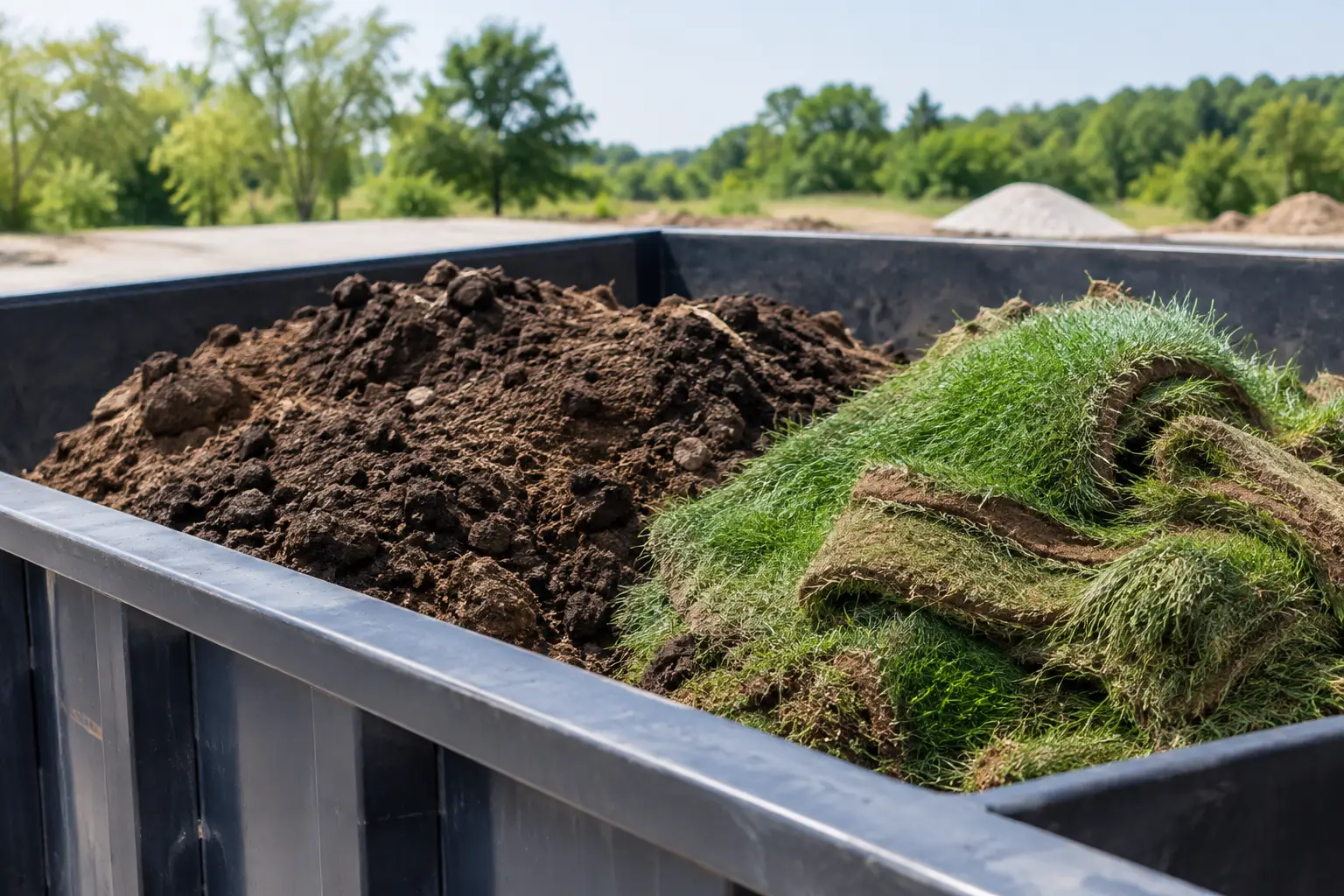
A yard renovation can create a surprising amount of heavy material fast. One day you are lifting old turf and leveling a garden bed. The next, you have piles of sod, loose soil, roots, stones, and broken landscape materials taking up half the driveway. So, can soil and sod mix in the same dumpster bin? Sometimes, but only when the material meets the requirements for clean fill and the bin is loaded correctly.
The practical answer is to treat soil and sod as a separate waste stream from regular renovation debris. That keeps disposal simpler, helps avoid sorting fees, and prevents a bin from becoming too heavy to haul safely.
Can Soil and Sod Mix in the Same Bin?
Soil and sod can often go together in a clean fill bin when the load is primarily natural earth material. Sod is soil with grass, roots, and a thin layer of organic matter attached, so many disposal facilities will accept it alongside excavated soil.
The details matter. A pile of clean sod removed from a lawn and mixed with plain soil is very different from a pile that also contains plastic edging, landscape fabric, treated wood, garbage, chunks of concrete, or construction debris. Once those materials are mixed in, the load may no longer qualify as clean fill.
Before booking, describe what is in the pile as clearly as possible. Let the bin provider know whether you are removing lawn sod, garden soil, clay, rocks, roots, or material from a demolition or excavation area. A quick conversation before delivery is much easier than dealing with a rejected load after the bin is full.
What Counts as Clean Fill?
Clean fill usually means uncontaminated soil, clay, sod, gravel, sand, and small natural stones. It is material that can be processed or reused without extensive sorting. Requirements vary by disposal site, but the goal is consistent: keep earth materials free of waste and man-made products.
A clean soil and sod load should not include household trash, lumber, drywall, insulation, roofing, carpet, plastic, metal, or bags of yard waste. Large roots, branches, and shrubs may also need to be handled separately, especially if there is a significant amount of organic debris mixed into the load.
Be especially careful with soil from older sheds, garages, driveways, burn areas, or places where vehicles and equipment were stored. Soil that may contain oil, chemicals, paint, or other contaminants cannot be treated as ordinary clean fill. If you are unsure about the history of the property or the material looks unusual, ask before loading it.
Why Mixing Materials Creates Problems
The main issue with soil is weight. Dirt, sod, clay, and wet grass add up quickly, even in a small bin. A container that looks only half full can be at or above its safe hauling limit. Rain makes the situation worse because sod and soil hold water.
Mixing heavy soil with general debris creates two problems. First, it can make the bin too heavy for the truck or disposal facility. Second, it makes sorting more difficult. A load with soil, old fence boards, broken pavers, plastic pots, and garbage may need to be processed as mixed material instead of clean fill, which can affect disposal costs.
That does not mean every landscaping project requires multiple bins. It means the bin should match the material. If you are pulling up grass and regrading a small section of yard, a dedicated clean fill bin may be the right fit. If you are also tearing out a deck, fence, or patio, separate the soil and sod from those materials whenever possible.
Choose the Bin Based on Weight, Not Just Volume
For bulky but light cleanup debris, customers often think in terms of how much space they need. Soil projects require a different approach. Weight comes first.
A smaller bin is usually safer for soil and sod because it limits how much dense material can be loaded. Even if you have a large pile, it may be better to arrange multiple smaller loads than to fill a large container with earth. This protects the driveway, keeps transport safe, and helps avoid delays at pickup.
When requesting a quote, estimate the area you are removing and the depth of excavation. For example, stripping a thin layer of sod from a backyard creates less material than removing several inches of soil for a patio base or drainage project. Mention whether the ground is wet, clay-heavy, or mixed with rocks. Those details help determine a realistic bin size and load limit.
How to Prepare Soil and Sod for Disposal
A little preparation can keep the job moving and prevent the most common loading mistakes. Start by creating a dedicated pile for soil and sod. Keep it away from demolition debris, household waste, and landscape products that do not belong in clean fill.
Pull out obvious contamination as you work. Remove plastic plant pots, irrigation tubing, landscape fabric, metal stakes, edging, and bags. If old sod comes up with large pieces of fabric or netting underneath, separate those materials before they reach the bin.
Load the bin evenly rather than dropping all the heavy material on one side. Do not pile soil above the top edge. An overloaded bin may be unsafe to transport, and material can spill during pickup. If your project is generating more soil than expected, stop before overfilling and arrange the next step with your rental provider.
It also helps to think about access before the bin arrives. Place the soil pile where you can move it without crossing soft grass, blocking a garage, or dragging muddy wheelbarrows over a finished driveway. A clear loading path saves time, especially for contractors working around other trades.
Keep Yard Waste Separate When Needed
Not every piece of natural material belongs with clean fill. Grass clippings, loose leaves, branches, brush, and large amounts of roots are typically handled as yard waste or organic material, not soil. A little grass attached to sod is expected. Several bags of leaves and a pile of branches are a different disposal category.
The same goes for landscaping materials. Natural stone, gravel, and plain dirt may be acceptable in a clean fill load, while railroad ties, pressure-treated timber, plastic mulch, synthetic turf, and composite decking are not. If you are removing an old garden or backyard feature, sort the job into piles before the bin arrives.
This approach is not about making extra work. It is about avoiding a full bin that cannot be disposed of as planned. Clean loads are easier to manage, and clear separation helps keep your cleanup predictable.
Plan Pickup Around the Weather and Project Schedule
If possible, schedule sod removal and soil loading during a dry stretch. Wet soil is harder to shovel, heavier to haul, and more likely to stick inside wheelbarrows and equipment. Covering a soil pile before heavy rain can make a meaningful difference if the work takes more than a day.
For homeowners, it is often best to have the bin delivered shortly before the excavation begins rather than leaving it on the property for weeks. For contractors, coordinate delivery with the demolition or landscaping phase so the crew has a clear place to put material immediately. Fast loading and timely pickup keep the site cleaner and free up valuable parking or driveway space.
Forever Green Bin Rental can help York Region and South Simcoe customers match a bin to the material before a yard cleanup starts. Sharing a few details about the project upfront helps prevent the wrong container from arriving at the job site.
A clean soil and sod load starts with one simple habit: keep the pile clean from the first shovel full. When the materials stay separated, the bin choice is clearer, pickup goes more smoothly, and you can get back to building the yard you had in mind.