
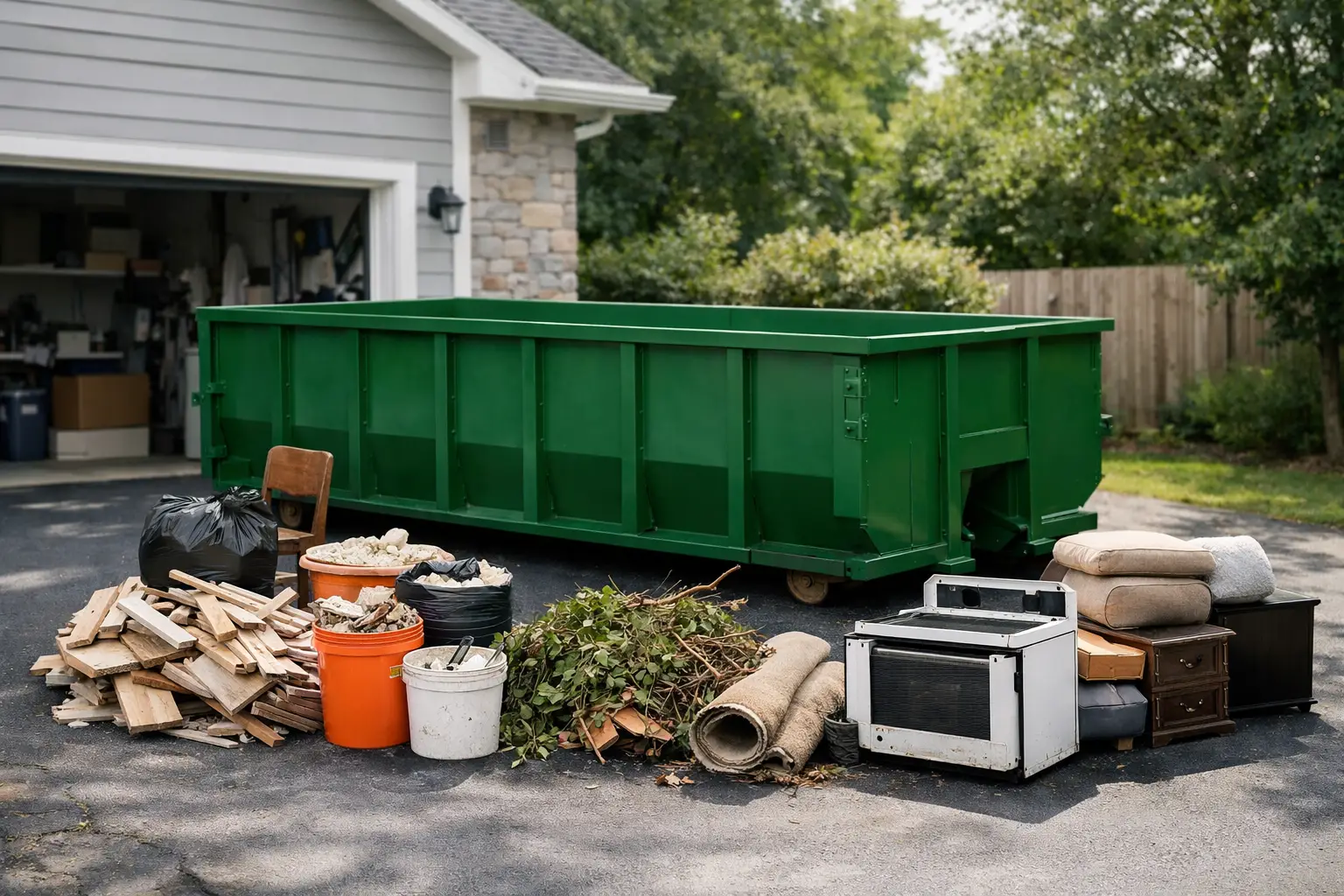
A 15-yard bin is often the sweet spot for projects that are too big for curbside pickup but do not need a massive construction container. If you are asking what fits a 15-yard bin, think of a substantial room cleanout, a moderate renovation, or several pickup-truck loads of debris. It gives homeowners and contractors enough room to work efficiently without taking up more driveway space than necessary.
The right bin is not just about how much material you have. Weight, material type, and how easily debris stacks all affect whether a 15-yard container is the right call. Here is how to size your project with confidence before delivery day.
What Fits in a 15-Yard Bin?
A 15-yard bin holds 15 cubic yards of material, or about 405 cubic feet. Exact dimensions vary by container style, but it is commonly long enough to sit comfortably in a residential driveway while providing a practical amount of loading space.
As a rough visual estimate, a 15-yard bin can hold the equivalent of about six pickup-truck loads when those loads are stacked and secured properly. That estimate is useful, but it is not a guarantee. Loose branches, old furniture, and awkward demolition materials can fill open space quickly. Broken-down boxes, bagged household items, and neatly stacked lumber make much better use of the same bin.
For many York Region and South Simcoe homeowners, this size works well when a cleanup has grown beyond a few bags but has not turned into a full-property renovation. It is large enough to keep a project moving and compact enough for most standard residential jobs.
Projects That Are a Good Match for a 15-Yard Bin
A 15-yard bin is a dependable choice for mid-sized projects with general household waste, renovation debris, or yard materials. The following jobs are common examples.
Basement, garage, or estate cleanouts
A crowded basement or garage can produce more waste than expected. Old shelving, boxes, toys, damaged furniture, clothing, mattresses, and general household clutter can fill a small bin fast. A 15-yard bin gives you room to sort as you go rather than making difficult decisions over every item.
It is also useful for estate cleanouts where several rooms need attention but the home is not being fully emptied. If the property contains large amounts of furniture, appliances, or dense materials, discuss the load before booking. A larger bin or separate disposal plan may make more sense.
Kitchen, bathroom, and flooring renovations
This size is a strong fit for a standard kitchen or bathroom renovation. It can typically handle removed cabinets, countertops, drywall, flooring, trim, insulation, packaging, and other light demolition debris from a single-room project.
Flooring deserves extra attention. Carpet and laminate are relatively light but bulky, while tile, mortar, and underlayment can become heavy very quickly. If your project includes a large amount of ceramic tile, natural stone, or similar material, a dedicated heavy-material bin may be the safer and more cost-effective choice.
Deck removal and small outdoor projects
Removing a small to medium wood deck, fence sections, old garden structures, or weathered patio furniture can be a good use for a 15-yard bin. Pressure-treated lumber is bulky, so break down long sections where possible and load them flat to avoid wasted air pockets.
Landscaping cleanups can also fit, especially when the material is mainly shrubs, small branches, sod, and yard waste. Dirt, gravel, bricks, and concrete are different. Those materials are heavy and should be placed in a clean fill or concrete bin rather than mixed into a general waste container.
Light demolition and contractor debris
For contractors, a 15-yard bin can keep a smaller renovation site organized without overwhelming the work area. It is often suitable for drywall, wood, insulation, trim, light fixtures, cabinets, packaging, and non-hazardous job-site debris.
It works best when the debris stream is predictable. If demolition includes concrete, asphalt, masonry, large quantities of roofing shingles, or plaster, weight can become the deciding factor. A bin may look only half full and still be too heavy for safe hauling.
What Usually Does Not Fit Well
A 15-yard bin is roomy, but it is not designed for every material or every volume of waste. The most common sizing mistake is ordering based on visible space alone and forgetting how heavy certain debris can be.
Large-scale whole-home renovations, major demolition work, roof tear-offs, and full-house cleanouts often need a 20-yard or 25-yard bin. That is especially true when the project includes bulky furniture from multiple rooms, large cabinets, framing lumber, or a steady flow of contractor debris over several days.
Dense material needs its own plan. Concrete, asphalt, soil, sand, gravel, bricks, and stone can quickly exceed hauling limits in a general bin. Even if you only have a few cubic yards, use the bin type intended for heavy clean fill or concrete. Separating materials correctly can also make disposal simpler and prevent surprise issues at pickup.
Fill Level Matters as Much as Bin Size
Every bin has a fill line. Debris should stay level with or below the top edge of the container. Nothing should stick out over the sides or extend above the rim.
This is a safety requirement, not just a packing preference. A loaded bin must be safely tarped and transported on public roads. Overfilled containers may need to be unloaded before pickup, which can delay your schedule and create an extra job when you are ready to wrap up.
Load heavy materials first and spread them across the bottom. Then add lighter materials, taking time to break down cardboard, cabinets, and other bulky items. Do not leave long boards or metal pieces hanging over the edge. A few minutes of organized loading can make a meaningful difference in how much the bin holds.
Material Rules to Confirm Before You Book
Not every item belongs in a general waste bin. Disposal facilities have rules for safety, environmental handling, and waste-stream separation. Always describe your material clearly when requesting a quote, especially if your load includes renovation debris or heavy material.
Items commonly requiring separate handling include:
- Paint, solvents, fuels, propane tanks, and other hazardous products
- Batteries, electronics, and fluorescent bulbs
- Tires, appliances, and items containing refrigerants
- Concrete, asphalt, soil, brick, and clean fill when mixed with general waste
Rules can vary based on the disposal facility and the specific materials in your load. Being upfront about what you are throwing away helps ensure the correct bin arrives and avoids problems after the container is loaded.
How to Decide Between a 15-Yard and a Larger Bin
Choose a 15-yard bin when you have a defined project, a moderate amount of debris, and mostly light-to-medium general waste. It is a practical middle size for homeowners who want enough capacity without paying for unused space.
Move up to a 20-yard or 25-yard bin if you are clearing several rooms, removing a large deck, renovating multiple areas at once, or expecting debris to build up over time. The larger bin can be a better value when you are close to the limit, since running out of space can mean arranging another delivery and pickup.
On the other hand, do not automatically choose bigger for dense waste. Heavy materials are often better handled in a smaller, dedicated bin. The best choice depends on both volume and weight.
Make Delivery Day Easier
Before your bin arrives, clear vehicles and movable items from the driveway. Choose a location with easy truck access and enough overhead clearance from wires, trees, or rooflines. If you are loading from a garage or side yard, consider the walking distance too. The closer the bin is to the work area, the faster and safer the cleanup will go.
Driveway protection should be part of the plan as well. Forever Green Bin Rental includes driveway protection with every rental, giving homeowners an added layer of care while the container is on-site.
A 15-yard bin is a practical tool when the project is the right size and the material is properly sorted. Start with an honest estimate of your debris, leave room for the unexpected, and ask about material limits before booking. That small bit of planning can keep your cleanup moving from the first load to the final pickup.