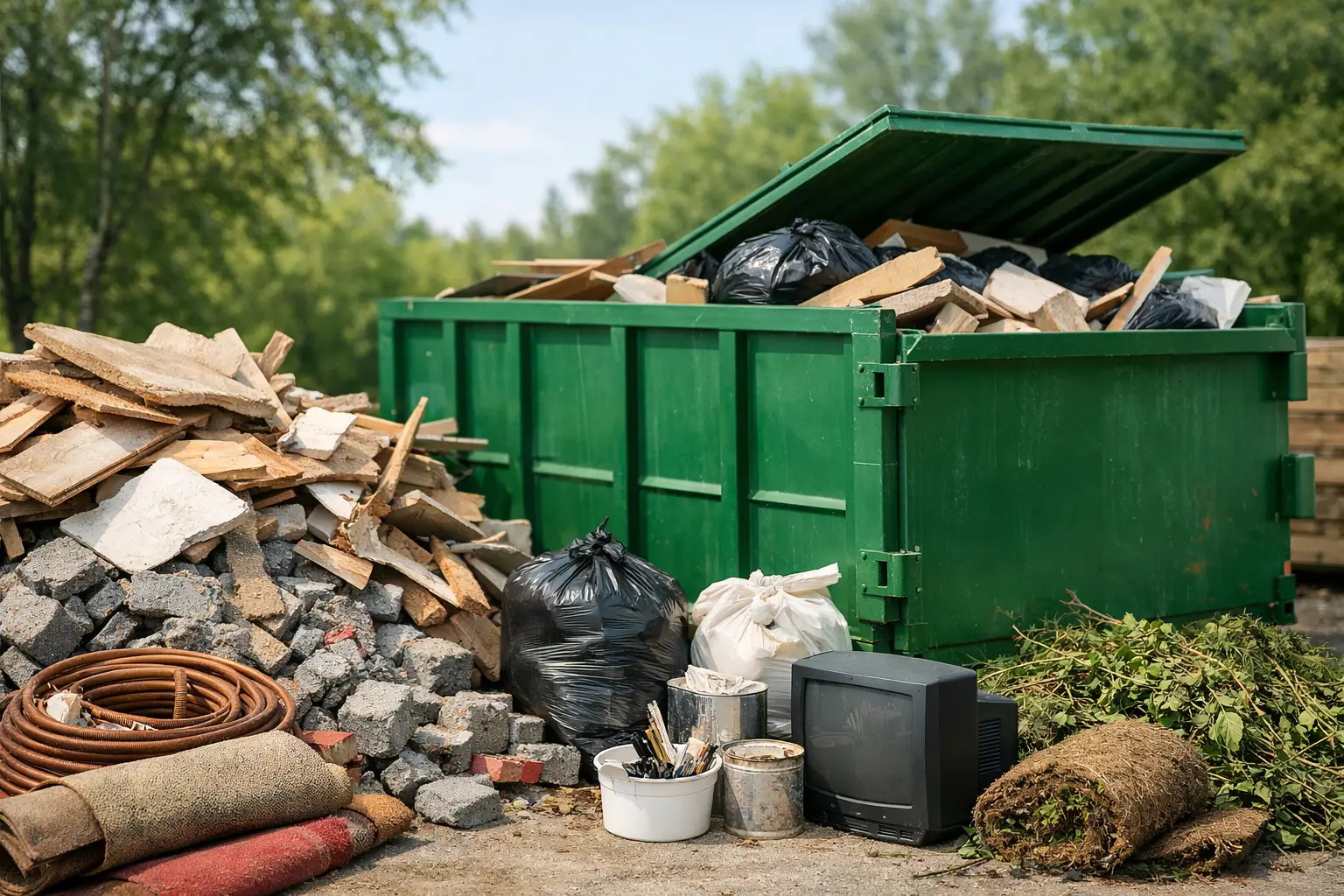
A basement cleanout can produce old furniture, boxes, carpet, and scrap wood all at once. A renovation can add drywall, flooring, cabinets, and packaging to the pile. Knowing the top materials accepted in dumpsters before delivery helps you choose the right bin, avoid sorting delays, and keep your project moving without extra landfill runs.
The key is not simply finding a bin large enough for the debris. Material type matters just as much. Mixed waste, clean fill, concrete, and asphalt are handled differently, and certain items cannot go in a rental dumpster at all. A quick plan before loading protects your schedule and makes disposal more affordable.
Top Materials Accepted in Rental Dumpsters
Most cleanup projects fit into one of four waste streams: general household waste, renovation debris, clean fill, and heavy construction materials. The right bin depends on what makes up most of your load. If you are unsure, describe the project and the materials when requesting a quote. That gives the rental provider a clear picture of what needs to be hauled away.
General household and cleanup waste
A general waste bin is a practical choice for moving days, estate cleanouts, garage purges, rental turnovers, and everyday clutter. These loads commonly include old furniture, mattresses, toys, clothing, cardboard, shelving, non-recyclable household items, and bagged garbage.
It also works well when the contents are varied but not unusually heavy. For example, a homeowner clearing a shed may have lawn chairs, storage totes, broken tools, light wood, and boxes. A 5-yard or 10-yard bin can often suit a smaller cleanup, while larger homes or multi-room cleanouts may need more space.
Keep an eye on weight. A bin full of couches and cardboard is very different from one filled with wet soil, books, or tile. Volume can look manageable while the load becomes heavy quickly.
Renovation and demolition debris
Kitchen remodels, bathroom updates, basement finishing, and small demolition projects create materials that are generally suited to a mixed material or general waste bin. Common examples include lumber, drywall, insulation, cabinets, doors, trim, carpet, underlay, laminate flooring, vinyl flooring, shingles, and construction packaging.
For a mixed renovation load, separation at the job site can still make a difference. Set concrete, brick, soil, and asphalt aside rather than mixing them into a bin full of light demolition debris. Those dense materials can make the bin too heavy and may require a different disposal stream.
Contractors also benefit from planning bin placement around the work sequence. Put the bin where demolition debris can go directly from the work area to the container, but leave clear access for trades, deliveries, and pickup. A well-placed roll-off bin reduces loose piles and keeps a project site safer.
Wood, drywall, flooring, and bulky materials
Many interior materials are accepted in a standard mixed waste bin, but their condition and quantity matter. Clean lumber, old decking, plywood, drywall, carpet, and flooring are common renovation waste items. Cabinets and built-ins can usually go in as well after they are removed from the structure.
Long materials should be loaded flat where possible. Break down cabinets, trim oversized pieces, and flatten cardboard to use the bin efficiently. Do not stack debris above the top rail. Overfilled bins can be unsafe to transport and may need to be reloaded before pickup.
Drywall deserves a little extra attention. It is generally manageable as renovation debris, but a large drywall-only project may have different disposal requirements than a mixed kitchen teardown. If drywall is the main material, say so when booking rather than assuming every bin is priced and handled the same way.
Clean fill: soil, dirt, sod, and stone
Landscaping and excavation projects often produce clean fill. This can include uncontaminated soil, dirt, clay, sod, gravel, stone, and similar natural materials. A clean fill bin is designed for a load that stays clean and separated from garbage, wood, plastic, and other debris.
This separation matters because clean fill can often be processed differently from mixed waste. Once a load is contaminated with trash or construction debris, it may no longer qualify as clean fill. That can affect where it goes and what it costs to dispose of.
If you are removing a garden bed, digging for a patio, or grading part of a property, a dedicated clean fill bin is usually the better option. Soil is deceptively heavy, so even a small amount can add significant weight. Smaller bins are often the safe choice for dense materials, even when the project area is large.
Concrete, brick, and asphalt
Concrete, brick, block, and asphalt should typically be placed in a dedicated heavy-material bin. These materials are often accepted for recycling or specialized processing when they are kept free of general garbage and other contamination.
A driveway tear-out, old patio removal, walkway replacement, or asphalt repair can create more weight than most people expect. For that reason, concrete and asphalt are not a good match for a large mixed bin packed to the top. The container may have plenty of room but exceed safe hauling limits long before it looks full.
Ask whether rebar, wire mesh, dirt, or other materials can remain with the concrete. Requirements can vary by disposal facility and by the condition of the load. Clean, separated material is always easier to manage than a pile with wood, plastic, and garbage mixed through it.
Materials That Need a Separate Plan
A dumpster is not a catch-all container. Hazardous, regulated, and special-handling items need another disposal method. Putting them in a rental bin can create safety issues for the driver, disposal facility workers, and the environment.
Do not load these items unless your provider has specifically confirmed they are accepted:
- Paint, stains, solvents, fuel, oils, and other chemicals
- Propane tanks, pressurized cylinders, and fire extinguishers
- Batteries, electronics, televisions, and computer equipment
- Tires, appliances containing refrigerant, and automotive parts
- Medical waste, pesticides, asbestos-containing materials, and unknown substances
Some items on this list may have local drop-off programs or dedicated recycling options. Appliances can also be complicated. A metal appliance may seem like ordinary scrap, but units with refrigerant need proper handling before disposal. When in doubt, keep the item out of the bin and ask first.
How to Choose the Right Dumpster for Your Materials
Start with the material that will make up the largest share of the load, not the item you are most eager to get rid of. A bin with mostly household clutter and a few boards is general waste. A bin with mostly drywall and cabinetry is a mixed renovation load. A project producing dirt, concrete, or asphalt needs a dedicated option.
Next, estimate both volume and weight. Light, bulky debris calls for more cubic yards. Dense debris calls for a bin sized around safe weight limits. This is why a 25-yard bin may make sense for a major interior renovation but not for a full load of concrete.
Finally, consider timing. If a renovation has an early demolition phase and a later landscaping phase, booking separate bins may be cleaner and more cost-effective than trying to combine everything. It depends on the scope of the work, available space, and how strictly the materials need to be separated.
Load Your Bin for Safe Pickup
A few loading habits prevent common pickup problems. Place heavy materials evenly across the bottom instead of concentrating all the weight at one end. Load bulky items first, then use smaller debris to fill gaps. Keep the top of the load level with or below the bin walls so it can be secured for transport.
Protect the area around the bin, too. Choose a flat, accessible location with enough room for the delivery truck to maneuver. At Forever Green Bin Rental, driveway protection is included with every rental, helping homeowners and contractors keep cleanup practical without overlooking the property surface beneath the container.
A good bin rental should make disposal feel like one less moving part in your project. Sort the heavy materials, keep restricted items aside, and book the container that matches what you actually have. That simple preparation turns a pile of debris into a pickup that stays on schedule.