
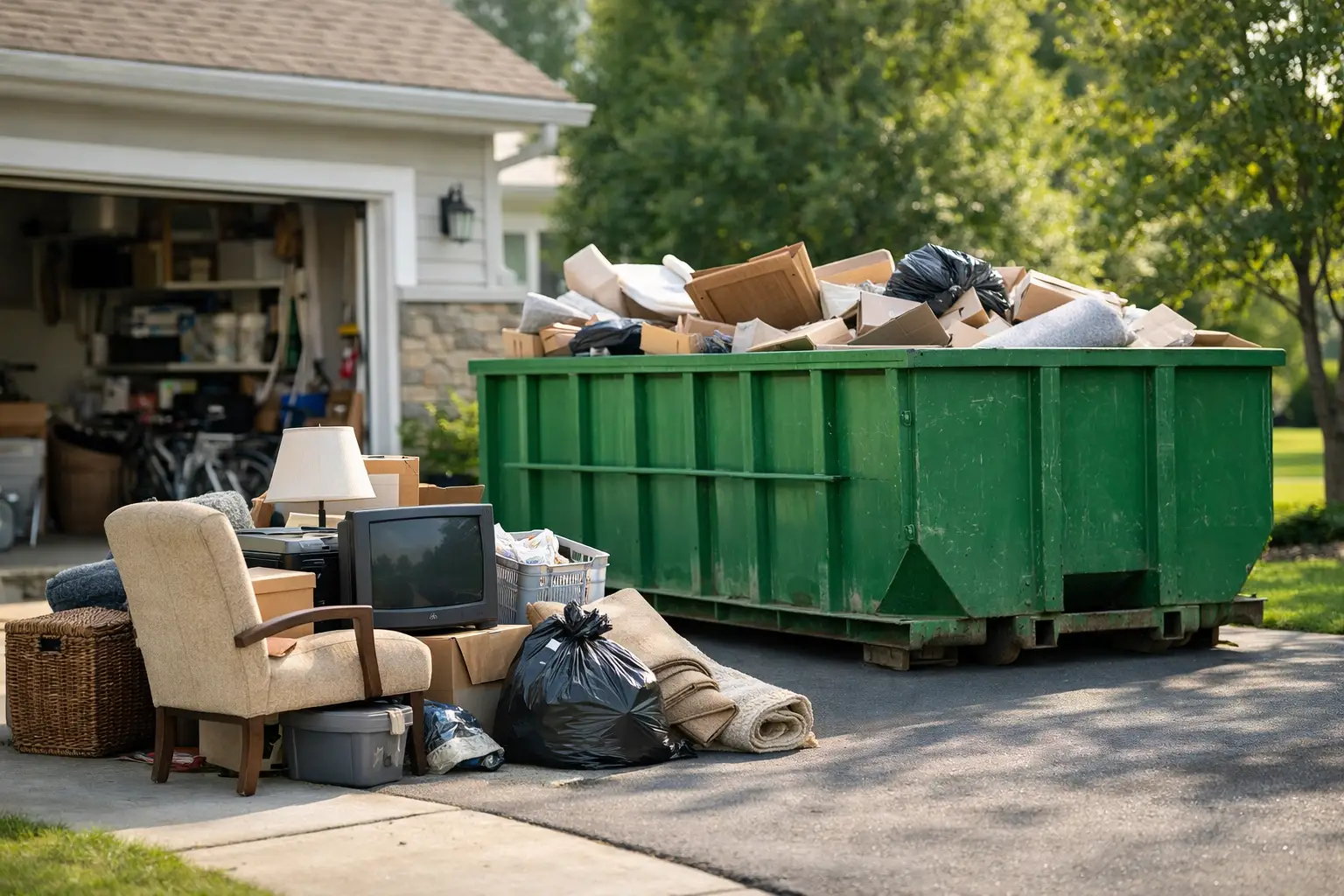
A home cleanout rarely starts as a major project. It starts with one overfilled closet, a basement corner you have avoided for years, or a garage that no longer fits a car. Then the old furniture, boxes, broken equipment, and renovation leftovers begin piling up. When you need to rent a dumpster for a home cleanout, the right bin saves you from repeated disposal runs and gives the project a clear finish line.
The key is not simply ordering the biggest container available. A good rental fits the amount and type of debris, can be placed safely on your property, and is scheduled around the pace of your cleanup. That is what keeps a stressful cleanout moving instead of turning into a driveway full of bags.
When a Dumpster Makes Sense for a Home Cleanout
A dumpster rental is often the practical choice when the volume of waste is more than a pickup truck can handle in one or two loads. Whole-home cleanouts, estate clear-outs, moving projects, rental turnovers, basement cleanups, and garage purges are common examples. It is also useful when you need to work in stages. You can sort one room at a time, load as you go, and keep the mess contained.
It may not be the best fit for every job. If you have only a few bags and one small item, curbside collection or a quick disposal trip may be easier. But once bulky furniture, mattresses, shelving, carpet, drywall, or several years of stored household items enter the picture, a bin is usually the more efficient option.
For homeowners in York Region and South Simcoe, timing matters too. A bin on site means you can clean out a basement after work, tackle the garage over a weekend, and avoid trying to coordinate several landfill trips around a busy schedule.
Choose the Right Dumpster Size Before You Book
Bin sizes are measured in cubic yards, which describes volume rather than weight. For a home cleanout, the best size depends on how many rooms you are clearing, how bulky the material is, and whether you are adding renovation debris to the load.
Small cleanouts: 5-yard bins
A 5-yard bin works well for a single-room cleanout, a small shed, a closet purge, or a modest DIY project. It is a sensible choice when the debris is mostly bags, boxes, light household items, and a few small pieces of furniture. A smaller bin also takes up less driveway space.
The trade-off is simple: bulky items fill space quickly. A couch, large chair, broken dresser, or rolled carpet can make a small bin feel full sooner than expected. If you are clearing a packed basement or garage, sizing up is often less frustrating than trying to make everything fit.
Mid-size bins for garages, basements, and moving cleanouts
A mid-size container is usually the sweet spot for larger residential projects. It gives you room for furniture, boxes, old toys, shelving, household junk, and general debris without taking on the footprint of a major construction bin.
This size is a good fit when you are cleaning multiple areas of the home or preparing a property for sale. It also gives you breathing room when the project is still uncovering surprises, which is common in storage rooms and inherited homes.
Large bins for whole-home and renovation debris
For an estate cleanout, a major move, a large rental turnover, or a cleanout combined with demolition work, a 20- or 25-yard bin may be the better answer. Large bins are designed for high-volume jobs, but they should be chosen with care. They need adequate placement space, and heavy materials can affect what the bin can safely carry.
If you are unsure, describe the project honestly when requesting a quote. Mention the number of rooms, large furniture, flooring, drywall, or outdoor materials involved. A local bin provider can help you avoid paying for more capacity than you need while reducing the chance of needing a second bin.
What Can Go in a Home Cleanout Dumpster?
Most general household cleanout materials can go into a general waste bin. Think old furniture, non-hazardous household junk, carpeting, wood, cabinets, drywall, toys, clothing, boxes, and general renovation debris. Loading similar materials together makes the job easier and helps keep disposal straightforward.
The materials that need more attention are the ones that are heavy, regulated, or require separate handling. Concrete, asphalt, soil, and clean fill typically belong in dedicated bins rather than a mixed household waste container. Electronics, paint, propane tanks, chemicals, fuel, batteries, tires, and other hazardous materials may not be accepted in a standard dumpster.
Before loading, ask about anything you are unsure of. This is especially worthwhile for old workshop supplies, cleaning chemicals, automotive fluids, or materials left behind in a garage or shed. A quick question before delivery is easier than discovering at pickup that an item cannot stay in the bin.
Plan the Driveway Placement
Where the dumpster sits affects the entire project. Most homeowners choose the driveway because it keeps loading close to the house and out of the street. Measure the available space if you have a narrow drive, low-hanging branches, gates, or parked vehicles that may limit access.
Clear the placement area before delivery. Move vehicles, basketball nets, loose planters, and anything that could block the driver. Keep in mind that you will want a clear path from the house to the bin, especially if you are carrying furniture or hauling heavy boxes.
Driveway protection should be part of the service, not an afterthought. Forever Green Bin Rental includes driveway protection with every rental, helping reduce direct contact between the bin and your driveway surface. It is a practical detail that matters when you are putting a heavy container on a residential property.
Load the Bin Safely and Efficiently
Start with flat and heavy items on the bottom. Broken-down boxes, wood pieces, panels, and flat furniture components create a stable base. Then place bulky items carefully to use open spaces instead of dropping them in at random. A little organization can make a major difference in how much the bin holds.
Do not load above the top edge of the container. Overfilled bins can be unsafe to transport and may need to be leveled before pickup. Keep walkways around the bin clear, and take extra care with glass, nails, sharp metal, and heavy objects.
Weight matters as much as volume. A bin that looks only half full can still be very heavy if it contains concrete, dirt, shingles, or other dense material. If your cleanout includes these materials, separate them from general household waste and book the appropriate bin type.
Set a Rental Timeline That Fits Real Life
Many cleanouts take longer than expected because sorting is part of the work. You may find paperwork to review, family items to set aside, donation piles to create, or materials that need separate disposal. Give yourself enough time to make those decisions without rushing.
A weekend rental may be enough for a focused garage or basement project with help from family or friends. A whole-home cleanout often benefits from a longer timeline, especially when you are coordinating movers, contractors, or an estate sale. Arrange delivery before your work crew arrives, and schedule pickup once the bin is loaded and accessible.
If the project changes, communicate early. Local service is valuable because you can get a direct answer about availability, pickup timing, or whether a swap-out bin is needed for a bigger job.
Get a Clear Quote, Not a Surprise Bill
Before booking, make sure you understand the bin size, rental period, accepted materials, weight allowance, and any potential charges for restricted items or excess weight. Transparent quote-based booking gives you a realistic picture of the cost before the bin arrives.
Be specific about what you plan to throw away. “Household junk” is useful context, but mentioning a sofa, old cabinets, carpet, drywall, or concrete helps the provider recommend the right container and waste stream. That conversation protects your budget and keeps pickup simple.
A cleanout can feel overwhelming when you look at the whole house at once. Start with one room, keep what truly belongs in your next chapter, and let the bin handle the rest. With the right size container, a safe driveway placement, and a plan for what goes inside, the work becomes manageable one load at a time.