
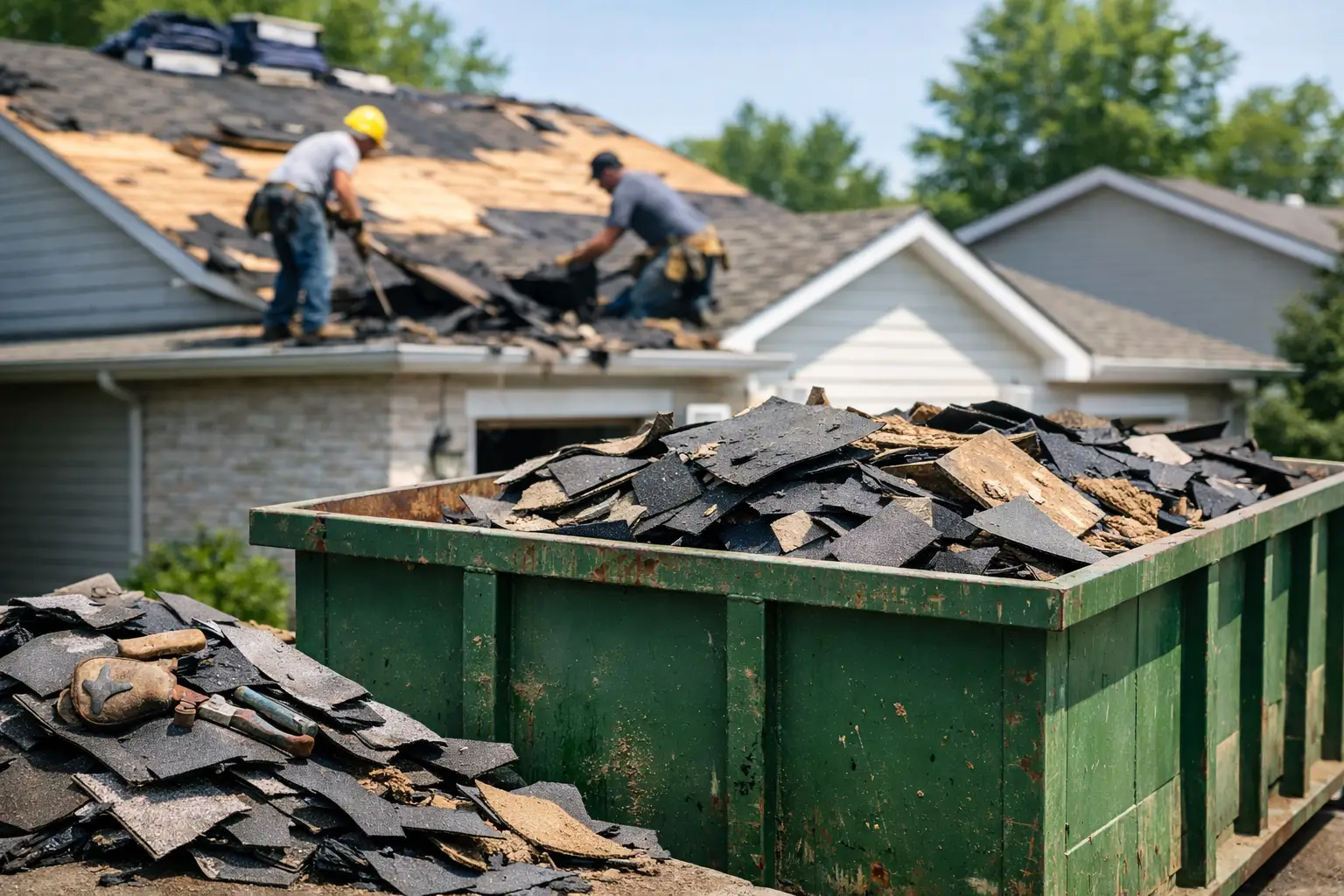
A roof tearoff moves quickly once the crew starts pulling shingles. Old roofing, underlayment, flashing, nails, and damaged wood can pile up far faster than most homeowners expect. When you order a bin for roofing tearoff, the goal is not simply to have somewhere to toss debris. You need the right container, placed in the right spot, with clear expectations about what goes inside.
A little planning before delivery keeps the work area safer, helps your roofing crew stay productive, and prevents delays when it is time for pickup. Whether you are replacing a small garage roof or stripping a full home, these are the details that make bin rental straightforward.
Start With the Roof Size and Number of Layers
The biggest factor in choosing a bin is the amount of roofing material coming off the structure. A single layer of asphalt shingles from a small roof may fit in a modest bin. A large home, a steep roof, or a roof with two or more layers can create a surprisingly heavy load.
Shingles are bulky, but weight is usually the bigger concern. Asphalt shingles can weigh hundreds of pounds per roofing square, which equals 100 square feet of roof surface. Older roofs may also include extra layers, heavy felt, cedar shakes, metal pieces, or rotted plywood that increase the total load.
Before booking, have a rough idea of the roof's square footage, the number of shingle layers, and whether the contractor expects to remove decking. If you do not know those details, your roofer can usually provide them. Sharing that information with the bin rental company is more useful than guessing based on the size of the house alone.
Choosing a Bin Size for a Roofing Tearoff
For a small shed, detached garage, or minor repair project, a smaller bin may be enough. Full residential tearoffs often require a mid-size or large roll-off bin, especially when the roof has multiple layers or the crew is removing more than shingles.
The best size depends on the project, not just the available space in the driveway. A bin that is too small can mean waiting for a swap or making the crew stop while debris is handled. A bin that is much larger than needed may take up valuable access space and add unnecessary cost.
It also helps to think about how the crew will load it. Roofing debris is often tossed directly from the roof or carried to the bin by hand. The container needs enough capacity without being positioned so far away that it slows every trip. A reliable local provider can help match the bin size to your roof and job site conditions before delivery.
Do not plan to heap debris above the rim
Roll-off bins must be loaded level with the top edge. Overfilled bins are unsafe to transport because loose shingles, nails, and debris can fall out during pickup. If the load cannot be safely covered or hauled, it may need to be leveled before removal.
This is one reason it is better to build in a little room rather than order the smallest possible container. Your roofers should also keep debris inside the bin, not on the driveway or street, as the project wraps up.
Keep Roofing Materials Separate From Other Waste
A roof replacement often creates more than shingle waste. There may be cardboard packaging, old gutters, aluminum flashing, lumber, insulation, siding, or general household junk that the homeowner has been meaning to clear out. It can be tempting to combine everything in one bin, but that is not always the best or permitted option.
Different materials can have different disposal requirements and pricing. Clean concrete, asphalt, soil, and other dense materials are commonly handled in dedicated containers. Mixed renovation debris may be accepted in another type of bin, but the allowed materials and weight limits can differ.
Ask what is permitted before loading anything beyond roofing debris. In particular, keep hazardous materials, paint, chemicals, propane tanks, batteries, tires, and electronics out of the bin unless the rental company has specifically approved them. If the home is older and there is any concern about asbestos-containing material, stop and arrange proper assessment and disposal. That material should never be treated like ordinary roofing waste.
Pick a Placement That Helps the Crew and Protects the Property
The most convenient place for a roofing bin is usually the driveway, close enough for efficient loading but clear of vehicles, garage access, and low obstructions. Delivery trucks need room to enter, place the container, and later retrieve it. Branches, utility lines, parked vehicles, narrow gates, and steep or soft ground can all affect placement.
Measure the usable driveway area if space is tight. Let the provider know about a sloped drive, shared lane, newly paved surface, or any access concern before the truck arrives. Clear the area on delivery day so there is no last-minute reshuffling of cars, trailers, or outdoor equipment.
Driveway protection matters, particularly with heavy roofing loads. Boards or protective measures beneath the bin can help reduce direct contact and distribute pressure on the surface. Forever Green Bin Rental includes driveway protection with every rental, giving homeowners one less detail to manage during a demanding project.
Think about falling debris and daily access
Roofers often prefer a bin near the roofline so they can send material down efficiently. That placement can be practical, but it should not block the only entrance to the home or create a hazard near walkways. Keep children, pets, and visitors away from the loading area, and make sure workers have a clear route between the roof and container.
If the bin must go on the street, check local rules first. Some areas require permission or have restrictions on where a container can sit and for how long. Your rental provider can explain delivery requirements, but the property owner should confirm any local permit obligations that apply to the location.
Book Around the Roofing Schedule, Not Just the Start Date
Roofing schedules can change because of weather, material deliveries, or unexpected repairs found after the shingles come off. Book the bin to arrive before the crew begins, but avoid having it delivered so early that it occupies your driveway for days without a purpose.
When requesting a quote, provide the planned tearoff date, the expected project length, and whether a contractor will be loading the bin. If the job could extend because of weather, ask how an extra rental day or a pickup change is handled. Clear timing upfront makes it easier to keep the driveway open and the site organized.
For busy renovation periods, it is smart to arrange the bin as soon as the roofing date is confirmed. Local availability can be limited when several projects are running at once, especially after storms or during peak building season.
Give Your Roofer the Bin Rules Before Work Begins
The homeowner, contractor, and bin provider should be working from the same plan. Let the roofing crew know which container is theirs, what materials are allowed, where it will be placed, and that debris must stay below the rim. This quick conversation can prevent costly mix-ups, such as filling a roofing bin with household items or loading dense materials that push the bin over its weight allowance.
It is also worth asking who will do the final cleanup. Even careful crews can leave behind nails, shingle pieces, and packaging. A magnetic nail sweep and a walk around the driveway, lawn, and landscaping beds are good finishing steps before pickup. Keep the bin accessible when the job is done so the driver can remove it without waiting for vehicles or materials to be moved.
A roofing tearoff is messy by nature, but the disposal side does not have to be. Choose a bin based on the actual roof, separate materials properly, and set it where the crew can work safely. With those basics handled, your project can stay focused on getting a sound new roof over your home.