
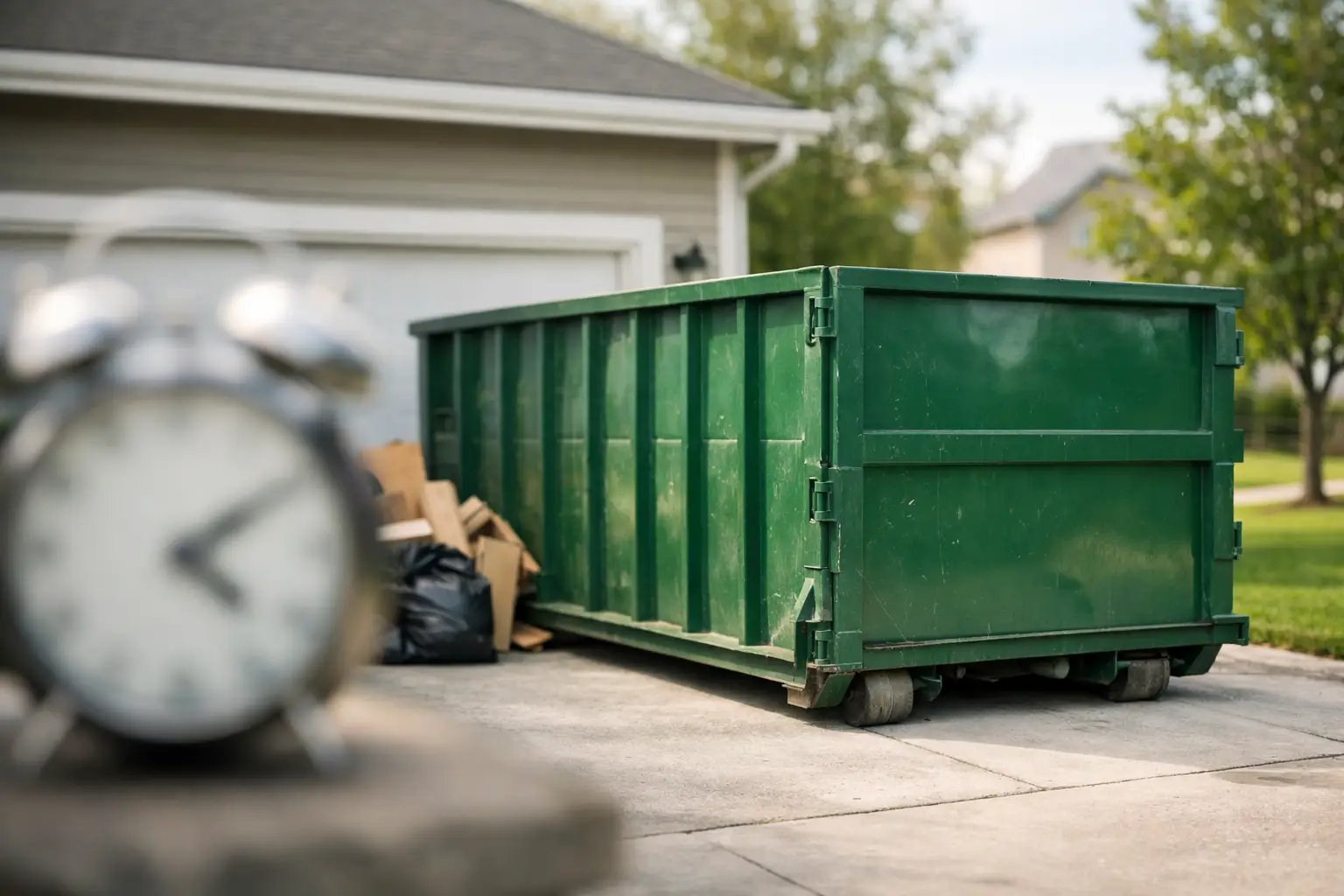
Most people ask how long can you rent a dumpster when they are already knee-deep in a cleanup. The garage is half emptied, the contractor is starting demo tomorrow, or the landscaping debris is piling up faster than expected. The short answer is that dumpster rental periods usually range from a few days to a couple of weeks, but the real answer depends on the type of job, the material going into the bin, and how tightly your project is scheduled.
If you rent too short, you end up rushing or paying for extra time. If you book longer than you need, you may tie up space on your driveway or job site for no reason. The right rental length is less about picking a standard number and more about matching the bin to the pace of the work.
How long can you rent a dumpster for most projects?
For many residential and light commercial jobs, a standard dumpster rental lasts between 7 and 14 days. That window works well for common projects like basement cleanouts, small remodeling jobs, roofing tear-offs, yard overhauls, and moving-related junk removal.
A shorter rental, like 3 to 5 days, can make sense if the debris is already staged and ready to load. That is often the case with a simple garage purge or a contractor-led project where labor is scheduled tightly and the material will be loaded quickly.
Longer rentals are common too. If you are doing work in phases, waiting on trades, or cleaning out a property over multiple weekends, you may need more than two weeks. Some companies can accommodate extended rentals, but the timing usually needs to be discussed upfront so there are no surprises around availability or extra charges.
What affects dumpster rental length?
The biggest factor is the project itself. A full home cleanout moves differently than a bathroom remodel. A contractor replacing a roof can often fill a bin in a day. A homeowner sorting through years of storage may need several evenings and a full weekend before the bin is ready for pickup.
Material type also matters. Heavy materials like concrete, asphalt, brick, and clean fill are often loaded more deliberately because weight limits come into play faster than volume. Mixed household junk or renovation debris usually takes longer to sort and load, especially if you are trying to separate items properly.
Access is another issue people underestimate. If the bin is going on a tight driveway, behind a gate, or near active work areas, loading may happen more slowly than planned. Weather can also stretch a project out. Rain, snow, or extreme heat can turn a one-week cleanup into something longer.
Then there is permit and scheduling pressure. If your project depends on a contractor, inspection, or delivery of materials, delays in one part of the job often affect the dumpster timeline too.
Short-term dumpster rentals: when they make sense
A short rental is often the most cost-effective option when the debris is predictable and the work is concentrated into a narrow time frame. If you are replacing flooring in one room, clearing out a shed, or handling a quick landscaping refresh, there is no real benefit to keeping the bin longer than necessary.
Short rentals also work well for contractors who know exactly when demolition starts and ends. When the crew is lined up and the debris stream is clear, the bin can be dropped off, filled, and removed with very little downtime.
The trade-off is that short rentals leave less room for changes. If you decide to add another room to the cleanout, if the weather turns, or if loading takes longer than expected, you may need to request an extension. That is not always a problem, but it is easier when you work with a local company that can respond quickly.
Longer dumpster rentals: when extra time is worth it
Longer rental periods are often the better fit for homeowners doing their own labor. If you are cleaning out an estate, decluttering before a move, finishing a basement over several weekends, or tackling a renovation bit by bit, extra time lowers the pressure.
That matters more than people think. Rushed loading leads to poor use of bin space, mixed materials that should have been separated, or items being tossed in that should not be there. A little more time can mean a smoother job and fewer problems at pickup.
Longer rentals also help on job sites where multiple trades are involved. One crew may start demo, another may frame, and another may handle finishing work later. If debris is generated in stages, keeping the dumpster on site can save extra coordination.
Still, there is a balance. A bin sitting too long can become a catch-all for every loose item around the property. It may also block parking, limit access, or create frustration with neighbors on tighter residential streets. Extra time is useful when it supports the project, not when it just delays decisions.
How to choose the right rental period
A good starting point is to think about when debris will actually be generated, not just when the project starts. If demolition begins Friday but cleanup will not happen until Monday, your best delivery date may not be the start of the week. If you are doing a weekend cleanout, having the bin arrive too early may just waste rental time.
Be honest about your pace. Many homeowners estimate based on ideal conditions, then realize sorting, lifting, and organizing takes longer than expected. Contractors are usually more accurate because they work on fixed schedules, but even then, material delays and customer changes can shift the timeline.
It also helps to ask yourself a few practical questions. Is the debris already piled and ready? Will you need to sort materials into different waste streams? Are you relying on friends, family, or a small crew to help load? Is there a chance the scope will grow once the work starts? The more uncertainty there is, the more valuable flexibility becomes.
Ask about extensions before you book
One of the simplest ways to avoid stress is to ask how rental extensions work before the bin is delivered. Not every company handles extra days the same way. Some charge a clear daily or weekly rate. Others may offer flexibility based on bin availability and pickup schedules.
This matters because timing problems are common, even on well-planned jobs. A project may uncover more debris than expected. A tenant move-out might leave more behind than promised. A renovation can reveal damaged materials that need to come out. When you already understand the extension policy, those changes are easier to manage.
A local provider with direct scheduling is often better positioned to help than a larger national chain working through centralized dispatch. Fast communication can make the difference between keeping the project moving and scrambling for another container.
Avoiding extra fees tied to rental length
The most common timing-related costs come from keeping the bin longer than the included rental period or needing an additional haul because the project outgrew the original plan. Both can often be avoided with a more realistic schedule and the right bin size.
Overloading can create issues too. If a bin is filled above the top edge because the project ran long and debris kept accumulating, pickup may be delayed until the load is made safe. That can lead to more time on site and more cost.
Clear communication helps here. If you think the job may run over, say so early. A company that knows your schedule can often suggest a better rental window, a different container size, or a material-specific bin that loads more efficiently.
How long can you rent a dumpster if your project changes?
You can usually rent a dumpster longer if your project changes, but it depends on availability and the rental terms. That is why the best time to think about timing is before the job starts, not after the bin is already full and the crew is still working.
For example, a 5-yard bin for a quick room cleanout may only be needed for a few days. A 25-yard bin on a major renovation or demolition project may need a longer window, especially if debris is being generated in stages. The right answer is not one-size-fits-all.
At Forever Green Bin Rental, the practical approach is the one that works best: match the bin size, waste type, and rental period to the actual job, then leave a little room for real-life delays. That keeps your property cleaner, your schedule more manageable, and your pickup process easier from start to finish.
If you are planning a cleanup, think less about the fastest possible timeline and more about the most realistic one. A dumpster rental should make the job easier, not turn into another deadline to manage.