
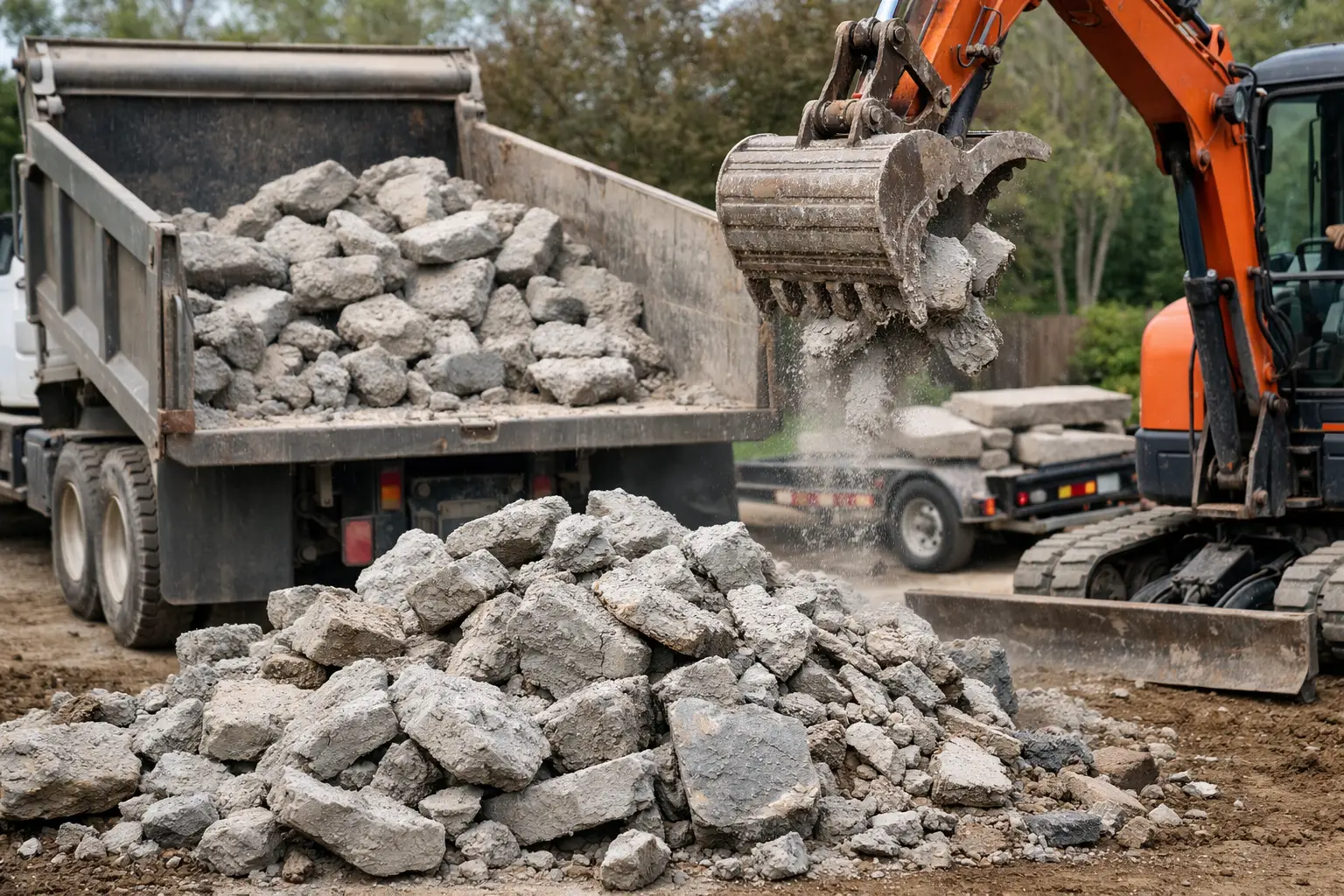
A patio can look manageable until the first slab breaks apart. Then you are left with dense, sharp, heavy debris that is not suited to curbside pickup or a regular household trash bin. The practical way to dispose of concrete from patio removal is to separate it from other waste, estimate the weight honestly, and arrange a bin that is approved for concrete or clean fill.
Concrete removal is one of those jobs where planning the disposal before demolition saves time, protects your driveway, and prevents a half-finished patio project from becoming a pile that sits for weeks.
Why Patio Concrete Needs Its Own Disposal Plan
Concrete is recyclable in many areas when it is kept clean. Processing facilities can crush it for use as aggregate, road base, or other construction applications. That is why clean concrete is usually handled differently from general renovation debris.
A load of patio slabs, broken concrete, and clean masonry may qualify as clean fill, depending on the receiving facility's requirements. Once the load includes lumber, soil, plastic, garbage, insulation, or other demolition materials, it may need to be handled as mixed waste instead. That difference affects where the material goes and what the disposal cost may be.
Weight is the other issue. Concrete takes up less room than bulky household junk, but it becomes extremely heavy fast. A bin that looks only partly full can still reach its safe hauling weight. Avoid treating a concrete bin like a general cleanup bin just because there is open space at the top.
Plan Before You Break Up the Patio
Measure the patio and take note of its thickness before booking disposal. A small walkway or a thin concrete pad creates a very different load than a large reinforced patio with a deep base. If you are unsure how much material you will have, describe the length, width, thickness, and whether there is rebar or a gravel base when requesting a quote.
You should also decide what is actually being removed. Patio projects often create more than concrete debris. There may be old pavers, edging, landscape fabric, wood steps, soil, shrubs, or packaging from the new installation. Separating those materials at the start is easier than sorting through a pile later.
Choose a safe staging area close enough to the work zone that you are not carrying heavy pieces across the property. At the same time, leave a clear path for the delivery truck and avoid blocking vehicles, garage access, or active work areas. A local bin provider can help you consider placement before delivery, especially if driveway space is limited.
Think About Access and Property Protection
Concrete removal involves wheelbarrows, demolition tools, and repeated trips with heavy loads. Place the bin where loading is direct, but do not assume the closest spot is always the best one. A short, level route is usually safer than trying to maneuver heavy chunks over steps, garden beds, or uneven ground.
If the bin will sit on a driveway, ask how the surface will be protected. Forever Green Bin Rental includes driveway protection with each rental, which helps homeowners manage major cleanup work without adding an unnecessary concern about the surface underneath the bin.
Your Main Options for Concrete Disposal
For a very small amount of concrete, you may be able to haul it yourself to an approved recycling or disposal facility. This can work if you have a suitable vehicle, know the facility's acceptance rules, and can safely load and unload the material. It is rarely the easiest choice for a full patio removal, since multiple trips, vehicle weight limits, fuel, and unloading time add up.
A concrete or clean-fill bin is typically the more efficient option for a larger patio project. The bin arrives at the property, the material is loaded as demolition moves along, and pickup removes the debris in one step. It is particularly useful for homeowners doing the work over a weekend and contractors who need the site cleared so the next phase can begin.
Mixed waste bins have a place, but only when the project debris truly cannot be separated. They are useful for renovation cleanup that includes wood, drywall, fixtures, and other approved materials. They are not automatically the right choice for a concrete-only load. Keeping concrete separate may support recycling and can prevent unexpected mixed-material handling charges.
Choose the Right Bin Size for Concrete
Bin size is not just a question of volume. With concrete, weight limits matter just as much as the container's dimensions. A smaller bin can be the smart choice for dense material because it helps keep the load within safe transport limits.
Do not fill a large roll-off bin with concrete to the top unless your provider has specifically confirmed that it is permitted. A bin may physically hold the material but still become too heavy to haul legally or safely. This is one of the most common mistakes on DIY demolition projects.
The right size depends on the patio's dimensions, slab thickness, and what else is entering the bin. Be clear about whether you are loading only clean concrete or a combination of concrete, asphalt, bricks, soil, and other debris. A straightforward quote based on the actual material is far more useful than selecting the biggest bin and hoping it works.
What Counts as Clean Concrete?
Requirements vary by disposal facility, so confirm the accepted material before loading. In many cases, clean concrete means broken concrete with no garbage, household waste, wood, plastic, or excessive soil attached. Rebar, wire mesh, brick, stone, and asphalt may be accepted separately, accepted with conditions, or directed to a different bin type.
Do not guess when materials are mixed. Patio demolition can uncover old layers and repairs that are not visible from the surface. If you find a slab over asphalt, heavily reinforced concrete, or material contaminated with paint, adhesive, or other coatings, take a quick photo and ask your bin provider how it should be handled.
Load Concrete Safely and Efficiently
Break slabs into pieces that can be lifted and carried without straining. Smaller pieces are easier to place evenly in the bin, but avoid turning the entire job into gravel if larger manageable sections will load more efficiently. Use a wheelbarrow for repeated trips and wear gloves, eye protection, sturdy boots, and hearing protection when using demolition equipment.
Load the bin evenly from front to back. Keep material below the top edge and do not leave pieces sticking out. Concrete chunks can shift during hauling, so a level load is safer for everyone.
Resist the urge to toss a few unrelated items into the bin near the end of the project. A bag of trash, a stack of lumber, or landscaping waste can change a clean concrete load into mixed material. Keep a separate pile for anything that does not belong in the concrete bin, then arrange the appropriate disposal method for that material.
Avoid Delays and Surprise Disposal Costs
The fastest patio removal jobs are the ones with a clear material plan. Book the bin for the period you expect to demolish and load, but account for weather, equipment rental timing, and help from friends or subcontractors. Concrete work is slower than it looks, particularly when a slab is reinforced or access is tight.
Before delivery, move vehicles, mark any obstacles, and make sure gates are open if the bin needs to go beyond the driveway. During the rental, avoid overfilling and keep unauthorized material out of the container. At pickup, a properly loaded bin can leave the property without a delay caused by loose debris, blocked access, or an overloaded container.
Price can depend on the material, bin size, rental period, delivery location, and disposal destination. Asking for a quote with accurate project details gives you a better picture of the cost than relying on a generic estimate. It also gives the provider a chance to recommend the right container before the concrete starts coming out.
A removed patio makes room for the part of the project you actually want to see: a new outdoor space, better drainage, fresh landscaping, or a safer surface. Handle the concrete as its own waste stream from the first broken slab, and the cleanup stays as organized as the plan for what comes next.