
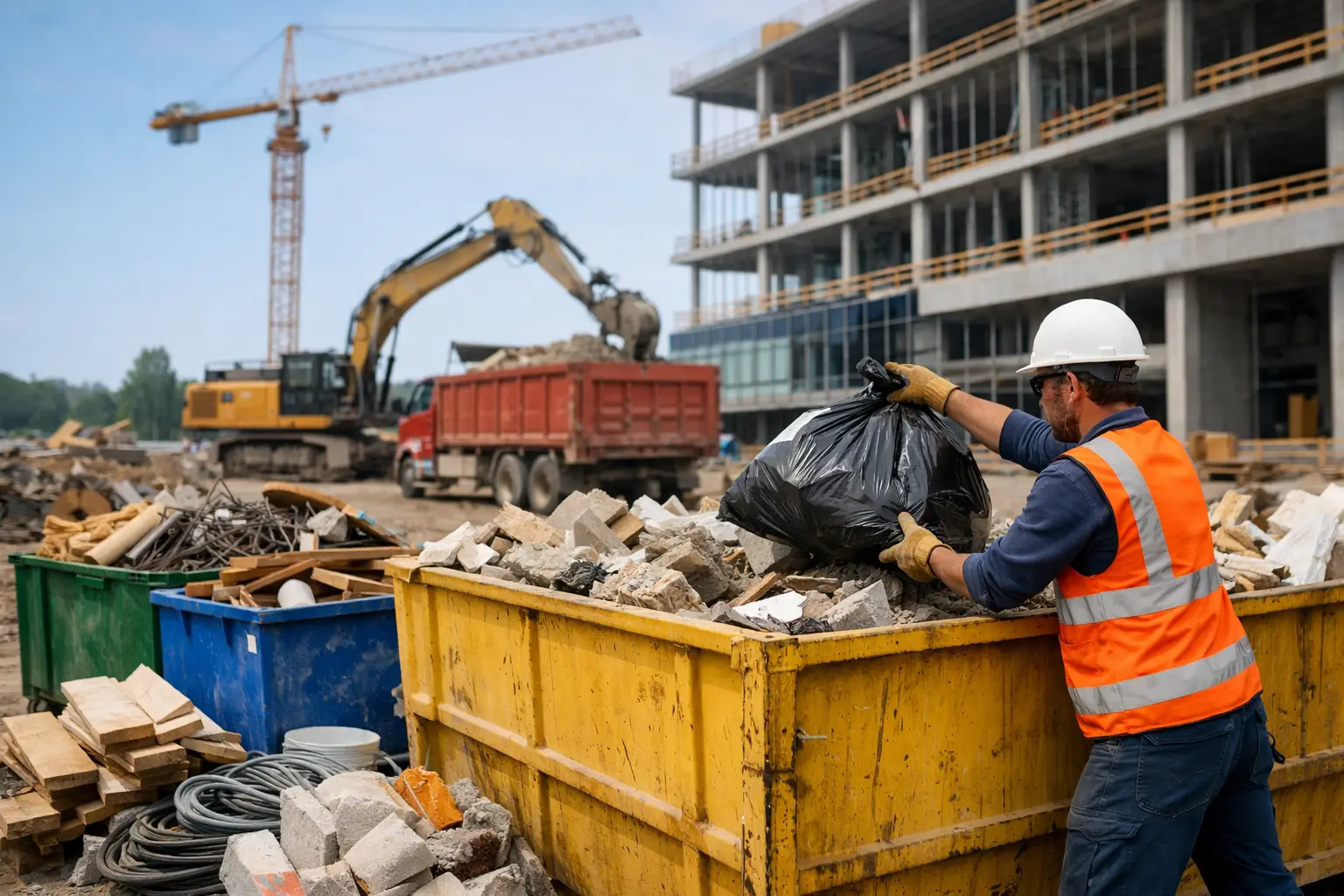
A job site can fall behind faster from a pile of debris than from a missing delivery. Scrap wood in walkways, broken drywall stacked in the wrong spot, and concrete mixed with general waste all create the same problem - lost time. That is why commercial construction waste management is not just a cleanup task at the end of a project. It is part of keeping the site safe, organized, and moving.
For contractors, renovators, and property managers, waste handling affects labor, scheduling, material flow, and customer perception. A clean site is easier to work in. It is also easier to explain to inspectors, easier on trades coming in behind each other, and easier to keep on budget. The right plan starts before demolition begins and continues until the final pickup leaves the property.
Why commercial construction waste management affects the whole job
Construction waste is rarely just one material. On a commercial site, you may be dealing with wood, drywall, packaging, flooring, metal, concrete, asphalt, insulation, and general debris at the same time. If everything gets tossed into one container without a plan, disposal becomes more expensive and sorting becomes someone else's emergency.
The biggest issue is usually not volume alone. It is contamination. Clean concrete has different disposal requirements than mixed demolition debris. Soil and fill are handled differently from renovation waste. Cardboard and packaging can take up far more space than expected if they are not broken down. When materials are mixed carelessly, the load can shift from straightforward disposal to a higher-cost waste stream.
There is also the site logistics side. Overflowing bins block access. Undersized bins lead to extra hauls. Oversized bins can take up room that crews need for equipment, deliveries, or parking. Good waste management is really about choosing a container strategy that fits the pace and footprint of the work.
Start with the waste stream, not the bin size
A lot of people begin by asking what size bin they need. That matters, but the better first question is what materials the project will generate. A tenant improvement job may create mostly drywall, studs, packaging, and flooring. A slab removal project is an entirely different situation. So is a roofing tear-off, landscape rebuild, or retail demolition.
When the waste stream is clear early, it becomes easier to match the right bin to the right material. General waste bins make sense for mixed renovation debris. Clean fill bins are better for soil, stone, and similar material. Concrete and asphalt need dedicated handling because they are heavy and often priced differently from mixed loads.
This is where a simple conversation with a local bin provider can save time. Instead of guessing, contractors can line up the correct containers before the mess starts. That prevents the common job-site problem where a crew fills the wrong bin first and has nowhere to put the next material.
Commercial construction waste management works best with separation
On smaller commercial jobs, some material mixing is unavoidable. On larger projects, separation is usually worth the effort. Not because it sounds good on paper, but because it reduces avoidable costs and confusion.
If clean loads stay clean, disposal tends to be simpler. Concrete, asphalt, and fill should usually stay separate from wood, plastics, and general demolition debris. Cardboard and packaging are often worth keeping out of mixed waste when they are generated in large amounts. Even simple source separation, with one bin for heavy inert material and one for general construction debris, can make the site easier to manage.
That said, separation is not free. It takes space, signage, and some crew cooperation. On a tight urban or suburban site, there may only be room for one or two containers. In those cases, the best approach is the practical one, not the perfect one. You work with the footprint you have, prioritize the materials that must stay separate, and keep pickups timed so debris does not overrun the site.
Matching bin size to project reality
Bin size should reflect both material type and loading pattern. Heavy materials can reach weight limits long before a container looks full. That is why concrete, asphalt, brick, and soil often belong in smaller bins, even on larger projects. Lighter mixed debris from framing, drywall, trim, and packaging may suit a bigger roll-off.
A contractor doing phased demolition may benefit from multiple smaller containers with staggered pickups rather than one large bin that gets buried behind active work. A property manager coordinating a plaza renovation may need a container placed where tenants and service vehicles can still move safely. Practical placement matters just as much as capacity.
There is also the issue of surface protection. Commercial sites and mixed-use properties often have finished asphalt, concrete pads, or customer-facing driveways that cannot be damaged during delivery. Built-in driveway protection is one of those details that seems small until it saves a repair or a difficult conversation with an owner.
Timing matters more than most crews expect
One of the most common waste mistakes on commercial jobs is treating pickup as a last-minute call. If a bin is full by noon and the framing crew has nowhere to throw material for the rest of the day, that is not a waste problem anymore. It is a production problem.
A better approach is to schedule around project phases. Demolition usually creates an early surge. Framing and rough-in create steady mixed debris. Finish work often brings a wave of packaging, offcuts, and cleanup material. If the project manager knows those peaks are coming, bin swaps can be arranged before the site gets jammed up.
This is where local responsiveness matters. On active projects in places like Newmarket, Aurora, Bradford, East Gwillimbury, or Keswick, fast turnaround can make the difference between a smooth workday and a crew wasting hours around a full container. Forever Green Bin Rental is built around that kind of practical scheduling support.
Safety, access, and site presentation
Commercial construction waste management is also about reducing risk. Loose debris creates trip hazards. Sharp materials sticking out of overfilled containers create injury risks. Improper loading can make pickup unsafe or delay removal. Keeping the waste area controlled is part of basic site management.
Access planning is just as important. The bin should be close enough to support efficient loading but not so close that it interferes with deliveries, lifts, parking, or pedestrian routes. On occupied commercial properties, placement needs extra care. Customers, tenants, and neighboring businesses still need safe access, and the site still has to look reasonably under control.
That presentation matters more than some teams admit. A tidy waste area signals that the project is being managed properly. For property owners and tenants, that builds confidence. For crews, it reduces friction. Everyone works better when the site feels organized.
What contractors should clarify before booking
Before a bin is dropped off, it helps to confirm a few practical points. What material is going in it? How much of that material is expected? Is the load heavy, mixed, or potentially restricted? Where can the bin be placed without blocking workflow? How long will it likely stay on site?
These questions are not red tape. They are what prevent costly mismatches. A clean fill bin used for mixed renovation debris can create issues. A large container ordered for dense material may not be the right fit. A pickup scheduled too late can hold up the next trade.
The more accurate the information, the easier it is to get the right quote, the right bin, and the right timing. That is especially valuable on jobs where several trades are stacked tightly and delays spread quickly.
The best waste plan is the one crews will actually follow
Complicated site rules tend to fall apart by day three. The best commercial waste plans are simple, visible, and realistic. Label the containers clearly. Keep them accessible. Tell crews what goes where. Plan pickups before overflow happens.
There is always a balance between ideal sorting and job-site reality. Some projects have space for multiple containers and careful separation. Others need one mixed bin and frequent service. Neither approach is automatically right or wrong. What matters is that the setup fits the site, the material, and the schedule.
If you treat waste disposal as an afterthought, it usually becomes an expensive one. If you plan for it early, commercial jobs tend to stay cleaner, safer, and easier to manage from start to finish.
The simplest way to keep a project moving is to make debris removal one less thing your crew has to fight with.