
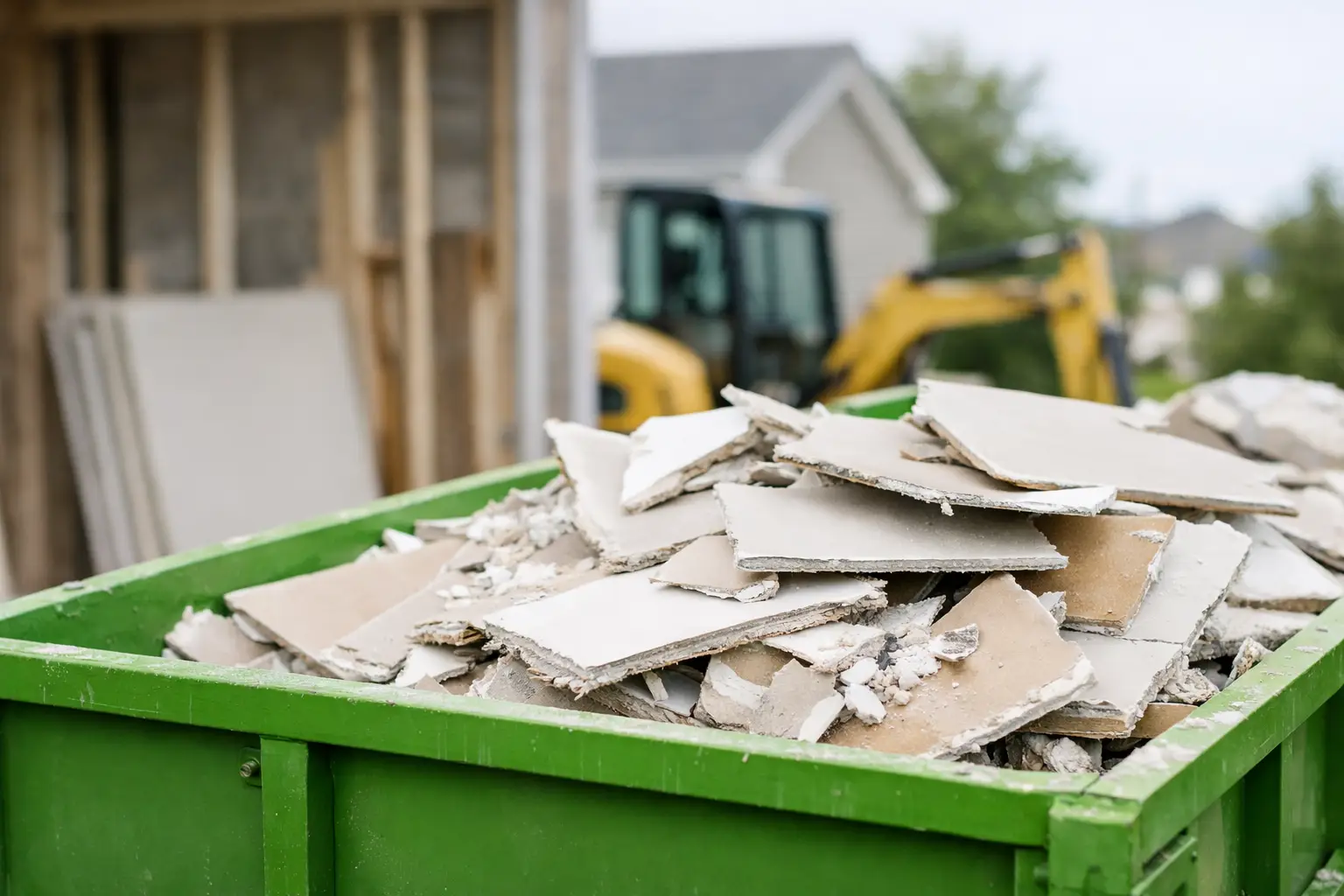
Tearing out an old bathroom or finishing a basement creates more drywall waste than most people expect. So, can drywall go in a bin rental? Often, yes, but the answer depends on the material’s condition, what else is going into the bin, and the disposal rules for the receiving facility.
Drywall is not handled exactly like ordinary household junk. A few sheets from a small repair may be easy to manage, while a full renovation can produce heavy, dusty piles of gypsum board, joint compound, insulation, trim, nails, and other demolition debris. Planning the waste stream before demolition starts helps prevent added sorting fees, delayed pickup, or a bin that is not suited to the load.
Can Drywall Go in a Bin Rental?
Drywall can commonly go into a general waste or mixed-material bin when it comes from a standard renovation or demolition project. However, acceptance is not automatic. Disposal sites may have different requirements for clean drywall, painted drywall, wet material, plaster, insulation, wood, and other debris that may be removed alongside it.
The cleanest drywall loads are often easier to process. That means drywall that is separated from garbage, food waste, liquids, hazardous products, and unrelated materials. If a facility can recycle gypsum, keeping the load clean may also create a better disposal option than mixing it with all-purpose renovation debris.
For many homeowner projects, though, drywall is being removed with studs, flooring, cabinets, trim, and fixtures. In that case, a mixed-material bin may be the practical choice. The key is to explain what you expect to load when requesting a quote. A local bin provider can help match the bin and waste category to the job before delivery day.
Why Drywall Disposal Has Extra Rules
Drywall is made primarily of gypsum pressed between paper layers. On its own, it is a common construction material. But when drywall is mixed with other waste, soaked by rain, coated with unknown materials, or combined with prohibited items, it becomes harder to sort and process.
Weight matters as well. Drywall seems light while it is hanging on a wall, but broken sheets add up quickly. A basement demolition, kitchen remodel, or commercial tenant refresh can fill a bin faster than expected. Overfilling a container or loading material above the rim creates a safety issue during transport, so choose a size that leaves room for bulky pieces to sit below the top edge.
Older buildings require additional caution. If drywall, plaster, textured coatings, insulation, or flooring materials may contain asbestos or another regulated substance, stop before loading anything into a regular bin. These materials need proper assessment and specialized handling. Never assume that age alone confirms a hazard, but do not treat suspicious material as ordinary renovation waste either.
Clean Drywall vs. Mixed Renovation Debris
The condition of the drywall usually determines the best approach. Clean, dry offcuts from new construction are very different from wallboard pulled from a water-damaged bathroom or a decades-old renovation.
When a Separate Drywall Load May Make Sense
A dedicated drywall load can be a smart option when your project produces a large volume of relatively clean gypsum board. This is common with new builds, basement finishing, additions, and larger remodeling work. Separating the drywall may make recycling or appropriate processing easier, provided the local facility accepts it.
Keep clean drywall away from paint cans, adhesives, chemical containers, household garbage, and food waste. If you are using a bin for drywall only, make that clear at booking so the disposal arrangement reflects the actual load.
When a Mixed-Material Bin Is More Practical
A mixed-material bin is often the better fit for demolition work where drywall is only one part of the cleanup. For example, a bathroom renovation may include drywall, tile, vanity pieces, lumber, old fixtures, flooring, and packaging. Sorting every item on a tight timeline can cost more time than it saves.
That convenience comes with a responsibility: do not use a mixed bin as a catch-all for materials that need separate handling. Tires, batteries, paint, propane tanks, fuel, chemicals, electronics, and hazardous waste should not be tossed in with drywall. Concrete, asphalt, and clean fill also usually belong in their own designated bins rather than a general renovation container.
How to Load Drywall Safely and Efficiently
Drywall breaks easily, which can make a cleanup look manageable at first and messy an hour later. A little preparation keeps the job safer and makes better use of bin space.
Start by removing screws, nails, and metal corner bead where practical. You do not need to make every piece perfect, but reducing sharp protrusions helps protect anyone handling the debris. Break large sheets into manageable sections instead of trying to force full panels into a small container.
Place flatter drywall pieces along the bottom and sides of the bin. Then layer other bulky, lightweight materials carefully. Avoid creating empty pockets under oversized pieces, and do not pile debris above the bin walls. Heavy materials such as tile, brick, concrete, or large quantities of wet drywall should be distributed evenly rather than concentrated in one area.
Drywall dust is another reason to work methodically. Wear appropriate personal protective equipment for demolition, including gloves, eye protection, and a suitable dust mask or respirator. Keep the work area ventilated when possible, and bag smaller loose debris if that makes loading cleaner. Do not sweep dust into storm drains or leave it loose where rain can carry it across the property.
Choosing the Right Bin Size for Drywall Projects
The right size depends on volume, not just the square footage of the room. Drywall is bulky, and demolition creates more waste than the finished space suggests.
A 5-yard bin can work well for a small room cleanout, a repair project, or a modest bathroom renovation with limited drywall removal. A mid-size bin is often more comfortable for a kitchen renovation, basement room, or several rooms of wall removal. Larger bins are better suited to major renovations, commercial cleanouts, and demolition projects that include framing, cabinetry, and other bulky debris.
Think about access before selecting the biggest option. Measure the driveway or placement area, account for parked vehicles and overhead wires, and leave a clear route for delivery. Forever Green Bin Rental includes driveway protection with every rental, helping homeowners keep the placement area protected while the project is underway.
It is also worth considering the project schedule. If drywall removal will happen in stages, a smaller bin with timely pickup may be more useful than a large container sitting full for weeks. Contractors working around multiple trades may prefer extra capacity so debris does not slow down the next phase of work.
Questions to Ask Before Booking a Drywall Bin
A quick conversation before delivery can prevent most disposal problems. Tell the rental company whether the drywall is new construction scrap, demolition debris, water-damaged material, or part of a mixed renovation load. Mention any plaster, insulation, tile, lumber, or heavy materials that will be included.
Ask whether the quoted bin is intended for general waste or clean drywall, whether weight limits apply, and what items must stay out of the container. If you are renovating an older property, mention any material you are uncertain about before loading it. Clear information lets the provider give you practical guidance and a more accurate quote.
For homeowners and contractors in York Region and South Simcoe, local disposal requirements can vary by facility and material type. Booking with accurate project details is the simplest way to avoid guesswork.
A drywall bin should make your renovation easier, not create another pile of questions. Separate what you can, keep prohibited materials out, load below the rim, and describe the job honestly when arranging your rental. That gives your cleanup the best chance of staying safe, efficient, and on schedule.