
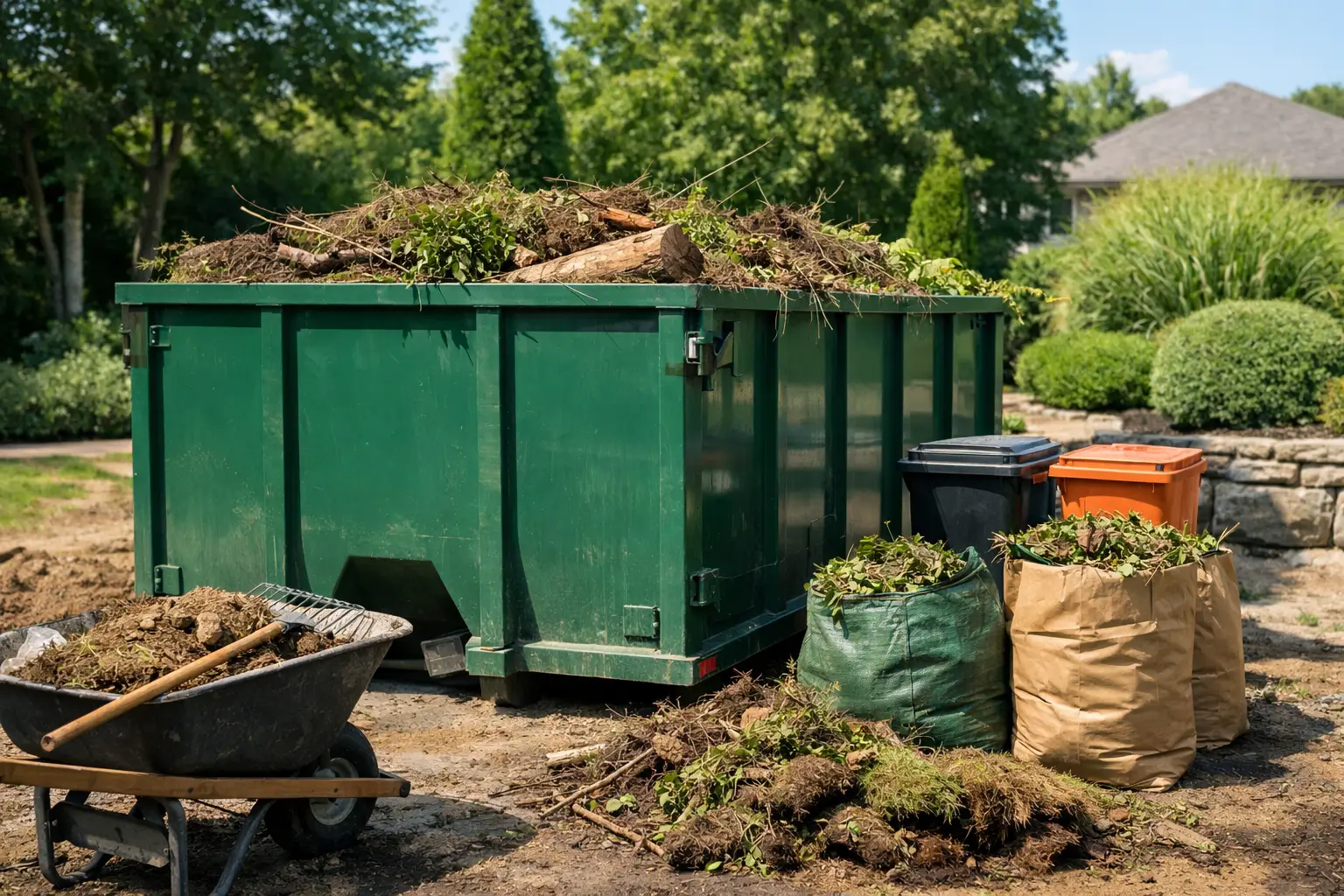
A yard project gets messy faster than most people expect. One weekend of pulling shrubs, cutting branches, tearing out sod, or breaking up an old patio can leave you with a pile that is too big for curbside pickup and too heavy for the back of a pickup truck. That is where bin rental for landscaping debris makes the job easier, faster, and a lot less frustrating.
For homeowners, landscapers, and contractors, the real question is not whether a bin helps. It is which bin makes sense for the material you have, how much room you need, and how to avoid paying for the wrong setup. Landscaping waste is not all the same, and that matters when you book a container.
Why bin rental for landscaping debris is different
Landscaping cleanup sounds simple until the materials start stacking up. Brush and yard waste are light but bulky. Soil, stone, concrete, and broken pavers are dense and heavy. Wood fencing, old deck boards, and mixed outdoor junk fall somewhere in between. A single project can produce all of it.
That mix is why bin choice matters. A container that works well for branches and garden waste may not be the right option for clean fill or broken concrete. If you load a bin with the wrong material, you can run into weight limits, disposal restrictions, or extra sorting charges. A good rental process should help you match the right bin to the right debris before delivery day.
This is also where local service has an advantage. A company that handles real cleanup jobs every day can usually tell from a quick description whether you need a general waste bin, a clean fill bin, or a heavier-duty option for hardscape removal.
What counts as landscaping debris
Most people think landscaping debris means leaves, branches, and grass clippings. Sometimes it does. More often, it includes a wider mix of outdoor materials from demolition, grading, and yard renovation.
Common materials include brush, shrubs, small trees, sod, soil, mulch, untreated wood, fencing, decking, garden edging, broken patio stone, gravel, dirt, concrete, and asphalt. The challenge is that some of these materials can go together, while others should be kept separate.
For example, clean fill materials like soil, brick, stone, and concrete are often handled differently from mixed yard waste or general construction debris. If you are removing an old interlock walkway and regrading a yard at the same time, it usually makes sense to mention both material types when requesting a quote. That helps prevent getting a bin that is too small, too light-duty, or meant for the wrong waste stream.
Choosing the right bin size
Size is where many customers either overbook or underestimate. A bin that is too small creates delays because you either need an extra pickup or have to leave debris sitting on site. A bin that is too large may cost more than the job requires.
For lighter landscaping debris such as branches, trimmings, and garden cleanup, volume is usually the issue. These materials take up space quickly, even when they do not weigh much. If you are clearing a backyard, removing several shrubs, or doing a seasonal property cleanup, a mid-size bin often gives enough room without taking over the whole driveway.
For heavier materials such as soil, stone, concrete, or asphalt, weight becomes the bigger factor. Even a smaller amount can load a bin fast. In these cases, a smaller container is often the better choice because it keeps the load manageable and aligned with disposal requirements.
If your job includes both bulky green waste and heavy hardscape debris, it is worth asking whether one mixed bin makes sense or whether separating materials will save money and make disposal easier. It depends on the project, the volume of each material, and how the load will be processed.
When one bin is enough and when it is not
Some landscaping jobs are simple. You remove brush, pull out a few garden beds, load the bin, and you are done. In that case, one container is usually all you need.
Other jobs are more layered. You may be tearing out a retaining wall, removing a fence, lifting old sod, and stripping down topsoil all at once. That kind of project often creates different debris streams with very different weights. Trying to force everything into one bin can lead to a poor fit.
One-bin jobs work best when the material is similar in type and weight. Multi-bin jobs make more sense when heavy material needs to stay separate from mixed waste, or when a contractor wants to keep the site moving without waiting for a swap. There is no one-size-fits-all answer here. The best option depends on the debris, the timeline, and how much room you have on site.
Placement matters more than people think
A landscaping bin is not just about capacity. It also needs to be placed where the work is happening without creating a new problem on the property.
If the bin is too far from the yard, cleanup takes longer. If it blocks access to a garage, gate, or active work zone, the project slows down. If it sits directly on a driveway without proper protection, it can leave marks or surface damage, especially under heavy loads.
That is why placement should be part of the booking conversation. A dependable local provider will ask where the bin should go, whether access is tight, and what kind of surface it will sit on. Built-in driveway protection is a practical detail that matters more on outdoor jobs, where loads can get heavy and weather can soften surfaces.
How to avoid extra costs and delays
Most problems with bin rentals come down to three issues: booking the wrong size, mixing restricted materials, or overloading the container.
With landscaping debris, overloading happens more often than people expect. A pile of dirt does not look dramatic, but it gets heavy fast. Broken concrete and patio stone add up even faster. Keeping material level with the top of the bin is not just about safety during pickup. It also helps avoid reloads, delays, and surprise charges.
Material mix is the other big issue. If you are tossing in soil, brush, pressure-treated wood, old fencing, plastic landscaping fabric, and chunks of concrete, mention that upfront. The right answer may still be a mixed material bin, but it is better to know that before the container arrives.
Timing matters too. Landscaping work often depends on weather, trades, and delivery schedules. If the excavation starts a day early or the tear-out runs long, you need a rental company that can respond quickly. That is one reason many homeowners and contractors prefer a local operator over a large call-center booking model.
Who benefits most from a landscaping bin
Homeowners usually book bins when the cleanup is too large for weekly trash service and too awkward for repeated dump runs. That includes backyard overhauls, fence replacements, shed removals, garden bed tear-outs, and patio demolition. The bin keeps the debris contained and saves time that would otherwise be spent loading, driving, unloading, and repeating the process.
Contractors and landscapers benefit for a different reason. They need the site clean, safe, and moving. A reliable bin on schedule helps crews work faster and keeps debris from piling up around active work areas. It also makes disposal planning easier when materials need to stay separated.
Property managers often fall somewhere in the middle. They may be handling seasonal cleanups, exterior upgrades, storm damage, or tenant turnover on larger outdoor spaces. In those cases, a bin helps centralize waste and keep the property looking under control while the work is happening.
What to ask before you book
A quick quote is helpful, but a useful quote is better. Before booking bin rental for landscaping debris, it helps to confirm what material is going in, how much of it there is, how long you need the bin, and where it can be placed.
If you are not sure whether your project counts as general waste, clean fill, or mixed material, ask directly. If access is narrow or the driveway is newly paved, mention that too. Those details are small at the start and important later.
For jobs in places like Newmarket, Aurora, Bradford, and surrounding communities, response time can make a real difference when the weather turns or a crew is waiting. That is where a local company like Forever Green Bin Rental can keep things simple with practical guidance, fast delivery, and property-safe placement.
A good landscaping cleanup should leave your yard looking better, not leave you figuring out where the debris goes. The right bin takes one major problem off the list and lets the work move the way it should.