
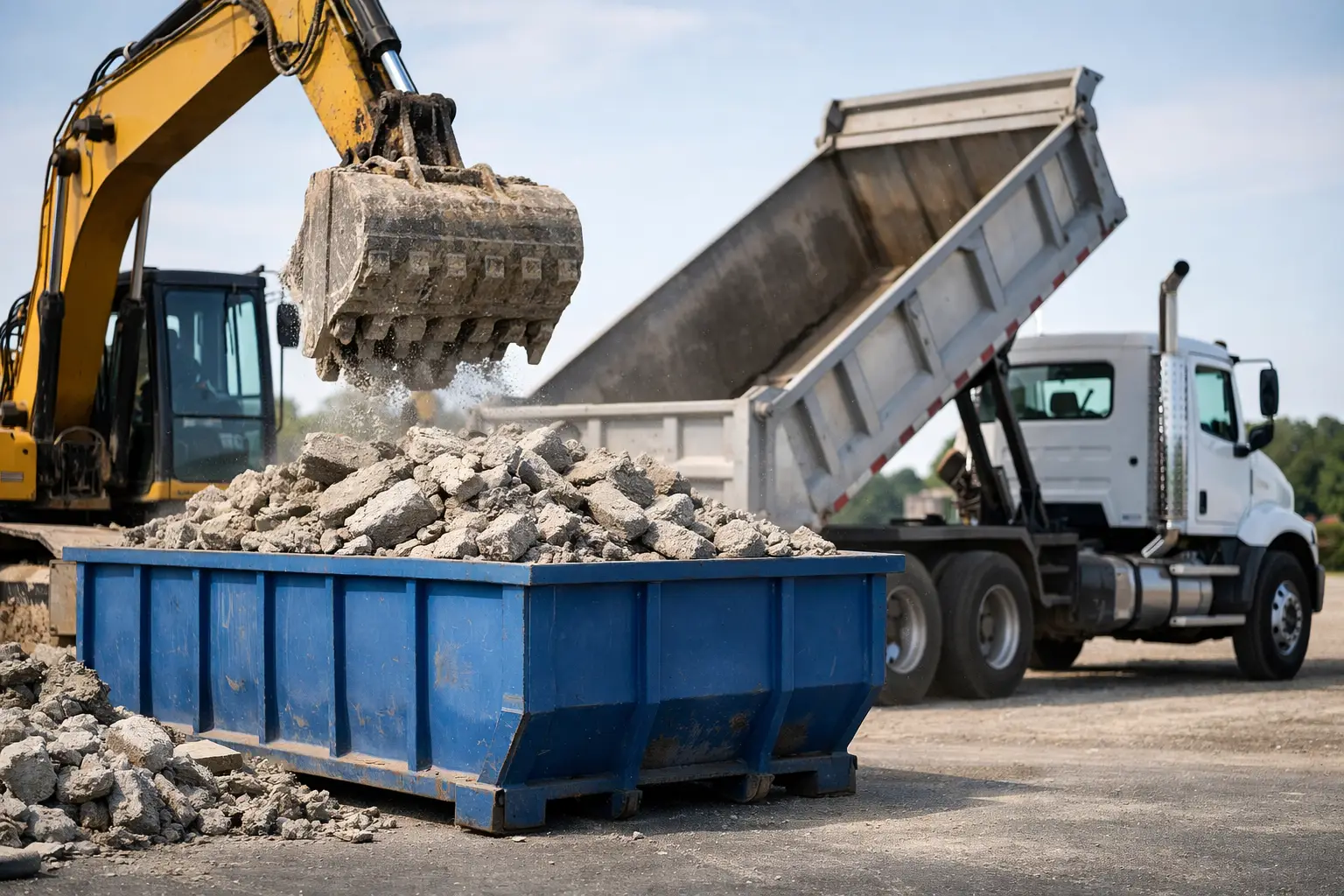
A pile of broken concrete gets heavy fast. What starts as a small patio removal or a few chunks from a footing repair can turn into a cleanup problem that is hard to move, hard to load, and expensive to haul if you choose the wrong container. That is why bin rental for concrete disposal needs a little more planning than a standard junk bin.
Concrete is one of the simplest materials to sort, but one of the easiest to underestimate. Homeowners often look at volume first, while contractors already know the real issue is weight. A bin that looks half full can still be at its limit when you are dealing with slab pieces, curb sections, fence post footings, or old pavers.
Why bin rental for concrete disposal is different
Concrete does not behave like household debris, wood, or renovation waste. It is dense, clean, and usually recyclable when kept separate, which is good for disposal efficiency. The catch is that it puts much more strain on the container and truck than mixed debris does.
That is why concrete disposal usually calls for a dedicated clean fill or concrete bin instead of a general mixed-waste container. Keeping the material separate helps with proper processing, but it also protects you from loading a larger bin the way you would for light debris and finding out too late that the weight is the real limit.
This is where a local bin provider can save you time. A straightforward quote based on material type, expected volume, and job conditions is usually more useful than trying to guess from a generic online chart.
Picking the right bin size for concrete
For many concrete jobs, smaller is smarter. That may sound backward if you are clearing a large amount of debris, but heavy materials are rarely loaded into the biggest bin available. A compact bin is often the safer and more cost-effective option because it matches the weight of the material better.
A 5-yard or 10-yard bin is common for broken concrete, especially for residential projects like walkway removal, a small driveway section, basement floor breakup, or landscape hardscape tear-out. These bins are easier to place on a driveway and are less likely to encourage overloading.
Larger bins can still make sense, but it depends on what is going in them. If the load is pure concrete, weight matters more than air space. If the job includes light demolition debris along with some concrete, that changes the recommendation. In those cases, you need to be clear about whether the material will stay separated or go into a mixed bin.
When customers ask what size they need, the better question is usually not "How big is the project?" but "What exactly is being removed?" A broken-up 10-by-10 patio is a different load than a few stacked cinder blocks, even if both seem manageable at first glance.
What can go in a concrete disposal bin
Clean loads are usually the easiest to handle and price. In most cases, a concrete bin is meant for materials like broken concrete, sidewalk sections, patio slabs, concrete chunks, and sometimes asphalt or brick, depending on the provider's sorting rules.
The key is contamination. Once concrete is mixed with garbage, wood, insulation, plastic, soil, or general renovation waste, disposal becomes less straightforward. The same goes for loads with rebar-heavy material, painted debris, or mud-packed fill that adds hidden weight and makes sorting harder.
If you are tearing out a pad, steps, or foundation edge, it helps to separate the concrete as you work. That usually keeps disposal costs more predictable and reduces delays at pickup.
Weight limits matter more than people expect
Most problems with concrete disposal come from overloading. A bin may physically hold more material, but that does not mean it can legally or safely be hauled once it is full.
This is especially common on DIY jobs. People fill the container to the top because that is how they would load household junk or wood scraps. With concrete, the safe load line is often much lower. If the bin is overloaded, pickup can be delayed until material is removed, which adds time and frustration to a project that is already messy.
A good rental company will explain this up front. That is part of what makes the service practical. The goal is not just dropping off a bin. It is making sure the container actually fits the material, the property, and the hauling limits.
Driveway placement and property protection
Concrete disposal is not just about what goes in the bin. It is also about where the bin sits while the work is happening. Heavy loads put pressure on driveways, and placement matters even more when the container will hold dense debris.
If the bin is going on a residential driveway, protective boards under the container are a smart detail, not an extra. They help reduce scraping and surface pressure, especially during drop-off and pickup. For homeowners doing a short-term demolition project, this can make the difference between a convenient cleanup and a repair bill that no one wanted.
Access matters too. The truck needs enough room to deliver and remove the bin safely, and the loading area should make sense for the work being done. A bin placed too far from the tear-out zone can slow the job down. A bin placed in the wrong spot can block vehicles or force unnecessary rehandling of heavy concrete pieces.
Cost factors for bin rental for concrete disposal
Pricing depends on more than bin size. Material type, weight allowance, rental period, and local hauling conditions all affect the quote.
Concrete is often priced differently from mixed waste because it is handled as a specific material stream. In some cases, keeping it clean can help control disposal costs. In others, the weight of the load is still the main factor, even if the material is recyclable.
The easiest way to avoid surprises is to be specific when requesting a quote. Mention whether the load is clean concrete only, concrete mixed with brick or asphalt, or demolition debris with some concrete in it. Also mention where the bin will sit, how long you need it, and whether the material will be machine-loaded or hand-loaded. Those details matter.
For contractors, this also affects scheduling. If a crew is breaking concrete over two days, the right rental window keeps the site cleaner and helps avoid having a full bin sitting longer than needed.
Residential jobs vs. contractor jobs
Homeowners and contractors often need the same service for different reasons. A homeowner may need one small bin for a weekend patio removal and want the process to be simple, fast, and driveway-safe. A contractor may need a clean concrete bin swapped out on a tight timeline so the next phase of work can start.
The difference is not just volume. It is how the bin supports the job. For a homeowner, guidance on size and loading rules is often the most valuable part of the service. For a contractor, responsiveness and dependable pickup usually matter just as much as price.
That is why local service tends to work well for this type of cleanup. When timing changes or the material turns out heavier than expected, quick communication matters more than a call center script.
How to make your concrete bin rental go smoothly
A little prep can keep the whole job cleaner and easier. Break the concrete into manageable pieces before loading day if possible. Keep dirt, trash, and loose renovation debris out of the pile. Do not assume the bin should be filled to the top. And if you are not sure whether brick, stone, or asphalt can go in with the concrete, ask before loading.
It also helps to estimate honestly. People often understate how much concrete they have because broken pieces stack unevenly and look smaller in a pile than they do once loaded into a bin. If you are between sizes or unsure about the weight, it is better to ask for guidance than to gamble on pickup day.
For customers in places like Newmarket, Aurora, Bradford, and nearby communities where residential driveway placement is common, practical details like delivery timing and property protection are part of the service, not an afterthought. That is one reason many customers choose a local provider like Forever Green Bin Rental for short-term heavy material disposal.
Concrete cleanup is never the glamorous part of a project, but it has a big effect on how smoothly the rest of the work goes. Get the right bin, keep the load clean, and ask the right questions early. The job gets easier from there.