
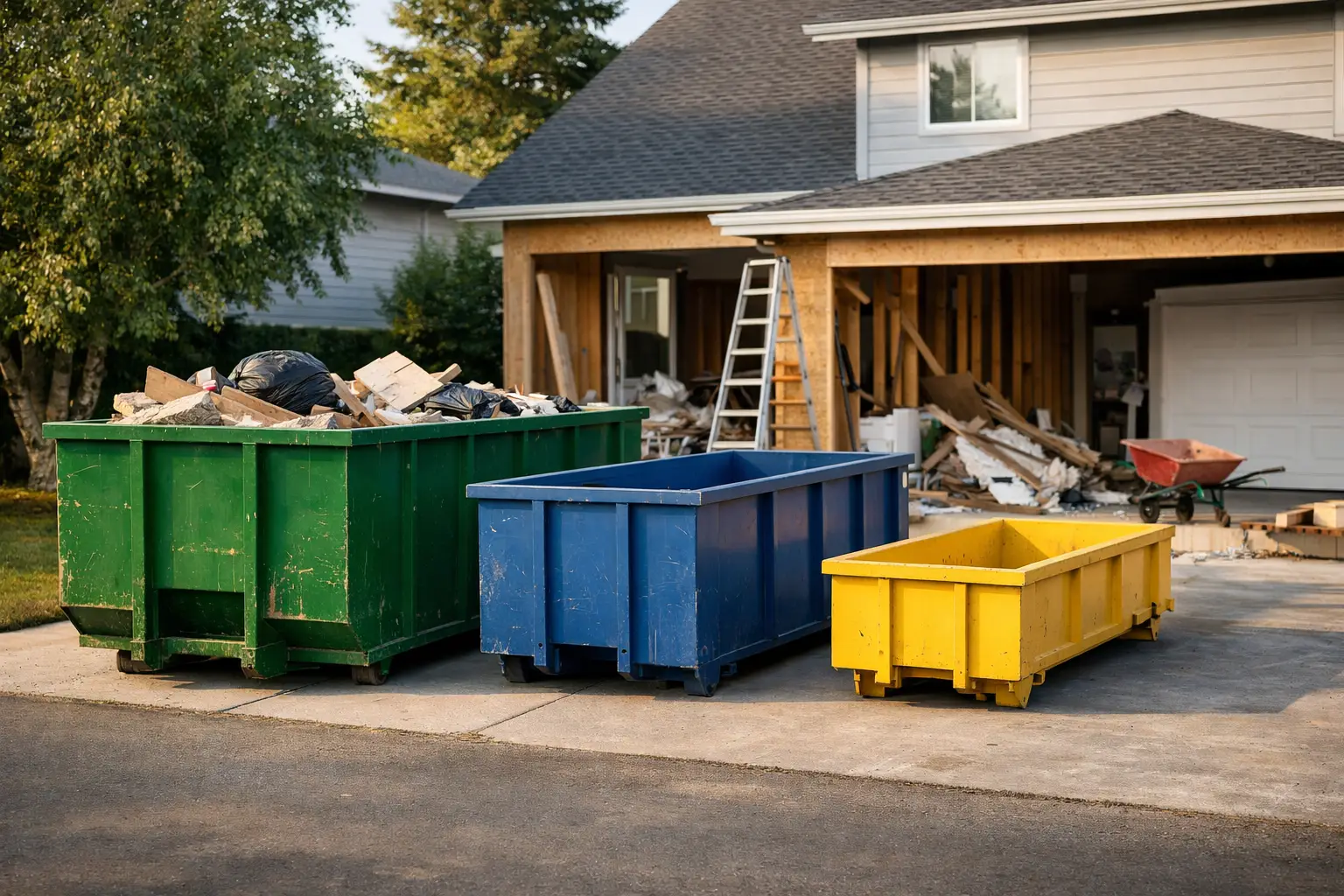
A renovation can fill a bin faster than most homeowners expect. One demolished bathroom can create bulky drywall, old tile, cabinets, fixtures, and packaging within a day. Choosing the best bin sizes for renovations starts with looking past the room itself and estimating every material that will leave the property.
A bin that is too small creates an expensive interruption when your crew is ready to keep working. A bin that is too large can take up useful driveway space and leave you paying for capacity you never use. The right choice comes down to project scope, material type, and how debris will be loaded.
Start With the Renovation, Not the Bin
The simplest way to choose a bin is to define the work before estimating volume. Are you removing a few fixtures and flooring materials, gutting a kitchen, or opening walls throughout the house? A project described as a "small renovation" can still produce a surprising amount of waste if it includes heavy materials such as tile, plaster, concrete, or lumber.
Think about what is staying and what is going. Cabinets take up more room than homeowners expect, while broken drywall compacts reasonably well. Carpet and insulation can be light but bulky. If demolition will happen before new materials arrive, the bin may be busiest in the first few days. For phased renovations, a smaller bin with a planned pickup may make more sense than reserving the largest container from the start.
It also helps to consider access. A large bin is useful only if there is a safe, practical place to set it. Measure the driveway, account for parked vehicles, and keep room for tradespeople and material deliveries. Driveway protection should be part of the plan, not an afterthought.
Best Bin Sizes for Renovations by Project Type
Bin capacity is measured in cubic yards. That number describes volume, not weight, which matters because a bin full of drywall is very different from one full of concrete or soil. The following project ranges offer a practical starting point.
5-yard bins for focused DIY projects
A 5-yard bin is often a good fit for a single-room cleanout, a small bathroom update, limited flooring removal, or a light DIY project. It works well when the debris is contained and the project does not involve tearing out several large cabinets or multiple walls.
For example, a homeowner replacing a vanity, toilet, small amount of tile, and old fixtures may find a 5-yard bin sufficient. It can also suit basement decluttering before a renovation begins. The trade-off is that bulky materials can use up the space quickly. If a bathroom includes a heavy tile floor, cement board, and a cast-iron tub, ask about weight limits and the correct waste stream before booking.
Mid-sized bins for kitchens, basements, and multi-room updates
Mid-sized bins are usually the practical choice for projects that go beyond one small room. They are commonly used for kitchen remodels, basement finishing work, flooring removal across several rooms, deck tear-outs, and renovations involving drywall, lumber, cabinets, and general construction debris.
A kitchen can produce more waste than its footprint suggests. Cabinet boxes, countertop pieces, drywall, old appliances, and packaging all take up room. A mid-sized bin gives renovators enough capacity to keep demolition moving without immediately worrying about overflow.
The same applies to a basement renovation. Framing offcuts, removed ceiling tiles, insulation, old carpet, drywall, and discarded storage items can add up fast. If the basement has been used for years as a storage area, include those contents in the estimate rather than treating them as a separate cleanup.
20- to 25-yard bins for major renovation and demolition work
A 20- or 25-yard bin is better suited to major renovations, full interior demolition, large additions, extensive roofing or siding removal, and construction projects with consistent debris generation. These sizes give contractors and homeowners room to work without stopping the job to manage waste every few hours.
A large bin is often the right call when a project includes several areas at once, such as a kitchen, main-floor flooring, and wall removal. It is also useful when a contractor expects bulky materials like framing lumber, cabinet sections, drywall stacks, and packaging from new products.
More capacity does not mean every material can be mixed without consideration. Dense materials can reach weight limits long before a large bin looks full. For concrete, asphalt, clean fill, brick, or soil, a dedicated heavy-material bin is usually the safer and more cost-effective option.
Material Type Can Change the Right Size
Volume is only half the decision. The material going into the bin affects disposal requirements, weight, and how efficiently the container can be loaded.
General renovation debris may include wood, drywall, old flooring, fixtures, insulation, plastics, and household materials. A mixed-material bin is often appropriate when these materials are coming out together. Keep prohibited items out of the bin and separate materials whenever required. Items such as hazardous chemicals, paint, propane tanks, batteries, and certain electronics need different disposal arrangements.
Concrete and asphalt are a separate category. They are exceptionally heavy, even in a small amount. A large bin filled with concrete can exceed safe hauling limits, so the correct approach is usually a smaller dedicated bin for clean concrete or asphalt. If the material is contaminated with soil, rebar, garbage, or mixed demolition debris, say so when requesting a quote. Clear information upfront helps avoid a mismatch between the bin and the load.
Clean fill also deserves its own plan. Soil, sod, clay, and similar materials should not be mixed with general household waste. Keeping clean loads separate supports proper disposal and makes the job easier to price accurately.
Estimate Debris the Way a Contractor Would
Before booking, walk the work area and identify the largest items first. Count cabinet runs, large furniture pieces, doors, carpet rolls, drywall piles, and sections of flooring. Then add the hidden waste: underlayment, trim, insulation, packaging, old shelving, and the items uncovered once walls or floors are opened.
Do not estimate based only on finished room size. A 150-square-foot bathroom may look small, but tile, backer board, a vanity, drywall, and fixtures can create a dense load. A 300-square-foot basement room may generate less waste if it is mostly framing and drywall, but it can still fill a bin with bulky material.
Loading method matters too. A bin loaded carefully and evenly holds far more than one filled with loose, oversized pieces tossed in from the top. Break down cabinets when possible, flatten cardboard, and place heavy materials at the bottom. Do not load above the bin walls. Overfilled bins may be unsafe to transport and can delay pickup.
Plan for Timing, Access, and Pickup
The right bin size should support the schedule, not become another task to manage. For a weekend demolition project, delivery before work begins gives you somewhere to put debris immediately. For longer renovations, place the bin where it can remain accessible without blocking deliveries, garage access, or the crew's work area.
If the project has distinct demolition and rebuilding stages, consider whether one larger bin for the demolition phase is the smarter option. If waste will be generated gradually over several weeks, a smaller bin with scheduled service may be more efficient. There is no one-size-fits-all answer because renovation timelines vary widely.
For homes in Newmarket and nearby communities, local delivery and responsive pickup can make a real difference when weather changes, trades are booked, or demolition uncovers more material than expected. Forever Green Bin Rental can help match the container to the job and provide driveway protection with every rental, so cleanup does not come at the expense of your property.
The best choice is the bin that gives your project enough room to keep moving while matching the materials you actually have. When you are between two sizes, share the project details, material types, and access conditions before booking. A quick conversation early can save a full bin, an extra trip, and a stalled renovation later.