
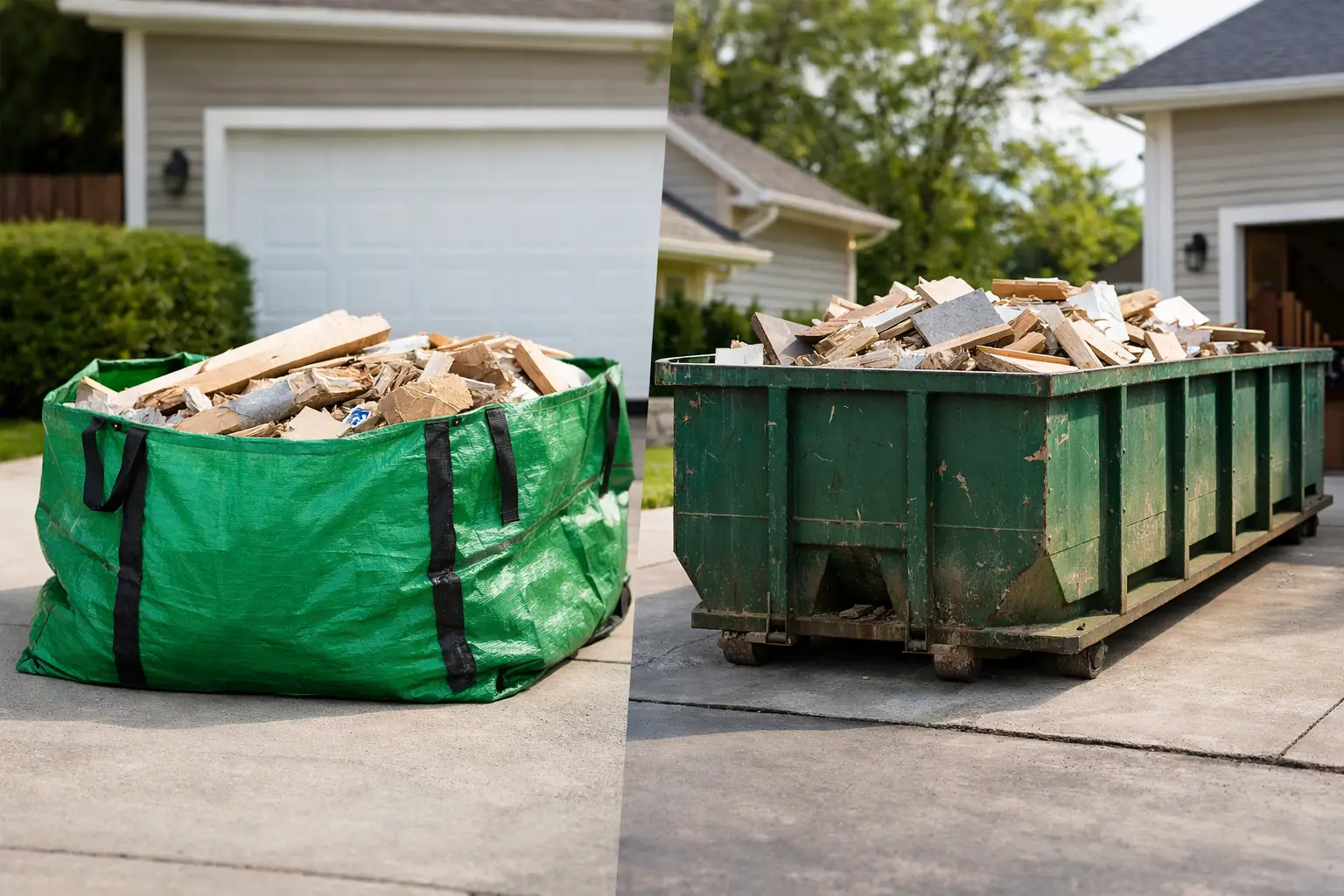
If you are weighing bagster vs dumpster rental, the real question is not which one is cheaper on paper. It is which one actually fits the amount of debris, the type of material, and the pace of your project. A small garage cleanout has very different needs than a bathroom demo, roof tear-off, or landscaping job, and choosing the wrong container can slow everything down fast.
For homeowners and contractors, that difference usually comes down to three things: how much waste you have, how quickly you need it gone, and how predictable you want the process to be. A bag can work for light, modest cleanup. A dumpster rental is usually the better fit when the job has weight, volume, or a deadline attached to it.
Bagster vs dumpster rental: the basic difference
A Bagster is a disposable debris bag that you buy first, fill yourself, and then schedule for pickup. It is designed for smaller projects and has strict limits on what can go inside, how high it can be filled, and where it can be placed for collection.
A dumpster rental is a delivered bin with a defined size and rental period. It is built for larger volumes, heavier debris, and more demanding job-site use. With a dumpster, you are not trying to make one soft-sided bag handle a renovation's worth of material.
That distinction matters more than most people expect. On a simple weekend cleanout, a bag may feel convenient. On a real project with demolition debris, flooring, drywall, wood, or mixed waste, a dumpster tends to be easier to load, easier to manage, and less risky from a scheduling standpoint.
When a Bagster makes sense
A Bagster can be a reasonable option when the cleanup is truly small and you have time to work around pickup scheduling. If you are clearing out old toys from the garage, getting rid of a few pieces of furniture, or tackling a light yard cleanup, a bag may do the job.
It can also appeal to people who do not want a metal container on-site for several days. Since you buy the bag yourself and set it up when ready, it can feel low-commitment.
But this option works best when your debris is light, dry, and limited in quantity. Once the project starts producing bulky material or dense debris, the bag becomes less flexible. It has capacity limits, weight limits, and access requirements for removal. If the pickup truck cannot safely reach it, the process gets complicated.
When a dumpster rental is the better choice
A dumpster rental is usually the better option when you are doing any kind of renovation, construction, roofing, flooring removal, estate cleanout, landscaping overhaul, or property turnover. These jobs create more waste than people expect, and it adds up fast.
A delivered dumpster gives you a solid container that is made for repeated loading. You can toss in debris as the work happens instead of stacking material around the driveway and hoping it all fits into a single bag later.
This is especially important for contractors and property managers. If crews are waiting on cleanup space, the job slows down. If debris piles up, the site gets harder to work in and harder to keep safe. A properly sized bin keeps the project moving.
For homeowners, the biggest advantage is usually peace of mind. You do not have to guess as tightly, and you are less likely to end up with extra debris that will not fit.
Cost is not as simple as the sticker price
A lot of people start with price, and that is fair. A Bagster can seem like the cheaper route because the bag itself has a relatively low upfront cost. But that is only part of the total price. You still need to pay for pickup, and pricing can vary by area and debris type.
With a dumpster rental, the quote is generally more complete from the start. You are looking at the bin size, the rental period, and the material involved. That tends to make budgeting easier, especially if you are comparing real project costs instead of just the cost to get a container on-site.
The bigger issue is value, not just price. If a bag fills up halfway through your project and you still have debris left over, you may end up paying twice by arranging another disposal method. If a dumpster is correctly sized from the beginning, the cleanup stays simpler.
That is why quote-based service matters. A local bin company can usually help match the container to the job instead of leaving you to estimate in the dark.
Capacity changes the decision quickly
This is where bagster vs dumpster rental becomes less of a debate and more of a volume question. Small projects can produce surprising amounts of waste. A single room cleanout might be manageable with a bag. A basement cleanup, kitchen demo, deck removal, or roofing job usually is not.
Dumpsters come in multiple sizes for a reason. A 5-yard bin fits small cleanouts and light renovation work. Larger bins are better for bigger remodels, demolition debris, and contractor use. That range gives you room to choose based on the actual project, not force the project into one fixed-size solution.
A bag does not offer that same flexibility. Once it is full, it is full. And because it is smaller and lower to the ground, loading bulky items can become a puzzle instead of a straightforward cleanup.
Weight limits and material restrictions matter
This is where many people get tripped up. Not all debris is equal. Drywall, shingles, concrete, soil, brick, and asphalt get heavy quickly. Even if the volume seems manageable, the weight may not be.
Bags are not ideal for dense construction debris or specialized materials. They also come with restrictions that can create surprises at pickup. If the contents are too heavy, overfilled, or not allowed, you may face delays or extra charges.
Dumpster rentals are better suited to material-specific disposal. If your project includes clean fill, concrete, asphalt, or mixed debris, the right bin can be matched to the waste stream. That helps with pricing, compliance, and disposal efficiency.
For anyone doing renovation or exterior work, this is a practical advantage. The right container is not just about fit. It is about avoiding problems once the debris is already sitting on your property.
Pickup timing and job-site control
Convenience is often the reason people consider a Bagster. But convenience depends on the project.
If your cleanup is casual and timing is flexible, scheduling pickup later may be fine. If your project runs on a tighter schedule, that delay can be frustrating. You may finish the work and still have debris sitting in front of the house while you wait for removal.
A dumpster rental gives you more control over timing because delivery and pickup are part of an organized rental process. For active renovations and contractor jobs, that matters. The container shows up when needed, stays while the work is underway, and gets removed when the job is ready.
That kind of predictability is one reason local service tends to work well for homeowners and trades. You are not dealing with a one-size-fits-all system. You are dealing with people who understand cleanup logistics and can respond faster when plans shift.
Placement, access, and property protection
A bag has to be placed where a pickup truck can access it safely with enough clearance. That can limit where you put it. Fences, low branches, parked vehicles, and tight driveways can all create issues.
A dumpster also requires placement planning, but the process is usually more straightforward because delivery is handled as part of the service. Just as important, a good bin rental company accounts for the surface underneath the bin. Driveway protection is not a small detail when you are placing a heavy container on residential property.
That is one of those practical differences people appreciate after the fact. Cleanup should not create a second problem.
So which should you choose?
If your project is light, small-scale, and flexible on timing, a Bagster may be enough. If you are getting rid of a modest amount of household junk and want a simple DIY option, it can work.
If the project involves renovation debris, heavier materials, bigger volume, or any real schedule pressure, a dumpster rental is usually the smarter call. It gives you more capacity, better loading conditions, clearer disposal options, and fewer chances for unpleasant surprises.
For most real-world cleanups, especially the kind that start with, "It is just one room," and end with a pile twice the expected size, having the right bin from the start saves time and frustration. If you are not sure which size or type fits the job, getting a clear local quote is often the fastest way to make the decision with confidence.