
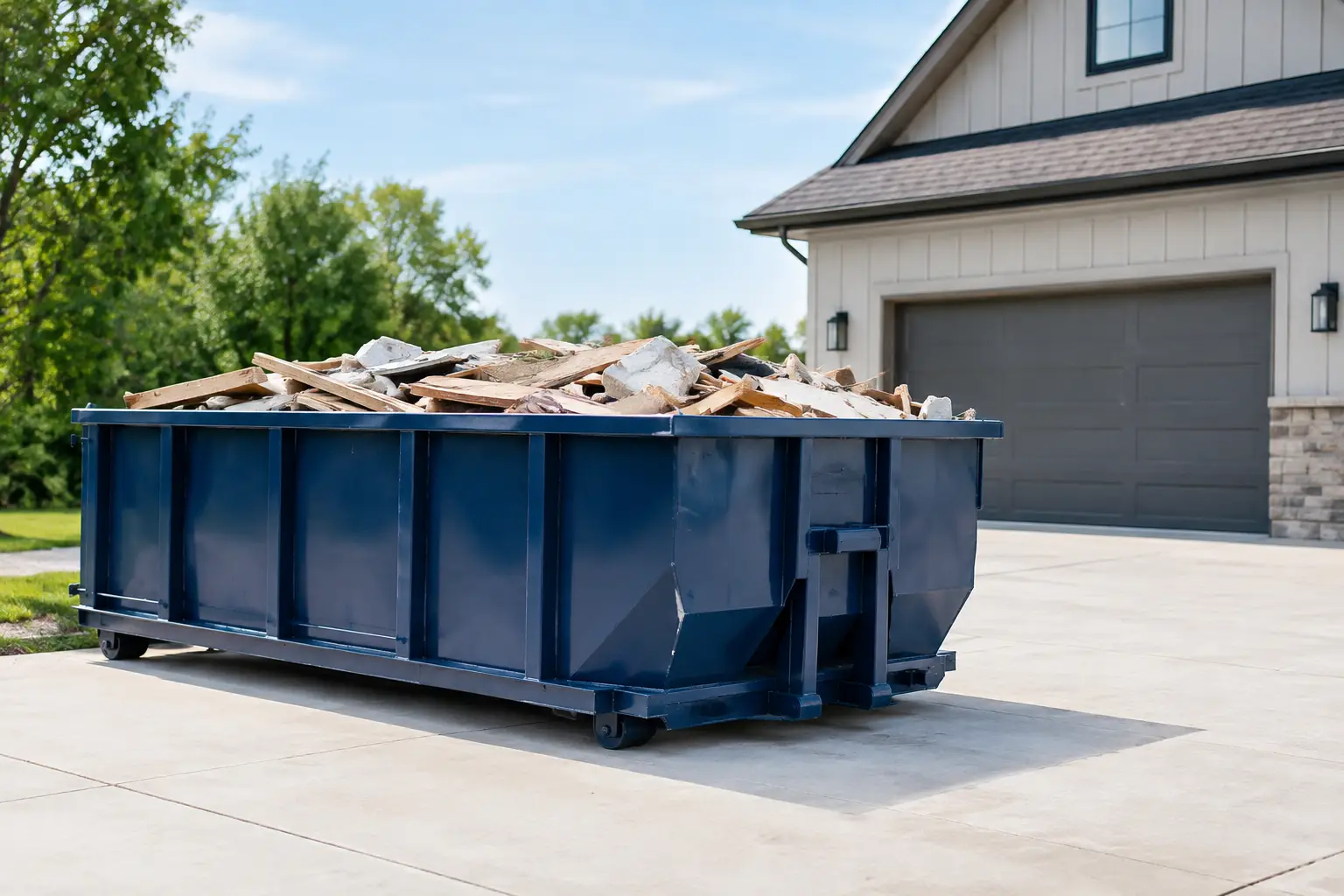
A garage cleanout can look manageable until the driveway is covered with old shelving, broken furniture, boxes, and renovation leftovers. An 8 yard bin gives many homeowners and contractors the right middle ground: enough room for a meaningful cleanup, without paying for a container that sits half empty.
It is a practical size for projects that create steady, moderate amounts of waste. The key is not just how much debris you have. It is also what that debris weighs, how bulky it is, and whether you can load it efficiently.
What Does an 8 Yard Bin Hold?
An 8-yard bin holds about 8 cubic yards of material. Dimensions vary by container style and provider, but it is generally a compact roll-off bin that fits comfortably in many residential driveways while still handling far more waste than a pickup truck.
For most projects, think of an 8-yard container as a strong choice when you have one substantial room to clear, a small renovation area to strip out, or several pickup-loads of mixed debris. It is often large enough to keep the work area clean as you go, which matters when a project has a tight schedule or limited space to stage materials.
The actual capacity depends on how you load it. Flattened cardboard, bagged household items, and broken-down wood stack efficiently. Couches, mattresses, uncut lumber, cabinets, and awkwardly shaped materials can use up space quickly. A bin may look large from the outside, but bulky items create empty pockets if they are tossed in without a plan.
Projects That Often Fit an 8 Yard Bin
An 8-yard bin is commonly used for basement and garage cleanouts, small kitchen or bathroom updates, flooring removal, shed cleanups, and landscaping projects with light debris. It also works well for landlords and property managers turning over a unit after a tenant moves out.
For a homeowner, this size can be a good match for clearing out years of stored items before listing a property or starting a renovation. You can dispose of old shelving, worn furniture, clothing, boxes, carpet, drywall, wood, and general household clutter in one organized place instead of filling the garage between landfill runs.
For renovators, an 8-yard container is useful when demolition is contained to one area. Removing vanity cabinets, old flooring, wall finishes, trim, and packaging from a bathroom renovation may fit well. The same can be true for a small kitchen refresh if you are not removing every cabinet, appliance, and wall.
Contractors often choose this size for service calls and shorter projects where a larger bin would take up more site space than necessary. Keeping a bin close to the work zone helps crews avoid piles of debris that slow down the job or create safety issues.
When an 8 Yard Bin May Be Too Small
Size decisions are usually straightforward until demolition begins. Materials that look modest inside a room can expand quickly once they are pulled apart. Drywall, insulation, old cabinetry, carpet, underlay, and framing lumber all take up more room in a bin than they did in place.
An 8-yard bin may be too small for a full kitchen demolition, a large basement renovation, a roof tear-off, or a whole-home cleanout. It can also fill fast when your project includes several bulky pieces of furniture. If you expect to remove multiple couches, mattresses, appliances, and large cabinets, moving up a size may be more cost-effective than arranging an additional pickup.
Heavy materials are a separate issue. Concrete, asphalt, soil, brick, and clean fill can reach weight limits long before an 8-yard container looks full. These materials generally require a dedicated bin and should not be mixed casually with household waste. A smaller container for dense material is often safer and easier to transport than filling a larger general-waste bin with heavy debris.
If you are unsure, describe the project rather than guessing by bin size alone. A clear list of what is being removed gives a local bin provider a better basis for recommending the right container and waste stream.
Match the Bin to the Material
The best bin size can still become the wrong choice if the material is not suitable for it. General waste bins are designed for common renovation and household debris, but disposal facilities have rules around restricted and hazardous items.
Before loading, separate materials that may need special handling. Paint, oils, fuel, propane tanks, chemicals, batteries, tires, electronics, and some appliances should not go into a standard mixed-waste bin. Items with refrigerants also need proper disposal. Keeping these materials out of the bin protects workers, avoids disposal problems, and helps prevent unexpected charges.
Clean loads matter as well. A concrete or clean-fill bin is meant for the specific dense material it is booked for. Adding wood, garbage, plastic, or other mixed debris can change the disposal requirements. When materials are separated correctly from the start, pickup is simpler and the project stays on budget.
How to Load an 8 Yard Bin Efficiently
A little planning can make an 8-yard bin go much further. Start with flat, heavy pieces on the bottom. Place broken-down furniture, lumber, and long materials along the sides when possible. Then fill gaps with bagged debris, smaller items, and loose material that is safe to load.
Break down what you can before it reaches the bin. Remove table legs, flatten cardboard, cut long pieces of wood when appropriate, and stack drywall or paneling carefully. This saves valuable volume and makes the load more stable.
Keep all debris below the top edge of the container. Overloaded bins can be unsafe to transport and may need to be leveled before pickup. If a door is available for loading, use it for heavier items rather than lifting them over the side. It is safer for your back and easier to place materials where they belong.
Do not wait until the final hour of a renovation to decide where waste will go. Booking the bin before demolition starts lets you remove debris as it is created. The work area stays cleaner, trades have more room to move, and you avoid the common problem of having a finished driveway full of garbage waiting for a solution.
Driveway Space and Delivery Planning
An 8-yard bin is compact enough for many driveways, but access still matters. Before delivery, move vehicles, trailers, basketball nets, and other obstacles from the drop-off area. Check for low branches or overhead wires, and make sure the truck has a clear route in and out.
Choose a location that is convenient for loading without blocking daily life more than necessary. Near the garage is often useful for a cleanout, while a spot closer to the renovation entrance can reduce carrying time. If the driveway has a slope, limited turning room, or delicate interlocking surfaces, mention that when requesting a quote.
Property protection should be part of the plan, not an afterthought. Forever Green Bin Rental includes driveway protection with every rental, helping reduce direct contact between the bin and the driveway surface. It is a small detail that matters when you are trying to finish a cleanup without creating another repair project.
Is an 8 Yard Bin the Best Value?
The best value is not always the smallest available bin. A container that is too small can lead to extra pickup fees, rushed loading, or another rental period. A container that is far too large can cost more and use valuable driveway space.
An 8-yard option is often the value choice for moderate cleanups because it balances capacity and footprint. It works especially well when the debris is mostly general household material or renovation waste that can be broken down and stacked. For dense materials, very bulky furniture, or a major demolition, a different bin type or size is usually the smarter call.
A good quote should account for the bin size, material type, rental timing, delivery access, and expected load. Being specific upfront helps avoid surprises and gives you a realistic plan for getting the job done.
When the cleanup is large enough to overwhelm a few trash cans but not large enough for a major construction container, an 8-yard bin can keep the project moving. Take a quick inventory of the debris, set aside restricted items, and choose the size that gives your crew or household room to work without making waste removal the hardest part of the job.